
Higher strength does not always win in zinc die casting as many OEM engineers would desire to think. EZAC demonstrates a much greater strength than conventional Zamak alloys, although the performance improvement is only significant when considered within specific environments where load-carrying criteria are more important than process complexity and cost.
The idea behind the creation of EZAC was to address an actual gap: the more common types of Zamak alloys (such as Zamak 3, 5, or 2) simply do not hold up under load or under high-temperature conditions where creep creep deformation or fatigue are involved. Most sourcing teams and designers believe that just moving to EZAC will automatically result in improved performances of parts. Practically, it often brings in smaller process windows, larger scrap risk in case of parameter drift and increased tooling-stress risks- risks that would not be justified until the mechanical requirements are really harder than what standard Zamak can perform at a dependable level.
The adoption of the correct choice of zinc alloy should be coordinated with the total capacity of zinc die casting and process control. To manufacturers possessing known experience in hot-chamber die casting, EZAC will open up a new line of implementation to design-but not unless the job demands it. our zinc alloy die casting capabilities
What Is EZAC and Why Was It Developed?
As experience with shop-floor conditions showed, EZAC was created due to the fact that the standard Zamak alloys reached their boundaries in use when higher creep and yield strength was required, without resorting to cold-chamber alloys such as ZA-27.
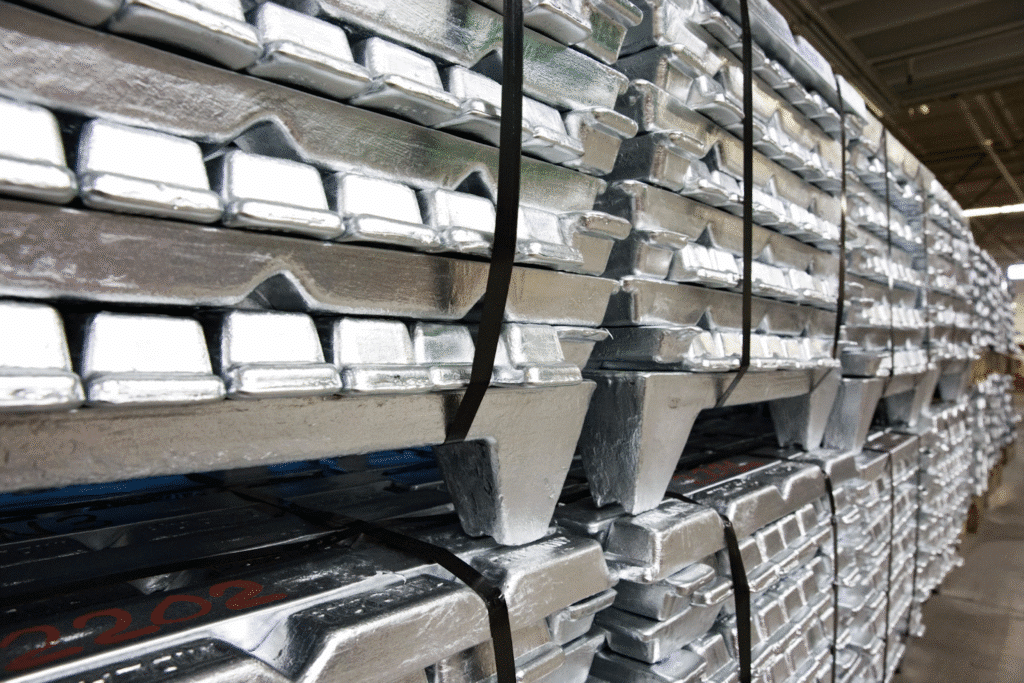
Traditional Zamak alloys, which are mostly Zn-Al alloys with small levels of Cu or Mg, are highly suitable in hot-chamber machines but do exhibit significant creep when subjected to sustained loads or at fairly elevated temperatures (e.g. automotive under-hood brackets or housings of power tools). EZAC changes this base containing an proprietary content of higher aluminum and copper (usually of approximately 4% Al, 1-2.5% Cu and a traces of Mg), with a refined structure that increases strength and thermal stability, yet maintains a low melting point (typically 380-386 o C) to allow it to work with hot chambers.
Key Compositional and Development Drivers
- Sustained-load parts contain addresses in which Zamak 3/5 deform with time.
- Targets achieves similar strength as ZA-27, but without penalties caused by wear in the cold chamber.
- Gains on hot chambers: reduces energy consumption, fails to draud, handles goosenecks and plungers kindly.
| Alloy | Primary Strength Focus | Typical Use Case | Trade-Off Summary |
| Traditional Zamak (3/5/2) | Balanced strength + fluidity | General hardware, consumer electronics | Good castability, moderate creep resistance |
| EZAC | High yield + exceptional creep | Load-bearing structural, elevated-temp | Higher strength, narrower process window |
Mechanical Performance — EZAC vs Traditional Zamak Alloys
EZAC provides a noticeable level of improvement in mechanicals in case of head-to-head testing, or production at a realistic scale, where parts are subjected to either tensile loads, fatigue cycles, or longer-term stress.
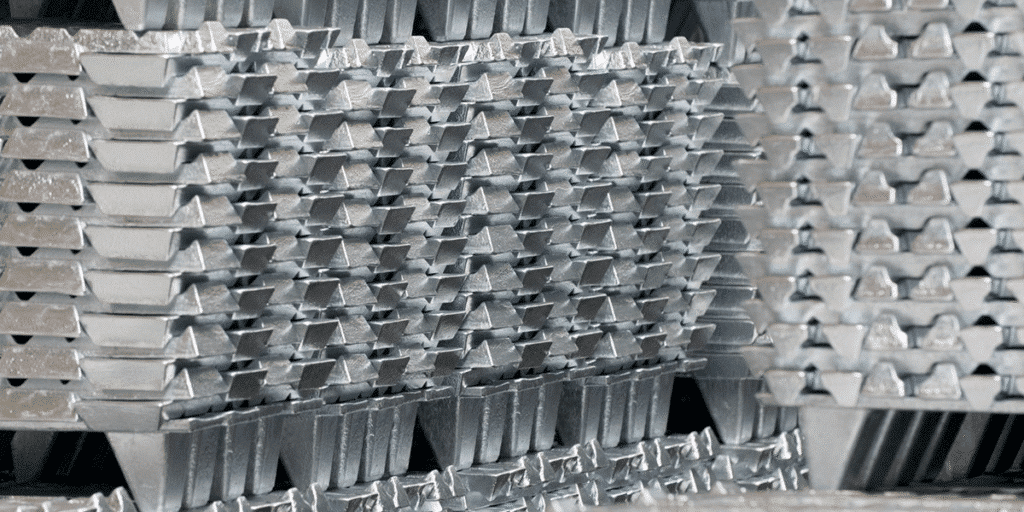
The yielding strength of EZAC can be as high as ~393396 Mpa (57ksi) which is approximately 4050 times higher than that of Zamak 2 (approximately 360 Mpa) and 1010 times higher than that of Zamak 3 (approximately 276 Mpa). The tensile strength is similar to that of ZA-27 at 380 despite some variance 414 Mpa with a hardness of 120-140 Brinell -which is comparable to the castable hot-chamber. Creep resistance increases (to a maximum of 10-14 times that of Zamak 5 in the test at temperatures below 140 C at pressures of 31 Mpa) and causes long-time deformation of bracket or housing to be reduced.
Fatigue and Rigidity Benefits
Cyclic applications (e.g. latch components or pedal mechanisms) are life extended by fatigue. Structural rigidity is enhanced which gives the designers the opportunity to provide stiffness with slightly thinner sections in focus areas however not necessarily generally thinner.
| Property | EZAC | Zamak Alloys (e.g., 3/5/2) | Practical Impact on Parts |
| Yield Strength (MPa) | 393–396 | 221–360 | Better load-bearing without yielding |
| Tensile Strength (MPa) | 380–414 | 283–397 | Improved margin in high-stress zones |
| Hardness (Brinell) | 120–140 | 82–130 | Enhanced wear/abrasion resistance |
| Creep Resistance | Excellent (10–14×) | Moderate | Less deformation under sustained load |
Castability and Process Stability Trade-Offs
Very increased strength in EZAC is associated with significantly lower fluidity and more parameter sensitivity than normal Zamak.
EZAC also is one of the more fluid high-strength solutions (capable of around 0.19 mm walls, in testing), but requires greater control over the melt temperature, injection speed, and die temperature. Deviations will lead to increased porosity or unfinished fill which will drive scrap rates as high unless the foundry has been dialled in.
The hardness of the alloy does cause a minor increase in tooling wear, but much less than does cold-chamber high-strength alternatives. Our guide to parameters of the zinc die casting process has the details on how to maximize these variables. zinc die casting process parameters.
Process Compatibility and Chamber Type Considerations
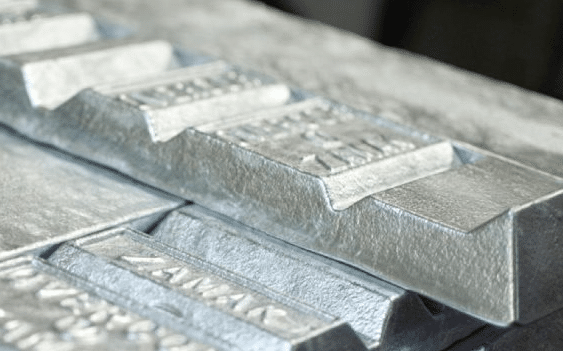
EZAC also remains well within the realm of hot-chamber temperature ranges, – its lower melting point does not exhibit the destructive tendency that other high-Cu alloys would.
Standard Zamak has a broader processing range (larger temp/speed tolerance), which means that it is tolerant to high-volume runs. EZAC should be set up and monitored with more discipline, which makes it inappropriate to novice stores with limited experience in the hot-chamber. As a background, review hot chamber vs cold chamber die casting.
Dimensional Accuracy and Tolerance Implications
Dimensional repeatability is under slight compromise with EZAC because its shrinkage behavior was altered, and thermal sensitivity was increased.
Albeit, zinc die casting usually performs excellently at tight tolerances, the composition of EZAC may cause a slight increase in variation, unless the cooling rates are not homogeneous, particularly when it comes to the thicker parts. This does not usually cause any problems in achieving specs but requires more rigorous control of mold temperature and venting location.This rarely prevents meeting specs but demands stricter mold temperature control and vent placement. Explore why zinc shines here in our post on zinc die casting dimensional accuracy and typical achievable ranges in zinc alloy die casting tolerances.
EZAC and Thin-Wall Design Limitations
Contrintuitive sources are that the increased strength of the EZAC does not consistently allow the reduction of the thickness in the walls.
Fluidity is desirable in a high-strength alloy, but the lower flow rate of the alloy than that of Zamak 3/5 implies that a successful thin-wall operation of a component relies on the geometry of the part geometry and gating. Zamak is usually desired in sub-0.5 mm wall in highly complicated designs. The most common traps are discussed in our article on thin-wall zinc die casting.
Defect Risk and Quality Control Considerations
Internal defects (particularly shrinkage porosity and hot tears) increase with EZAC in case there is a decline in process discipline.
The sensitivity of the alloy increases the danger of melt impurities, bad venting or temperature fluctuations. Structural parts have to be subject to X-ray examination and close supervision. The prevention measures have been outlined in our discussion on zinc die casting defects.
When EZAC Is the Right Choice — And When It Is Not
The decision is championed by the requirements of the application-strength is hardly a sufficient reason to make the switch.
EZAC excels in structural components that are carrying loads or resisting intermittent high temperatures (e.g. automotive brackets, frames of power tools, locking in ways). Zamak is still the best in applications requiring low cost, high volume cosmetic or low loads.
| Application Requirement | EZAC Recommended? | Reason |
| High sustained load + creep concern | Yes | Superior creep resistance prevents long-term deformation |
| Moderate strength + tight cost targets | No | Zamak offers adequate performance with easier processing |
| Thin-wall complex geometry | Case-by-case | Good fluidity but narrower window vs standard Zamak |
| Elevated temperature + cyclic fatigue | Yes | Better fatigue and hardness retention |
| General consumer hardware | No | Overkill; added cost and risk without benefit |
Conclusion — High-Strength Zinc Requires High-Discipline Manufacturing
Conclusively, the EZAC selection should remain application-oriented as opposed to being strength-oriented. The alloy allows performance to be opened in the right situation, but with process control failure, those performance increases disappear – result in increase costs, tardiness, or field failures.
Inclined to a life time experience of operating the two alloys simultaneously, the lesson is simple, combine high-strength zinc with high-discipline manufacturing. EZAC can be predictably performed when the mechanical loads warrant this, and when otherwise it is more rational to stay attached to tradition and use Zamak.