
In projects involving the die casting of zinc, quality and reliability in delivery are only ascertained relating to the extent to which assembly and packaging are developed and incorporated in the production line rather than regarded as an under consideration. The attitude of many OEM engineers, sourcing managers, is that packaging is merely a logistics activity: something that happens after the parts come out of the foundry. Factually, handling after casting occurs as one of the greatest risk factors to dimensional distortion, cosmetic damage and assembly failures. Unwise decision making in this case can make a well cast part an unacceptable assembly or a failed field and cause rework to increase the program cost and program schedule slippage.
The period between being thrown off the die and landed on your assembly line is what determines whether the part will work as desired. Part-to-part contact surface marks, thread damage under inappropriate stack force, or turned tolerances due to vibration in transit are hardly extraordinary cases; they are natural results when assembly and packaging are separated, with respect to the underlying casting.
For companies seeking professional zinc die casting services in China, a comprehensive assessment of the fact that a supplier can handle the entire processes of assembly integration and protective package delivery will eventually demarcate between credible partners and those who offer castings and yet fail to provide delivery consistency.
Why Assembly and Packaging Matter in Zinc Die Casting Projects
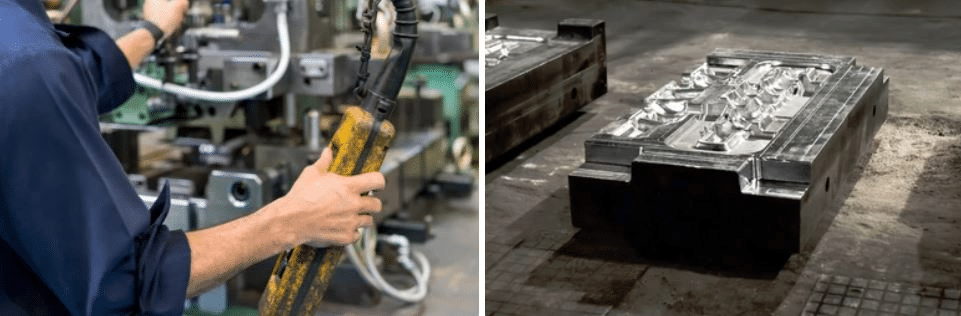
The success of assembly and integrity of final part depends on the post casting solidification. Zinc alloys are very precise in as-cast and surface quality, however, this precision is very weak unless controlled after-treatment and handling.
Even small surface scratches may re Johanna cosmetic components going into visible service involving visible or invisible components even minor surface scratches can reject cosmetic parts as well as stacking uncontrolled stacking may inject residual stresses in fastener retention or thread integrity in eventual assembly. The economic value takes effect very fast: a piece of damaged delivery can result in inspection freeze, line halt, re-work, or scrap costs which very often outweigh the initial point of casting.
Below is a list of risks expected in the post-casting stage:
| Post-Casting Stage | Potential Risk | Impact on OEM |
| Handling & Trimming | Flash residue or burrs left on parting lines | Interference in assembly fit, increased deburring labor |
| Intermediate Storage | Part-to-part contact or improper orientation | Cosmetic scratches, denting on critical surfaces |
| Transit & Shipping | Vibration, stacking pressure, moisture exposure | Dimensional shift, thread deformation, corrosion initiation |
| Pre-Assembly Inspection | Uncontrolled mixing of batches | Traceability loss, mixed alloy risks in downstream processes |
The risks are not hypothetical because they actually occur whenever packaging is standardized as opposed to when it is designed specifically to address the geometry, alloy, and usage.
Typical Assembly Operations for Zinc Die Casting Components
Piecing together is not often about screwing something together. In the case of zinc die castings, it may sometimes require direct interaction operations with the as-cast properties of the material, including thin walls, fine thread or insert features.
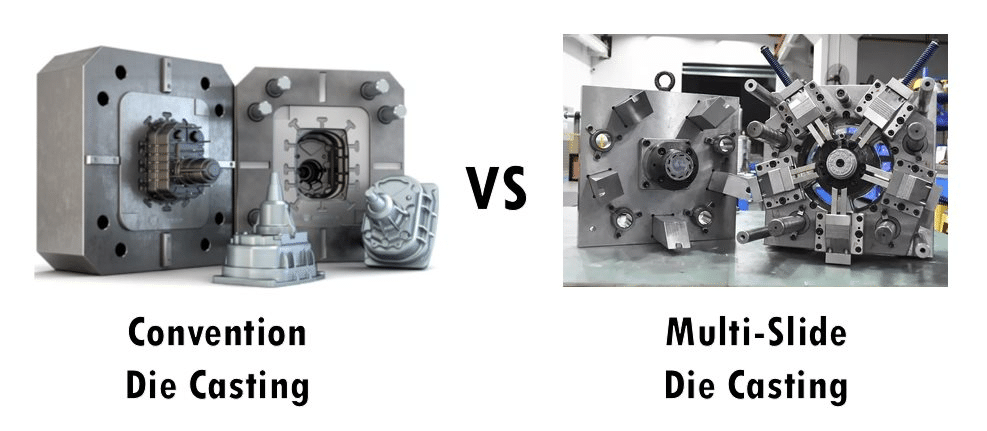
Applications encompass mechanical fastening (self-taping screw or press-fit), insert assembly (heat-staking or ultrasonic), sub-assembly integration (snaps, clips or adhesives) or functional checks (torque check, leak check or alignment gauge). Every step will have quality risks in case any variability is caused by the upstream casting or use.
| Assembly Operation | Purpose | Quality Risk if Uncontrolled |
| Mechanical Fastening | Secure mating components | Stripped threads from poor hole quality or alloy softness |
| Insert Installation | Add reinforcement or threaded features | Cracking around insert due to residual stress or improper preheat |
| Sub-Assembly Integration | Combine castings with other elements | Misalignment from accumulated tolerances or surface irregularities |
| Functional Checks | Verify performance before shipment | Undetected defects passed downstream, leading to field returns |
Controlling these requires not only good casting practice but also assembly fixtures designed with the real part geometry in mind.
How Alloy Selection Influences Assembly Performance
These must be controlled not only through good casting practice but also assembly fixtures that are thought after the geometry of the real part.
For example, higher-aluminum-content alloys like ZA-8 zinc alloy for structural parts alloy selection extends much further than castability since it directly influences the predictability of the part enduring assembly loads. The common zinc alloys differ greatly in terms of strength, stiffness, ductility, and thread-forming behavior.
Understanding how zinc alloy choice affects die casting quality helps engineers match material properties to assembly method—preventing issues like galling, cracking, or loosening over time.
Designing Custom Packaging for Zinc Die Casting Components
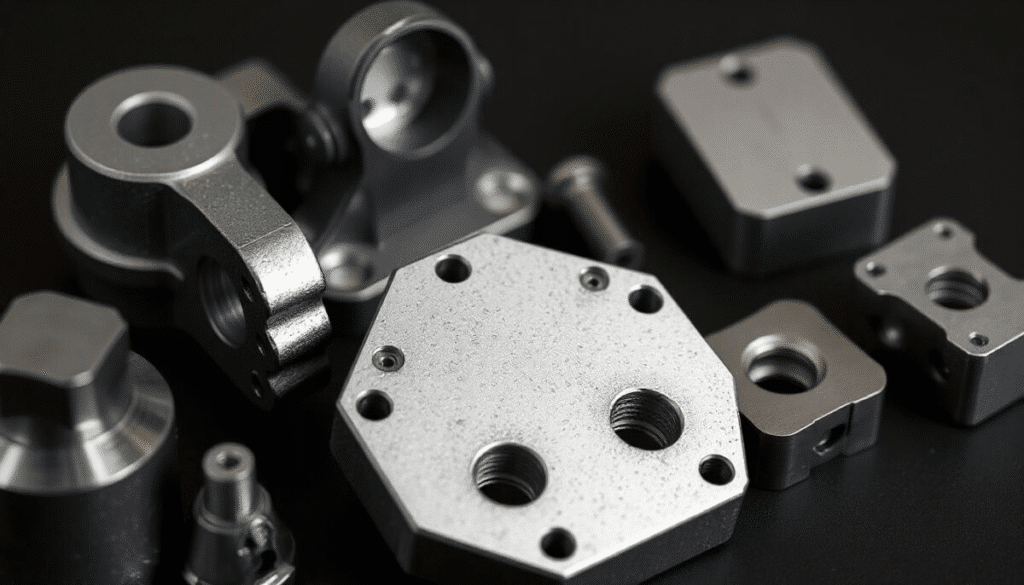
Good zinc die casting packaging cannot be found in an off the shelf foam or cardboard. This aims to avoid contact between parts and parts, ensure orientation, and spread loads in such a way that leaves cosmetic surfaces fresh and critical dimensions unchanged during transit.
Some of the design guidelines are custom thermoformed trays/foam inserts to hold every part out of place, rigid dividers not allowing any movement, and orientation with the strongest axes of the casting to allow the load to be carried.
| Packaging Feature | Function | Risk if Ignored |
| Individual Part Nesting | Prevents contact between components | Scratches, dents, or flash damage on visible surfaces |
| Custom Orientation | Aligns part with natural load paths | Dimensional distortion or thread deformation under vibration |
| Load Distribution | Spreads stacking pressure evenly | Warping of thin sections or housings |
| Protective Barriers | Shields against moisture and abrasion | Surface oxidation or cosmetic degradation |
Even tough castings can be received with problems and need expensive refinishing or rejection when not taken care of.
Packaging Considerations for Different Part Types
The die castings of zinc do not all experience the same handling risks. Structural brackets or load-bearing housings can be stacked aggressively more than a decorative trim part or miniature precision gears.
Avoiding any form of contact may require small, high-cosmetic components to be packaged in single blister packs or vacuum-formed trays. Bigger housings can incorporate layered foam containing cutouts which uphold flanges and bosses. Bulk packaging is only effective when non-cosmetic internals are vibration and stacking modeled and countermeasures are taken.
The trick here is to correlate the packaging aggressiveness to the part sensitivity part decorative stuff nearly always needs more investment than functional parts.
How Integrated Assembly and Packaging Improve Delivery Consistency
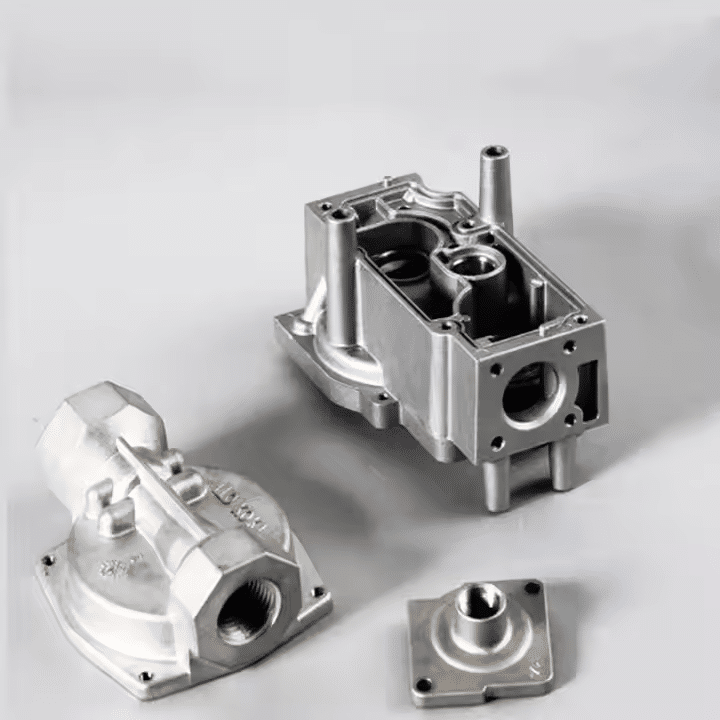
When assembly and packaging are considered as a part of the manufacturing system, but not assembly, but an independent step, the variability drastically decreases. The number of touches during handling is reduced, which results in fewer chances of damage. Issues are identified in-line during functional checks before packaging. Traceability involves linkage of every batch between the process of casting and shipment.
The outcome is quality delivery on time – parts come prepared to your line with only minimal incoming inspection being necessary.
| Integration Level | Typical Outcome | OEM Benefit |
| Fully Decoupled | Separate suppliers for casting vs packaging | High variability, frequent rejects |
| Partial Coordination | Basic packaging added post-casting | Improved protection but inconsistent checks |
| Fully Integrated | Assembly + custom packaging in one flow | Stable quality, reduced lead-time variability, lower total cost |
Common OEM Mistakes in Assembly and Packaging Decisions
The most common mistakes have to do with consideration of assembly and packaging as detached to casting:
- The main assumption that the standard packaging is practical with all parts- geometry does not matter.
- Waiting to make decisions about packaging until then the production process is finished- not taking exploiting design-for-handling opportunities early.
- Assuming that the quality of the assembly is not affected by the packaging process- ignoring the impact that transit damages have on the final function and fit.
- These assumptions will result into avoidable field problems and exaggerated overall ownership expenses.
The Inclinations of OEMs in the assessment of Assembly and Packaging Capability.
How OEMs Should Evaluate Assembly and Packaging Capability
involvement (DFM reviews that involve assembly and transit) that are developed early, prototype packaging customizing, and in-house assembly cells that are documented to control with documentation.
Key questions to ask:
- Do you have any sample of packaging as per our CAD and surface needs?
- What is the checking of dimensional stability following simulated transit?
- What are you doing with the assembly processes in-house and how do you control them?
- What batch tracking methods do you use after the casting?
| Evaluation Factor | Strong Capability | Weak Capability |
| Early Involvement | DFM includes packaging & assembly from concept | Packaging decided post-tooling |
| Custom Packaging Design | Engineered trays/inserts with prototypes | Generic foam or bulk bags |
| In-House Assembly | Controlled cells with gauges & checks | Outsourced or none |
| Transit Simulation | Vibration/drop testing data available | No validation beyond basic packing |
Conclusion — Assembly and Packaging Complete the Manufacturing System
Zinc die casting provides high as-cast accuracy, which can only last until the final consumer when an entire manufacturing system comprising of casting is expression engineered. The temptation of considering post-casting steps as optional or logistics-only is an unnecessary risk, cost and also delay.
The OEMs which require the integrated capability of the suppliers experience more consistent delivery preparedness, reduced trouble in the line, and performance of the program as a whole. The difference is not in the casting, but in the way the whole approach to the assembly line is thought that is in question.