
Manufacturing systems, discipline in quality control, and capability of producing a correlation across a series of repeated production cycles in the face of manufacturing characterizes reliable aluminum and zinc die casting manufacturers – not glitzy machine lists nor the lowest starting quoted price.
Most of OEM sourcing system failures occur after several months of supplier selection where initial samples appear ideal only to realize later production line problems of porosity, inconsistencies in tolerances, or delays. The huge feeling that people get misled with is that lower tooling cost/piece price means a better bargain. As a matter of fact, aggressive pricing normally comes at the expense of process, material handling, or preventive maintenance reduction which results in increased rejection, increased rework, and replacement of suppliers; thus, increasing project cost, on average, by 20-40% over time.
To select a good steel or aluminum and zinc die casting supplier China, one needs to consider manufacturing systems, discipline on quality assurance, and process stability over a long time are some of aspects to be considered and not only the price quoted or machine list.
Why Die Casting Supplier Selection Is a Risk Management Decision
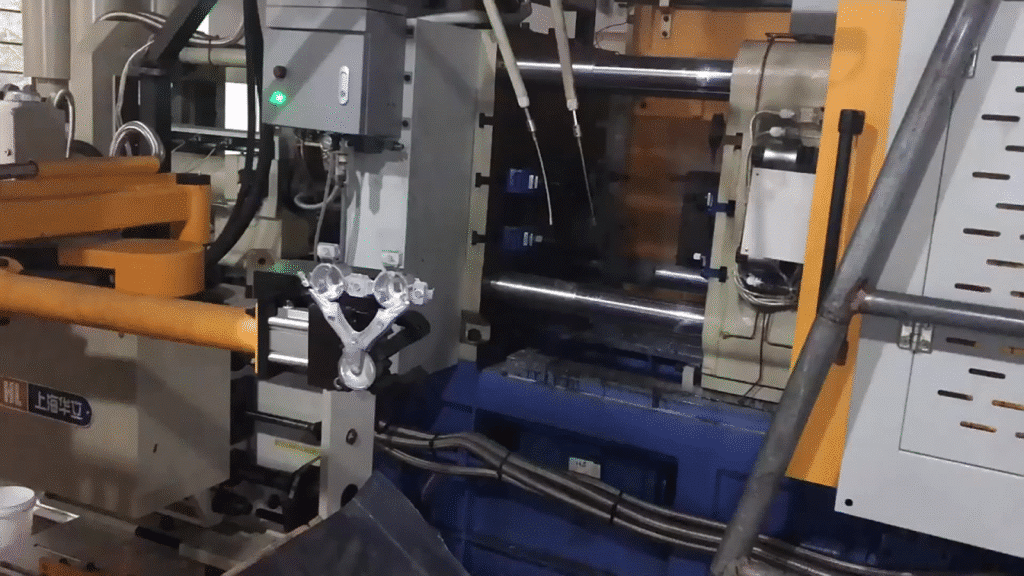
The selection of die cast suppliers is basically a risk management decision since most of defects are not accidental but are due to fundamental problems in the system process.
In high pressure die casting, molten metal is cast at extremely high speeds and pressure which makes the environment such that a minor change in temperature, gating design, or venting can lead to the mass problem that generate gas porosity or shrinkage. These are not isolated issues but they reoccur in batches unless the underlying causes are built-to-zero on a system-wide level.
Early vendor decisions fix long term performance: tool life, cycle predictability, secondary process production, and finish quality all require the tooling to be stable upstream. Changing suppliers in the middle of the project causes a reset of process variables that usually leads to requalification, new tooling adjustments, and weeks of lose-time as variability peaks.
Skilled OEM designers consider supplier review as risk mitigation in advance as they do FMEA at the design phase- since once production has been set in motion the cost of correcting system errors will compound exponentially.
Manufacturing Capability Comes From Integrated Systems, Not Individual Machines
Machine tonnage list alone do provide hardly anything about the actual capability of a manufacturer.
A 800 ton die-casting machine may appear impressive on paper, but unless the foundry incorporates the choice of downstream processes (such as the use of regular robotic trimming, in-house CNC fixturing, automated polishing) the data minority will be ruined during handling, misaligned, or have uneven surface texture. Real capability is demonstrated by the coordination effectiveness of the system of the chain (the design of molds is followed by the process of casting and then machining and finishing) under one roof and the standardized process of work.
Find signs of in-house machine control:aving control over the temperature of the mold, its shot control, automatic deburring, and SPC real-time data. Outsourcing facilities which introduce too much variability in the form of secondary operations can never be completely caught up by the final inspection.
An effective development of an aluminum and zinc die casters proves this integration by their ability to maintain uniform supply of production components, which perform a priori to prototype specifications within thousands of shots.
Understanding Aluminum vs Zinc Die Casting Capability
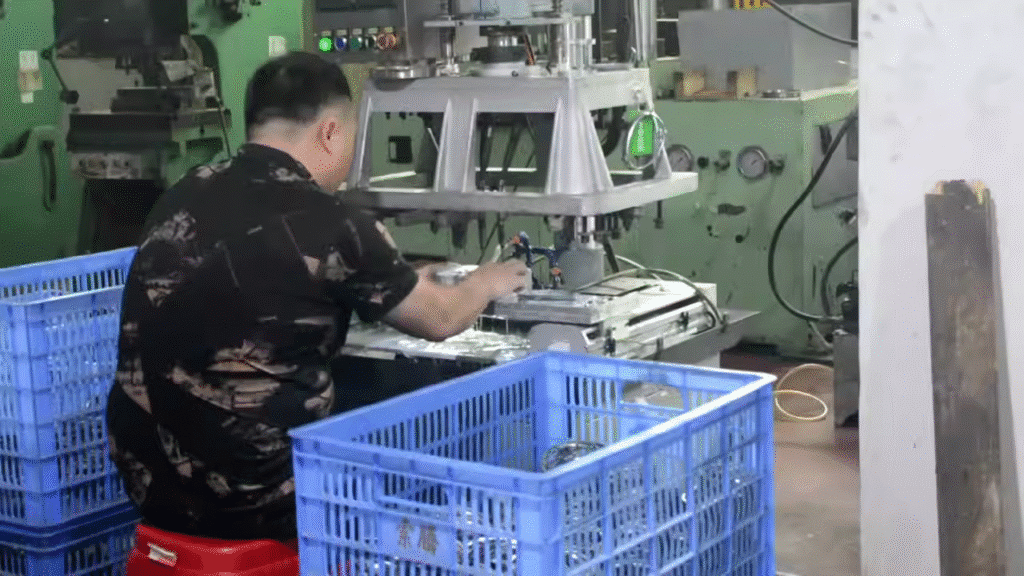
Alloys of aluminum and zinc present almost entirely different requirements on the side of tooling, process parameters and quality controls, i.e. responsible manufacturers are well aware of when each is the correct tool to use and inform such limits.
Cold-chamber machines, high melting temperatures (660 C) and high venting are required to treat aluminum, which also has a high solidification shrinkage rate and requires treatment at a higher temperature. Tool life is shorter (typical 100000-150000 shots maximum), parts are less heavy but with superior thermal/electrical conductivity but may tend to become porous without stringent control of melt treatment or injection.
Hot-chamber machines are used, with lower melt temperatures (typically 420C), are much easier to flow, thinner walls (down to 0.3-0.5 mm), smaller tolerances (+ -.0015 in /IN standard) and much longer life of the tool (100 million shots common). Zinc is good in complex shapes and geometries and surface details but it is not lighter and is not better in high temperature.
An effective supplier does not offer a single alloy to everyone–they determine your functional needs (weight, strength, corrosion requirements, sizeable assembly, etc.) and suggest it. To further inform about the choice of the process, see our detailed comparison: aluminum vs zinc die casting.
OEM Readiness and Project Evaluation Criteria
Manufacturers who place their trust in the quality of elements of OEM input will not commit until it has been determined that the input is of high quality since even bad drawings, specifications not clear or realistic volume expectations almost invariably lead to problems down the chain.
Prior to serious quotations, all inquiries should concern: GD&T callouts, functional and non-functional dimension, mating part tolerance, anticipated yearly use, surface finish, class ( e.g. powder coat preparation vs cosmetic plated ), and any regulatory standards (RoHS, REACH, IATF in case of an automotive application).
Strong-system manufactures decline or improve a placebo RFQ instead of running the risk of creating wrong expectations. This insulates the two against changes during the running and hence interfering with schedules.
To check what should be prepared in advance to a buyer in a practical case, one may refer to: OEM die casting project checklist.
Precision Die Casting as the Foundation of Consistency
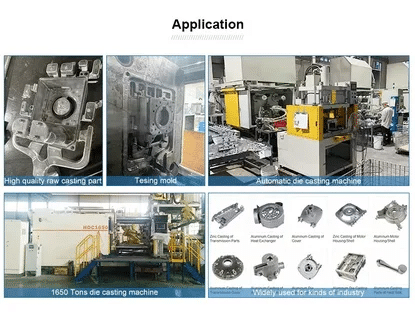
The accuracy in die casting is not an inspection-based process but a process-based one, that is, repeatability is achieved through controlling variables prior to the aforementioned metal ever going into the die.
Veritable accuracy manifests itself through shot-to-shot repeatability: identical melt temperature, injection profiles, homogeneous heating and cooling of the die, and a small thermal shock to the mold. These are the ones that directly affect the level of dimensional stability, porosity, and flash.
Process discipline prevents CpK values to be large and scrap minimized since inspection (CMM, gauges) identifies problems only after they have happened. Find suppliers that monitor main process indicators (shot velocity, intensification pressure, die temperature) and utilize them to stabilize the long-run.
Read about its application to the mass production of: precision die casting.
How Quality Systems Prevent Common Die Casting Defects
The upstream quality systems of prevention would be much more effective as opposed to sorting or reworking the defects after casting.
Typical defects of aluminum are:
- Gas porosity – due to confined air/aeration has happened (poor venting, melt degassing, turbulent fill)
- Shrinkage porosity – It occurs because of poor feeding or poor cooling.
- Cold shut/mis run – due to low melt temperature or slowness of injection.
- Inclusion/oxides – of contaminated melt or shameless ladle practice.
Zinc defects may be flash, soldering to die or hot tearing in case of the ejection being mistimed.
Credible suppliers make use of X-ray in regard to internal void, spectrometer in regard to alloy composition, tensile testing as regards to mechanical properties, and such preventive services as vacuum assist, filtered melt, and optimized gating. Symptoms are detected through post-casting sorting; the root causes are removed through strong systems.
Aluminum die casting defects: aluminum die casting defects.
Surface Finish Capability as a Reliability Indicator
Upstream process control is most evident in the quality of the surface finish.
The lack of uniformity of die temperature, too much flash or inconsistent spray release results in visible flow lines, drag marks, or crass texture and demands heavy secondary finishing to eliminate, increasing cost and variability. Zinc casts usually exhibit a smoother cast surface than does aluminum because it is more fluid, and aluminum tends to require more vigorous polishing or shot blasting.
Consistent Class A/B surfaces with a small amount of rework are provided by the reliable manufacturers since they control die lubrication, ejection timing and cleanliness of the alloy at the beginning. Chrome plating or high-gloss powder Differences: zinc parts are usually capable of being plated on, or having a high gloss finish, whereas aluminum parts may require anodizing equipment or chemical plating.
Discuss finish standards and finishes: zinc alloy die casting surface finish.
Tolerance Control and Assembly Risk
Tolerance specifications of nominal tolerance of drawings are not a critical matter without knowledge of real assembly tolerances.
A ±0.05 mm linear tolerance may be acceptable on paper, however, the thermal expansion, plating buildup or variation in the part mating may cause an interference or excess clearance problem in the assembly. Zinc generally has finer as-cast tolerances (plus or -0.38 mm/25 mm) than aluminum based on reduced shrinkage, although both demand that the supplier should understand GD&T implications – bonus tolerances, projected areas, datum references.
Available partners will counter unsound non-functional tolerances and recommend measures to design to keep the functionality of the product intact, as well as to enhance castability and yield.
See how this plays out in real assemblies: die casting tolerance control.
Conclusion — Reliability Is Proven Over Production Cycles, Not Quotes
The quality of a consistent die casting manufacturer of aluminum and zinc is not determined in terms of promises or prices, but by the one where quality remains current after few recurring production session.
Evidence-based assessment including process audits, sample run data, SPC records as well as review of certification disclose the presence of systems available to a supplier to manage the inherent variability of die casting. Pay attention to such signs, and there will be a significant reduction in the risk of mid-project surprises.