
A large number of OEM engineers and sourcing managers continue to perceive CNC machining cost in terms of hourly shop rates or part quotes. The latter has a blind view of the bigger picture. The truth is that total manufacturing cost is the sum of a myriad of minuscule process choices taken upstream and downstream of the spindle choices which add together in quality yield, scrap rates, inspection burden, lead-time variance, and even engineering change responsiveness.
The CNC machining that costs the most is not necessarily charged the highest rate; but it is that one that may seem cheap initially, but it ends up creating an unstable production engine. CNC machining strategy defines the overall cost of manufacturing by defining process stability, variation, and efficiency within the whole production system. Decisions made concerning tooling paths, allowance design, fixturing logic, and statistical controls determine whether costs remain controlled or uncontrolled and go through hidden rework loops and a loss of margins.
Why CNC Machining Cost Is a System Outcome
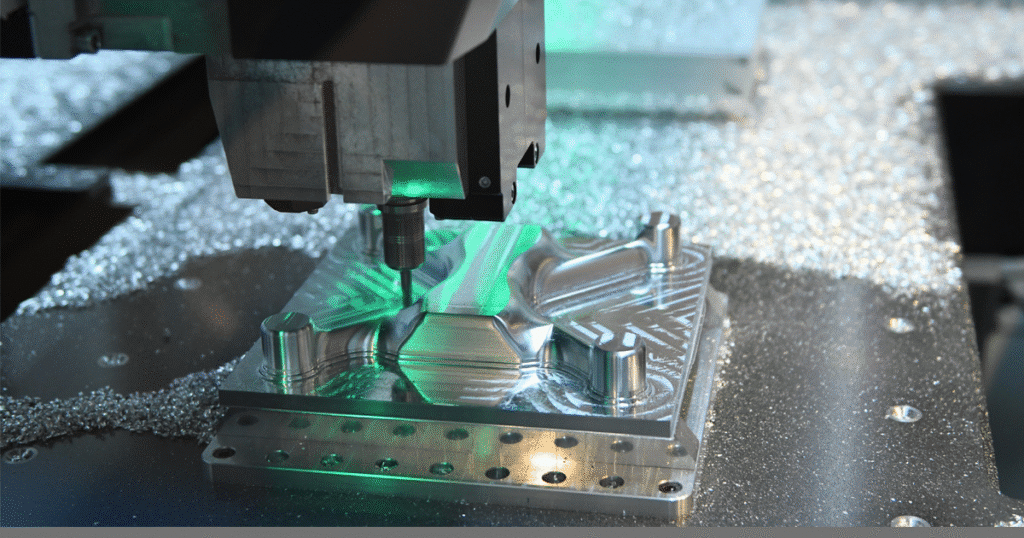
CNC machining cost never exists alone, it is a system result. When you consider the entire lifecycle, direct machining costs (spindle time, tool wear, electricity) typically constitute only 3050 percent of the actual landed cost. The remainder is in scrap, re-work cycles, over-checking, late deliveries, and quality escapes that give rise to customer take-backs or field failures.
Take an example of a high-volume die-cast aluminum bracket which needs to be precisely milled on important mounting surfaces. Unless the machining plan contains a solid variation control mechanism, a slight deviation in tool deflection or thermal expansion can cause dimensions to go out of control. The result? Existence of more time on first-article inspection, batch quarantines, remedial measures, and worst case scenario: entire lot rejection. These are not a single occurrence but rather cumulative to great cost total manufacturing control concerns.
Rework and scrap are mute multipliers. A 2 per cent scrap rate may be acceptable but when it initiates secondary sort, re-machining or expedited replacement part, the actual cost per finished good part can increase 15-25 times. Effective cost efficiency in CNC machining can only arise after the process has become stable enough to reduce these down stream interventions.
For OEMs evaluating baseline machining capability and system efficiency, advanced CNC machining technology is basic in ensuring that the results can be repeated to keep a lid on any hidden costs.
Machining Allowance Strategy and Cost Control
One of the first and least recognized switches in CNC cost optimization strategy is machining allowance strategy.
Allowance (stock remaining on critical features after casting) determines directly roughing cycle time, semi-finishing passes, tool engagement and final surface integrity in die casting followed by CNC. Excessive allowance creates a potential to expose porosity, insufficient cleaning of draft angles or subsurface defects, so more light cuts, change of tool, or even scrap are required. Unreasonable permissibility overloads cycle, enhances tool life, elevates volume removal of materials, and exceeds energy use.
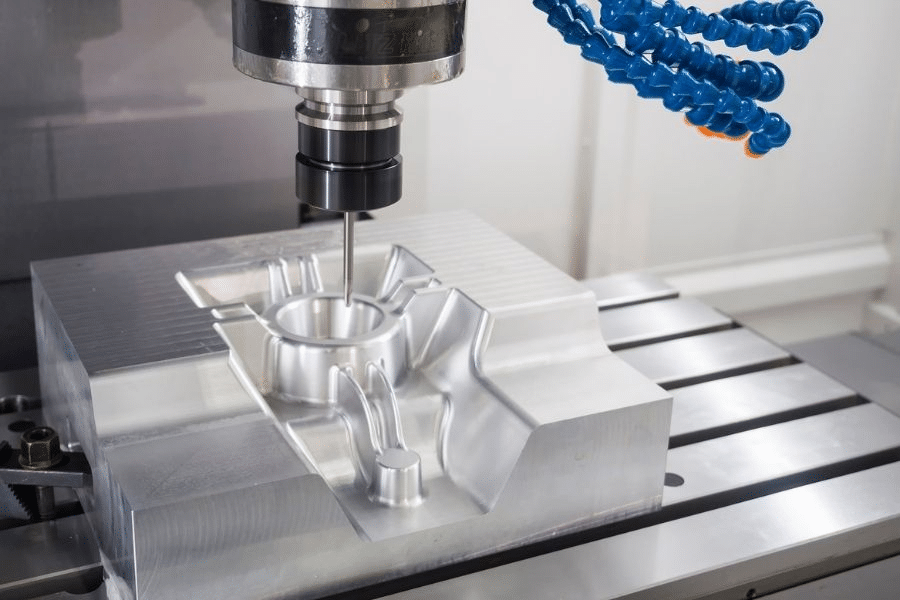
The practical experience shows that 0.5-1.2mm of die castings of aluminum on non-critical elements and 0.8-1.5mm of datums in non-vital parts have a sweet spot- codified during the initial stage of DFM cooperation. Under allowance is often the root cause of the most expensive rework cost as it causes what would otherwise be a foreseeable finish process to become an emergency defect hunt.
To dive deeper into balancing these trade-offs, learn more about machining allowance design.
Production Consistency as a Cost Reduction Mechanism
Production consistency is not a quality buzz word, it is a direct CNC machining cost drivers reducer.
In instances where a process produces parts within a narrow statistical range that repeat, yield increases to 99 percent or higher, inspection sampling may change to AQL-based sampling, and downstream assemblies have fewer problems fitting. Variation on the other hand drives up the sampling rates, more frequent tool offsets, and always-on-target SPC charting -all of which consume work hours and delay throughput.
In long-run programs (i.e. 50,000+ units), a distinction between a process capability of ±0.02 mm versus a process capability of drifting at ±0.08 mm can result in hundreds of thousands of dollars saved in rework and containment costs. Predictability is purchased by consistency, and predictability is the key to complete control over the manufacturing cost.
For practical approaches, see improving production consistency.
Variation Control and Its Cost Implications
Control of Variation and Its Cost Implication.
The largest hidden multiplier of manufacturing cost is an uncontrolled variation.
Process parameters drifted (say due to tool wear, coolant temperatures varying, fixturing flex, raw casting variations, etc.) cause CpK to decrease, and the ends of the distribution begin to create nonconformances. Every escape has the potential to escalate the likelihood of losing customers, containment measures and corrective CAPAs.
Mathematically stable fluctuations transform the economics: the predictable variability means that one can afford to sample relaxingly, have a smaller buffer stock and deliver just in time with confidence. creeping variation pressure that drives up inspection and scrap; runaway processes cause a straight cost upsurge of emergency overtime and rush freight.
The following is a fast comparison of the effects of variations conditions on costs:
| Process Condition | Cost Outcome |
| Stable variation | Predictable unit cost |
| Drifting variation | Rising inspection and scrap |
| Uncontrolled process | Cost escalation |
Mastering this requires disciplined CNC process control for die casting—more details here.
Process Standardization as a Cost Strategy
Bureaucracy Process standardization can be described as the most effective cost efficiency levers of CNC machining in the long term.
Standardized work instructions, tool libraries, fixturing concepts, and program templates remove variability as a result of operator to operator differences or ad-hoc configurations. A smaller number of distinct configurations will result in reduced changeover duration, time lost in waiting of the first piece approval, and probability of programming errors.
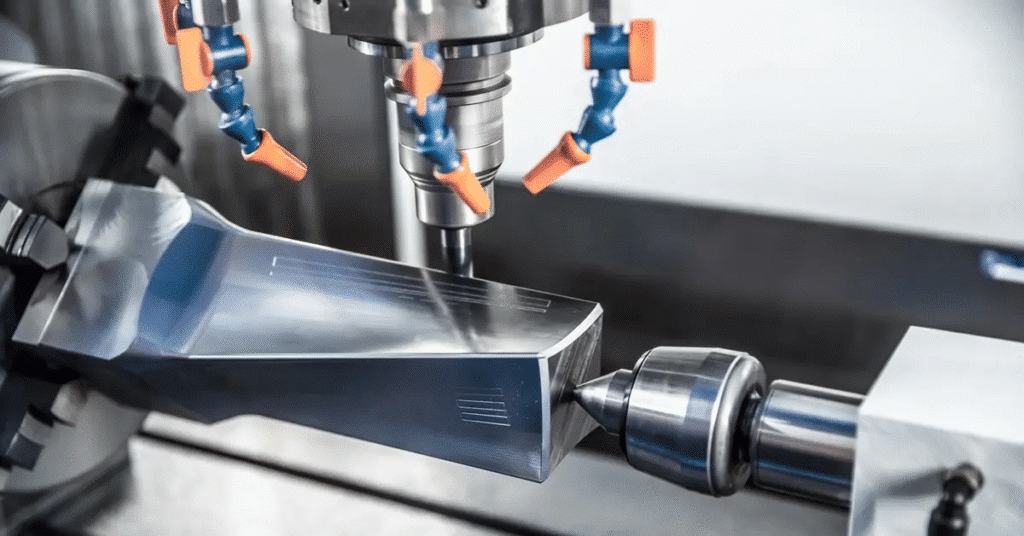
In a multi-year initiative, standardization simplifies: learning curves level off, tribal information gets documented, and the new engineers get to speed up. The outcome is reduction in the total cost because of repeatability as opposed to continuous reinvention. Explore why this matters in OEM contexts in this post on process standardization in CNC for die casting.
Engineering Change Response and Cost Exposure
Changes to engineering are unavoidable in product development- however, it is the machining strategy responsiveness that determines the potential financial damage caused by changes.
A supplier whose ECN implementation is slow (long re-programming, re-fixturing and validation time) will put the OEM at risk of longer containment and stocking of superseded parts and possible production halts. The capability of responding fast and in-house allows reducing the damage by ensuring that new setups are validated and flow is resumed as soon as possible.
The price difference in this case is not insignificant: a stranded ECN can mean weeks of having two inventories on hand or it may have to use premium air transport to procure spare parts. Engineering change response time for die casting often separates resilient supply chains from fragile ones.
Common OEM Cost Misjudgments in CNC Machining
When assessing the CNC suppliers, OEM teams often commit the same pitfalls:
- Assuming that only quoted unit price is important and disregards process stability facts.
- Taking machining as a transactional, even the service, instead of a system-related ability.
- Weak forecasting cost drivers at the downstream such as variation-induced rework or change-order latency.
These are not problems of vendors, but problems of awareness. The low quote may conceal instability that will wipe out all the program margins much better than a moderately higher stable rate will do so.
How OEMs Should Evaluate CNC Machining Strategy
In sourcing, change the discussion to cost-stable processes in lieu of price.
Request suppliers to prove:
- Long-term Cpk SPC charts of vital characteristics.
- Good definition of their major CNC machining cost drivers and cost-reduction strategies.
- Co-operation among quality systems, scheduling discipline and change-controlling workflows.
Find partners who are able to explain how their strategy secures total manufacturing cost through the lifecycle- not only the machining cell.
Conclusion — Cost Is the Result of Strategy, Not Price
In CNC machining of die casting parts, the overall cost of manufacturing is based on strategic decisions in the process of machining, rather than the найcomes machining price offered. Savings on short-term basis due to unstable or not adequately regulated methods virtually always dissipate by way of re-work, time wasting and quality escapes. Disciplined strategy creates long-term efficiency, which brings the actual profitability advantage.
Thinking systemically is a method that enables OEMs to outgrow price shopping and go to an actual total manufacturing cost control through concentrating on stability, variation control, standardization, and responsiveness.