
In the case of precision manufacturing, particularly in the field of aluminum and zinc alloy die castings, there is an urban legend: When a part requires more than one CNC configuration something must have gone wrong up the chain, perhaps in the design of the die, or in the planning of that die, or someone tried to cut corners. Based on the years of planning secondary machining of complex die cast parts as exported to Europe, North America, and Southeast Asia, I have witnessed the converse to be true much more frequently. Multi-operation CNC machining of die castings is required where single-set up machining fails to provide useful accuracy, surface integrity and process stability.
The truth is quite simple: die casting can make near-net-shape geometries fast and at a low cost but it can hardly make finished features to fine tolerances or with multi-face requirements without SEO. Putting it all in a single set up can be a risk, when it is common practice to introduce risks of vibration induced error, datum reference violation or excessive deflection of the tool, which far exceeds any perceived efficiency benefit. Rather than perceiving multi-operation CNC machining as an inefficient practice, process planners who are experienced look at it as a natural product of an honest design and practical necessity.
When used on the die cast components, single-setup CNC machining is limited relatively quickly compared to what many might think.
Die cast components come with as-cast finishes that are slightly different in the flattening of surfaces, angles of draft and solidification stresses. Despite the sophisticated fixturing, all the features needed might require accessing a given feature in a single clamping, which in turn can be compromised with awkward tool angles which causes chatter, small reach which results to incomplete cuts, or tolerance stacking created by datum shift. The first obstacle is accessibility, like features on either side of the part, deep pockets, or undercuts cannot be accessed without re-positioning the part.
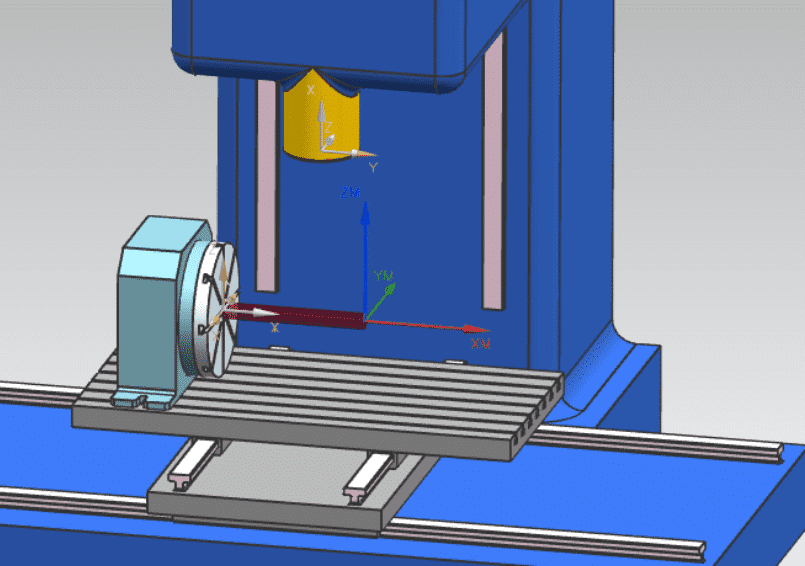
Single-setup also gets further limited by tool reach and engagement. Deep-feature tools must be long; otherwise, they are deflected during use and lack proper evacuation of the chip, particularly with the A380 aluminum which is highly difficult to evacuate. The Datum constraints make the problem even more difficult: primary datums (which are most often as-cast surfaces), in conflict with secondary features, imply that positional tolerances along more than one axis cannot be held in a single configuration.
Most importantly, the one-setup solutions become riskier than reduced. Aggressive clamping of the part may warp any thin parts, and aggressive clamping in the part may welcome movement. We have seen examples of single-set up insistence causing the scrap rate to increase 15-20 per cent due to vibration or thermal growth- errors that are prevented by sequential operation with re-clamp ordering.
In real production environments like our CNC machining workshop, more machining centers handling post die casting processes per day, planners will regularly evaluate whether the geometry of a part can actually allow single setup reliability before making a commitment. Where it fails, multi-setup is the choice of discipline, rather than the plan B.
Typical Conditions That Require Multi-Operation CNC Machining
The multi-operation CNC machining of die cast parts is motivated by the given circumstances under which the single-set machining is unable to maintain the demanded accuracy or surface finish without an unacceptable level of risk.
Some of the most common types of requirements and the reason why one arrangement fails and the kind of operations that would result are summarized in the table below:
| Requirement Type | Why One Setup Is Insufficient | Resulting Operation |
| Multi-face features | Limited tool access to opposite or angled surfaces | Re-clamping for multi-side access |
| Mixed tolerances | Datum conflicts between tight positional and looser as-cast references | Sequential machining to establish independent datums |
| Surface integrity | Tool engagement limits prevent consistent finish across large areas | Separate roughing and finishing passes |
| Deep cavities/pockets | Tool deflection and poor chip evacuation in extended reaches | Staged depth removal with reorientation |
| Thin-wall intersections | Clamping forces distort features during heavy cuts | Light passes in multiple setups |
As a convenient example, consider multi-face features: a car bracket with holes to be mounted on its perpendicular faces and an accurate bore on the bottom. Machining in a single set-up requires extreme angles of fixturing, or long tools, typically positional errors are larger than ±0.02 mm. Re-clamping can be used in each face to allow the best toolpaths and stiff structures.
Mixed tolerances are often common with structural housings – tight true-position concerns on fastener patterns and more generous flatness to mating surfaces. Trying everything with a single datum per risk supports as-cast variations into features of interest, series operations allow planners to create new, machined datums as they proceed.
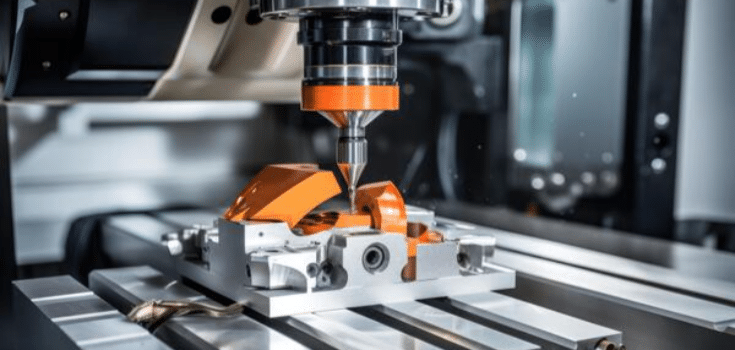
A roughing is frequently separated by finishing demanded by surface integrity. Massive removal of material produces heat, vibration, which destroys finish; separating a light finishing pass leaves the Ra values below 0.8 0 without affecting cycle time in other places.
These are not indicators of bad planning but are the physics of machining die cast alloys, on which a reasonable process sequencing is determined by balancing removal speeds, life, and stability of tools.
Multi-Operation Machining for Thin-Wall Die Cast Parts
Multi-operation CNC machining of die cast parts with thin walls is practically always needed because the risk of deformation increases during the removal of the material.
Walls less than 2.5 mm (typical of lightweight vehicle or electronic housing) are not inherently stiff. Single-cut aggressive bending moments cause bending tolerances to exceed specifications or cause residual stress which causes warping after machining. Bores or bow flat sections can even be ovalized by moderate pressure clamping.
Removal of the material in stages is necessary: an early heavy roughing is done to remove bulk material on a symmetry basis, intermediate stages are done to eliminate stresses, and final light finishing stages are used to produce tolerances without deflection. Weaknesses can be repositioned with re-clamping between stages, and internal features can be safely accessed with re-clamping.
To understand these issues further, refer to our discussion in detail on CNC machining thin-wall parts for die casting.
Cosmetic and Decorative Components Requiring Multiple Operations
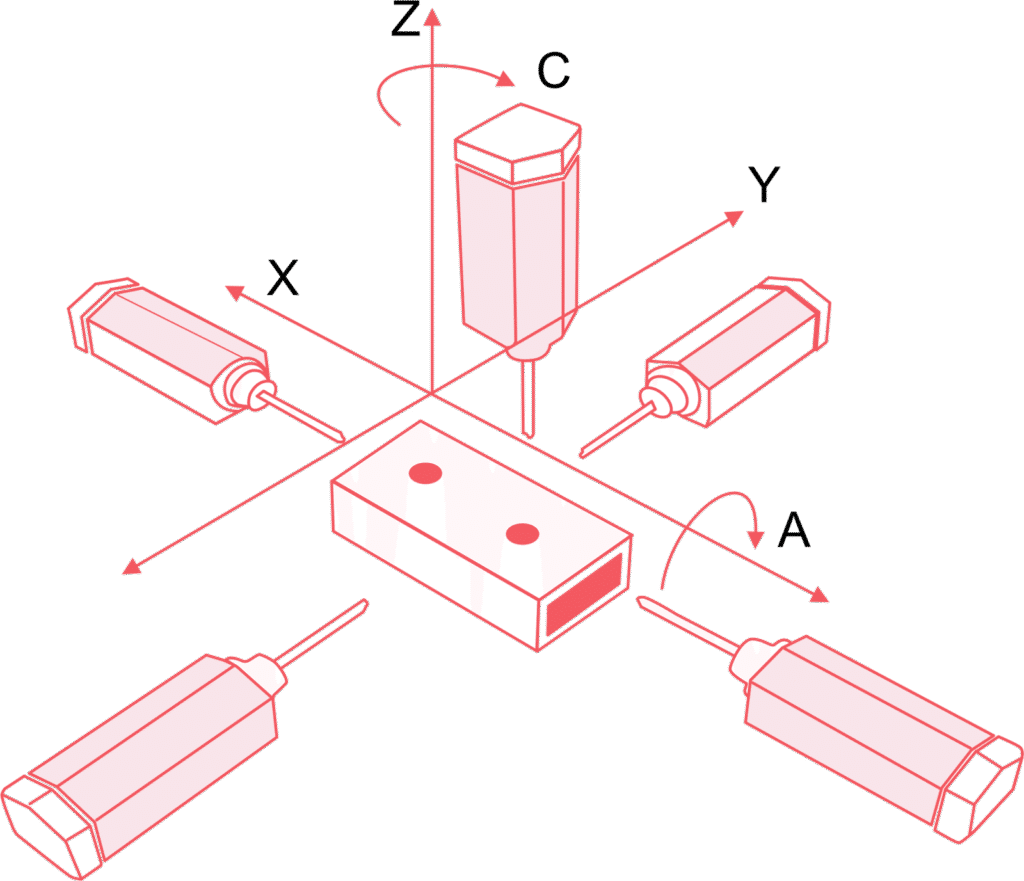
Die cast ornamental items, cosmetic items Cosmetic and ornamental die cast components require several processes to prevent appearance sensitive surfaces being damaged during structural machining.
Components such as perfume bottle tops, lighting strips, or consumer electronics casings typically have superficial exterior finishes such as polished, brushed or plated faces and internal bosses and threads that are functional. Structural machining (particularly heavy roughing) is susceptible to marks left by tools, vibration scratches, or embedding chips of the visible parts in case it is attempted in the same arrangement.
Process planners isolate processes: coarse and semi-finished functional geometry is isolated at an early stage, and final setups are devoted to smooth passes of cosmetic areas with high speed and low-force tools. This separation is surface preserving and tight internal tolerance preserving.
Find out more in our article about CNC for cosmetic components for die casting.
Structural Components and Precision Sequencing
Structural die cast components must be controlled with respect to their order of operation to ensure that they are stiff, their load paths, and that they are dimensionally stable during service loads.
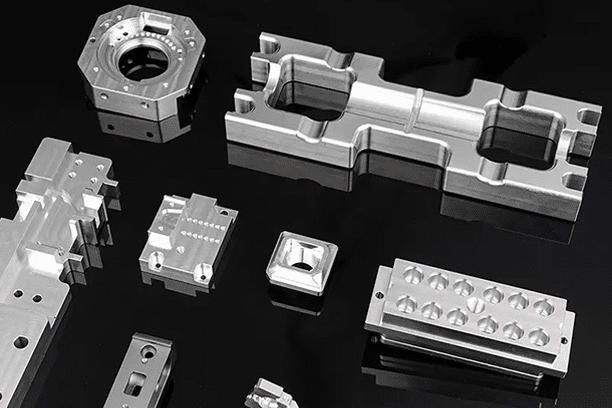
The housing of medical equipment, automobile brackets, or telephone cases can be loaded with hefty mechanical loads. The order in machining is important: a premature removal of the material in the high-stress areas decreases the rigidity of the parts, increasing the deflection in the next machining. On the other hand, the geometry is maintained by sequencing heavy cuts initially (as the casting is as stiff as possible) and then with accuracy light passes afterwards.
Load path considerations determine datum progression – primary structural datums are machined first, followed by secondary features referred to them. This sequencing is under control so that the cumulative error is minimized and the functional performance is guaranteed.
Related information about machining requirements for structural parts for die casting.
How Design Decisions Drive Multi-Operation CNC Machining
Initial design decisions have a significant impact on the need to have multi-operation CNC machining or a minimal one.
Positioning of features is very important: matching important bores and faces with natural parting-line datums minimizes re-clamping. Lack of datum continuity, where continuity necessitates the use of as-cast surfaces to provide tight positional control, virtually insures additional operations to provide machined references.
Sufficient stiffness can be enhanced by wall thickness consistency, generous fillets, and careful ribbing, and limit lightweighting to painful aggressive cases,—or with complex, multi-directional detail, sequencing.
Careful design phase cooperation with DFM usually eliminates redundant processes without losing functionality. To get practical advice, review our article on designing die casting parts for CNC for die casting.
Risks of Unnecessary Multi-Operation Machining
The need to engage in unnecessary multi-operation machining brings about risks that are avoidable and which have been taken care of by seasoned planners.
Handling is added each time a setup is added, increasing the likelihood of datum drift due to inconsistent fixturing or damage during transfer of parts. Accumulation of error – even a minor error in one operation multiplies in the next, and may even drive positional tolerances out of spec.
The lead times are increased when machines are waiting to be re-set and costs are increased due to additional labor, changes of tools and inspection procedures. It is possible that quality can be even less consistent: The more the touchpoints, the more avenues of thermal variation or operator-induced inconsistency.
The secret lies in the awareness- the multi-setup must be based on need engineering, rather than default process traditions. When multiplication of operations takes place without clear justification, it means that there is need to revisit the strategy of design or fixturing.
How OEMs Should Evaluate the Need for Multi-Operation CNC Machining
Multi-operation CNC machining should be viewed by OEM engineers and sourcing personnel through a functional need prism instead of few necessarily being superior.
Begin by a question: Does all the proposed operations serve a verifiable need – tighter tolerance, better surface, or access constraint – which cannot be reliably met with single-setup? Demand evidence: simulation or tolerance stack-up analysis data or previous run data indicating the reason re-clamping is not convenient.
Search disciplined sequencing: processes must be constructed sequentially (rough to semi-finish to finish), with datum strategy certain and risk analysis of deformation or drift. When a supplier offers additional measures which are not related to geometry or function, look further–there is really process discipline which is worth complexity, and will not be hiding behind it.
Finally, the best plans are cost-effective, risk-effective, and reliable without provoking unnatural simplicity.
Conclusion — Multi-Operation Machining Is a Design and Process Outcome
There is no good or bad in multi-operation CNC machining of die cast components it is the resultant condition of design, functional requirements and discipline, of process planning.
There are cases where geometry, tolerances, surface requirements, or structural requirements are beyond the capability of a single set-up, and multiple operations are proper engineering judgment, not inefficiency. The target is controlled sequencing which provides reproducible quality and risk and cost management.
By differentiating justified complexity and unnecessary steps, both the OEMs and manufacturers arrive at more credible results in a more demanding precision hardware environment.