
Why Part Consistency Is the Core Challenge in Mass Production
With high-volume production, being able to produce parts to pass the first-article inspection is only a part of the issue: it only means the difference between a successful program and a high-cost nightmare.
A large number of OEM engineers rejoice as prototypes or initial samples are found to be in spec and think that the process is now sealed in. However, the experience that mass production has in the real world tells otherwise: variation sneaks in after thousands or millions cycles. What initially begins with slight variation in dimensions, surface finish, or mechanical properties may build up to fit production in the assembly, scrap, re-work or even field failures.
The fault that actually takes place is seldom a single case. Rather it is process drift – small changes in temperature, pressure or material behavior over which shifts are compounded, wear of the tool or ambient changes. Even 0.05 mm difference in a manufacturing process such as automotive or electronics can put the brackets or housings in places they should not be to cause an increase in rejection rates downstream. The financial burden is obvious: the sorting/repair costs and the interrupted supply chains in case of the inconsistency of parts lead to increased costs as a result of wasted material, labor, and disrupted chains.
Precision as a Manufacturing System, Not a Single Operation
Exact die can increase the consistency of mass production by stabilizing the inputs of processes, tooling behavior, and discipline in the operations that are made during a production-cycle.
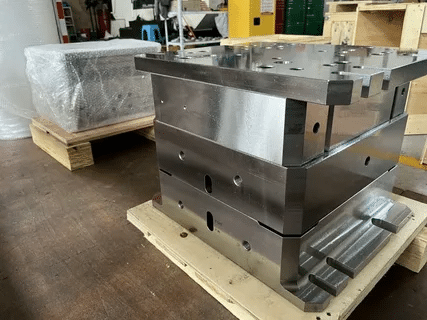
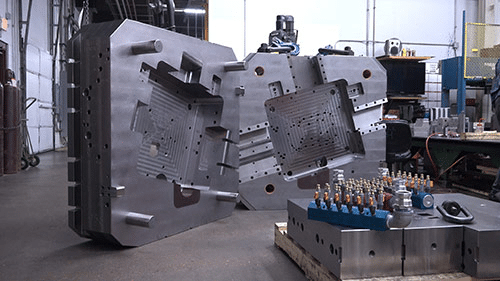
Having real precision is not about a single shot or some end result CMM check, but the product of the system. Since the design of mold and the preparation of material involves casting, trimming and secondary handling, each of these steps is in the range of repeatability. It must be a high-quality die (typically, H13 tool steel) that has to sustain a high-quality thermal balance cycle cycle in cycle. Shot endpoints, extracting of parts robotically, and regularly-applied lubrication are automated controls that avoid introduction of variable scatter.
When it comes to standardizing on the operating procedures, there is no compromise. The operators adhere to standard melt hold, die preheat and spray pattern. Where these disciplines are, fluctuation remains within narrow limits. In context, mature facilities attain CpK values which are above 1.67 on critical dimensions – not through heroic inspection, but by designing stability at the upstream. As an OEM aluminum & zinc die casting company with in-house tooling and full-process control, we’ve seen firsthand how fragmented systems lead to drift while integrated ones deliver predictable output.
Key Process Variables That Affect Die Casting Consistency
This is based on strict control of the upstream variables long before any part is taken to inspection and thus the basis of consistent die casting.
The following are the key variables that bring the variability, their effects and measures of control:
| Process Variable | Impact on Consistency | Typical Control Method |
| Melt temperature | Too high causes excessive shrinkage/porosity; too low leads to cold shuts or incomplete fill | Furnace controls ±5°C; real-time monitoring and alloy-specific holding protocols |
| Injection speed & pressure | Inconsistent speed creates turbulence (porosity) or incomplete filling; pressure drift affects density | Multi-phase profiles (slow → fast → intensification); servo-driven machines for repeatability |
| Tool (die) temperature | Uneven or drifting temps cause warping, solder, or dimensional scatter across parts | Closed-loop water/oil circuits; preheat to 150–250°C depending on alloy; cycle-consistent spray |
| Cooling time | Short cooling increases residual stress/warpage; excessive extends cycle without benefit | Optimized timing via simulation; uniform cooling channels to balance solidification |
| Lubrication consistency | Inconsistent spray leads to soldering, staining, or ejection issues | Automated robotic sprayers; precise volume (±5g/cycle) and pattern control |
Preventing downstream surprises is done through controlling these upstream. An example is of constant melting temperature, which guarantees consistent fluidity, minimizing fill defects. Tight injection profiles reduce the number of air entrapments and the uniformity of die temperature reduces the solidification shrinkage- imperative to dimensional stability of thin-wall parts.
Application-Specific Consistency Requirements
Different things denote consistency depending on the end-use, structural integrity in one instance, cosmetic finish in another.
Various applications require (or can get by with) different degrees of dimensional, mechanical or surface repeatability:
| Application | Consistency Priority | Risk of Variation Impact |
| Automotive structural parts | Tight dimensional & mechanical (strength, fatigue) | Assembly misalignment, safety concerns, high rework/scrap |
| Lighting housings | Surface finish & thermal stability | Aesthetic defects visible, heat dissipation issues |
| Home appliances | Cosmetic uniformity & thin-wall repeatability | Customer returns for appearance, fit problems in assembly |
Any change in wall thickness or porosity may affect the capability to carry a load in structural automotive parts. In lighting or appliance housings, flaws on the surface or minor deformities become visible instantly to the end-users. Knowledge of these priorities is used to tune processes, e.g. structural parts porosity control is more important than surface flow visible housings, see our automotive die casting solutions and aluminum die casting for lighting housings.
Manufacturer Selection Directly Impacts Consistency Outcomes
Not all suppliers are able to maintain accuracy on a large scale, system maturity and discipline will distinguish trustworthy partners with sporadic partners.
Numerous stores are good at selections but fail with quantities. Tool wear is wearing faster without preventive maintenance; process monitoring can be manual instead of automated; training of the operator can be various. A manufacturer having closed-loop controls, tracking of statistical process and tighter window of discipline at IAF levels contributes tight windows on the long run. Find indications of perpetual CpK, reduced scrap rates, and solid root-cause systems. In order to make an effective assessment, consult our guide to how to choose a die casting manufacturer in China.
Process Choice Influences Precision and Repeatability
The consistency can be held more or less tightly depending upon the material used it is not the same with aluminum and zinc which act in opposite ways.
Aluminum (e.g., A380, A360) is much stronger-to-weight, but with a higher shrinkage (0.5-0.6) and sensitivity to thermal gradient and dimensional stability in complicated geometries is more difficult. Zinc alloys (e.g. Zamak 3/5/7) have reduced melting points, reduced shrinkage (typically 0.4-0.5%), better fluidity and tighter as-cast tolerances, usually down to ±0.025 mm per 25 mm without additional work. Zinc is better when using small and complex components that require cosmetic performance; aluminum in larger, structural components that do not need much weight reduction.
The selection has an impact on the repeatability that can be attained: zinc tends to provide a finer detail and reduced drift during high-cycle operation whereas aluminum would need even stricter thermal control. Speaking in more detail, check our post on aluminum vs zinc die casting.
Why Precision Die Casting Reduces Long-Term Production Risk
Engineering precision at the system-wide level results in multiplied benefits throughout a program lifetime.
Scrap and rework are reduced- the processes are stable due to reduction of porosity rejection, part distortion or out-of-tolerance dimensions. These are assembly lines that are smooth with predictable fit and operation that result in a decrease in line stoppages and quality holds. Stabilize long-term measures: decreasing PPM defects, stable mechanical properties (tensile, hardness) and decreased variability in fatigue or thermal performance. The outcome is reduced cost of ownership, reduced engineering changes and increased confidence of scaling between pilot and full production.
Conclusion — Consistency Is Engineered, Not Inspected
Part consistency in mass production does not come as a result of increased inspection; it is obtained instead through designing a precision into all levels of the die casting process.
Checks at the end of the line detect the problems when they are already in place; the only way to be really repeatable is to be able to have upstream stability, i.e. controlled variables, disciplined operations and mature systems. Stability of process inputs makes variation insignificant, risks diminish and production will be predictably dependable. That is how one is able to make it in large volume runs and to succeed in it.