
failures can practically be always linked to unfinished requirements, ambiguous specifications, or unjustifiable assumptions which never stand the test as the tooling is sunk. Many of our OEMs continue to believe that they can solve significant problems once tooling is completed or once samples have been run. As a matter of fact, in the majority of geometry, material behavior, and process constraints, die casting locks out early. No take-on board alterations afterwards are cheap, time-consuming, or even impossible.
Cost, time, and quality risk is greatly minimized through OEM buyers specifying what they need, how they want it integrated, and what constraints they can place on the manufacturing tool. This is the largest lever of project success even in the beginning.
Why Pre-Project Preparation Determines Die Casting Success
Die cast tooling is essentially permanent after it has been cut. The mold is a significant dead investment, and changes in the mold including hardening or post production test are expensive and involve long durations of inactivity. Even minor ambiguity at the start of production (e.g., wall thickness, parting lines, draft angles, or critical features) will nearly inevitably propagate to later stages: porosity (due to poor fill) or flash (which requires additional trimming) or dimensional drift (which requires heavy machining rework).
I have witnessed projects in which poor definition of tolerancing or undefined functional requirements resulted in 30 to 50 percent additional secondary operations than forecasted, out of control budgets, and schedules. The capability of the supplier is important but process expertise can never be used completely to provide a solution to the requirements that were not clearly stated at the very beginning. The sooner you get in agreement on manufacturability the more likely the result.
Understanding the Role of the Die Casting Manufacturer
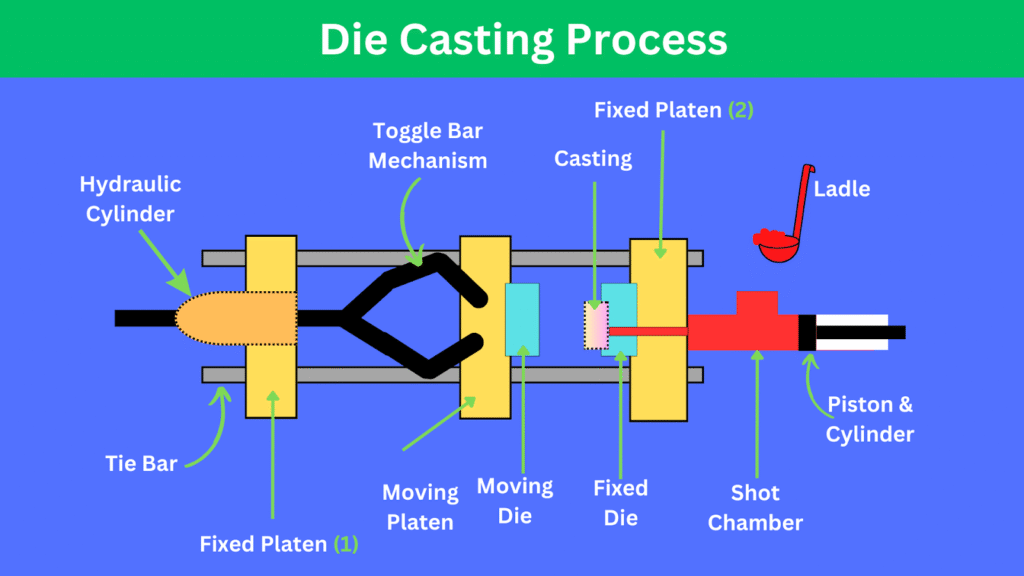
The die casting company is not a parts supplier– they are a process partner whose contribution is the determiner of feasibility, cost, and time. Making judgments about them consists in taking an extra step to understand what they are capable of, not only in price, but in the strength of their entire project: alloy handling, shot control, in-house secondary operations, laboratories and familiarity with your industry.
This collaboration begins with the joint DFM reviews wherein they indicate risks such as thin walls, which are likely to be soldered, or the presence of features that are highly likely to trap gas. The fact that they are treated as part of your engineering family when the planning comes about detects problems that diagrams cannot detect. For reliable aluminum and zinc die casting manufacturer options with proven integration across casting and machining, early collaboration makes a measurable difference.
Defining Post-Casting Machining Requirements Early
Die casting provides good net-shape capability, with little eliminated machining being the order of things. Secondary operations are required on most functional parts to achieve tight tolerances, threaded holes, sealing surfaces, too small, too precise to cast.
Typical areas requiring CNC machining after die casting include bores (±0.01 mm or better), flatness on mating faces, or complicated undercuts (±0.01 mm or better). One of the traps is to underestimate this scope: the teams believe that in near-net-shape there is little post-work and at the end they find out that 4060 percent of the part prices is staffed in the machining. Specify following die casting prior to machining: enumerating critical features, tolerance bands, GD&T callouts. This allows unexpected eventualities when oversized or excessive stock in terms of size is received.
Choosing Between Die Casting and CNC Machining for Key Features
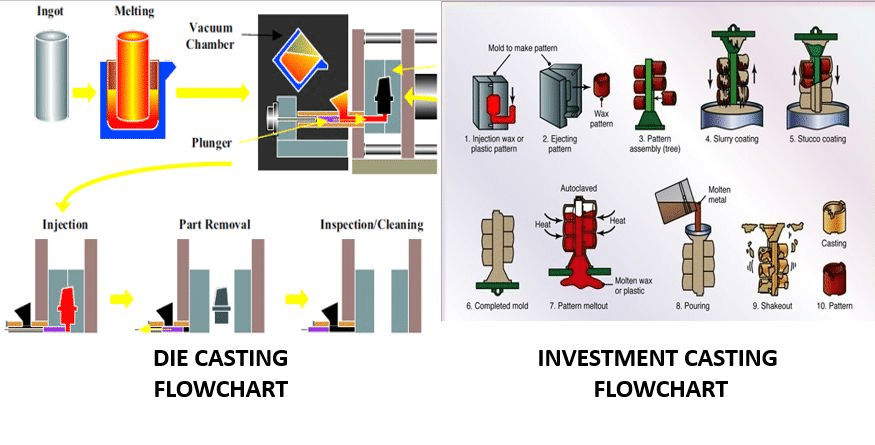
There are features that are incorporated in the die, those that are machined more effectively, and making this early determination revolves around cost, reliability and lead time. Casting is good with intricate forms, fine walls and small features, but with thermal contraction and wear of die. Machining provides closer accuracy and repeatability even on critical datums.
These trade-offs are apparent: cast threads or bosses economize material and cycle time at the expense of possibly requiring chasing; machined marks are expensive on a per-part basis, but are consistent. To many OEMs the smartest way is a combination of both, cast the bulk shape, machine precision elements. Reviewing die casting vs CNC machining trade-offs during concept phase helps balance upfront tooling against ongoing production economics.
Integration Strategy Impacts Lead Time and Cost
Fragile sourcing characteristic of a different supplier of casting, machining, finishing, and assembly creates handoff risks: datum misalignment, tolerance stack-up, latent communication and finger-pointing on failures. One location of responsibility incorporating die casting manufacturing simplifies the entire process of designing a mold through integrated die casting and CNC machining.
In scenarios that include casting and CNC on the same roof, the fixtures align automatically, lead times can reduce (by weeks), and the amount of rework is minimal since problems are identified within the factory. Integrated production planning prevents the concealed expenses of two (or more) logistics chains and process incompatibility.
Application-Specific Requirements Must Be Defined Upfront
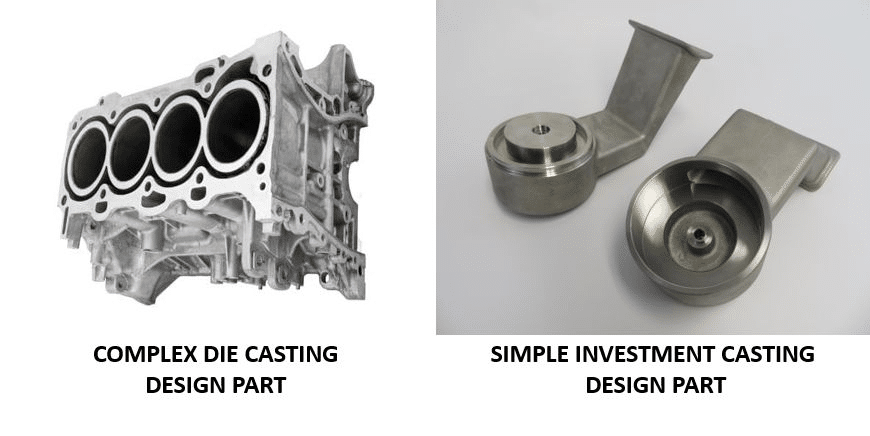
Each end-use has special requirements which will need to be clarified prior to tooling. Lack of expectations result in the production of parts which are not on the field.
Here’s a quick breakdown:
| Application Type | Typical Requirements | Risk if Undefined |
| Automotive structural parts | High strength-to-weight, fatigue resistance, crash energy absorption, tight GD&T on mounting points | Premature failure, safety recalls, excessive weight |
| Lighting housings | Thermal conductivity for heat dissipation, surface finish for reflectivity/aesthetics, IP-rated sealing | Overheating, poor light output, corrosion in outdoor use |
| Home appliances | Corrosion resistance, food-grade compliance (if applicable), vibration damping, consistent cosmetic finish | Early degradation, noise issues, aesthetic rejects |
For automotive die casting solutions, can be selected to manage the heat in the case of lighting housings and durability in the case of appliance components due to repeated thermal cycles. Spell them out in the RFQ package- do not suppose that the supplier will make an educated guess.
Common OEM Assumptions That Increase Project Risk
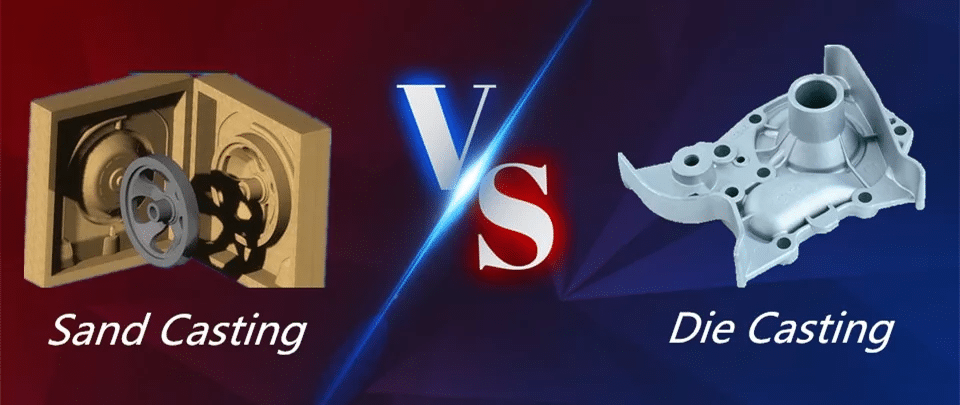
Some few repetitive misunderstandings are more of a pain than nearly everything.
To begin with, there is the idea that tooling is modifiable in the future with ease. Indeed, sometimes, it is necessary to weld, re-machine or replace the slide or cave entirely, something that is weeks and thousands of dollars, without considering the extra time spent.
Second, it is possible to assume that machining requirements can be projected following the sampling. Things may work on early prototypes, but production dies are different because of thermal effects; waiting until samples to define post-work leads to rushed re-quotes and timeline slips aluminum die casting for lighting housings.
Third, leaving it to a single supplier to do it all without coordination. And even competent shops have advantages–some are fine thin-wall casters, some fine machiners. Making unverified assumptions in the blind belief that vertical integration is all that is required results in gaps.
Conclusion — Preparation Is the Most Cost-Effective Decision OEMs Make
The success of die cast is hardly influenced by a tooling speed or a proposed price but by the degree of requirements elaboration prior to implementing the project. An upfront investment in specifications, DFM cooperation, machining plan, integration plan, and needs based on application rewards in a stable production, cost control, and reduced surprises.
The projects which go well are not the projects which have the glittery-eye quote but those which have the engineering and sourcing arming early in to liaise design intent and manufacturing reality.