
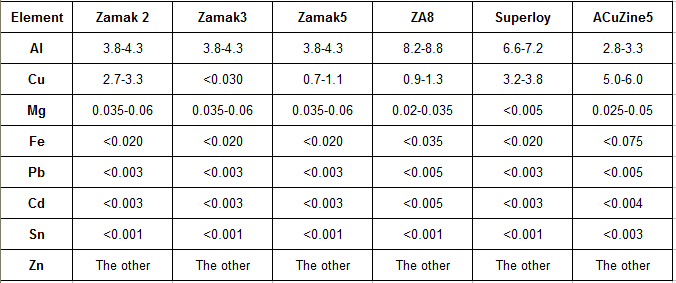
ZA-8 does not inherently exhibit any advantage over conventional Zamak alloys such as Zamak 3, 5 or 7. Most OEM engineers believe that the specification of increased strength zinc alloy would automatically result in increased reliability in the load-bearing parts, but the truth is not that simple. When dealing with structural applications, where the elements are exposed to high tensile or shear (or compressive) forces, the actual determining factors are the behavior of the alloy to variations in the process, the susceptibility to internal dislocations, and its dimensional integrity over time. ZA-8 has enhanced strength and creep resistance over conventional Zamak alloys, however this only holds value in structural components in which mechanical applied loads warrants more organization of control and stepped up manufacturing discipline.
Unsuited alloy choice may result in tolerance build up, unforeseen amplified porosity under stress, or creep that would destroy fit as time progresses. In the context of firm selecting zinc die casting suppliers, it is important to reconcile the alloy selection with the real-world manufacturing capability is paramount, particularly where structural functionality is an absolute requirement. When sourcing high reliability zinc components, a possible way out is to collaborate with long-established manufactures that observe strong safety standards, professional zinc die casting services in China often provide the process maturity needed for ZA-8 success.
What Is ZA-8 and How Does It Differ from Zamak Alloys?
Practically it exists because engineers required a hot-chamber-castable zinc alloy that had less than compromising worsening mechanicals than the standard Zamak family in a matter of leaps to cold-chamber ZA-12 or ZA-27.
It is a zinc-aluminum alloy containing about 8.0–8.8% aluminum, 0.8-1.3% copper (according to ASTM B86) v.s. the traditional Zamak alloys, around 4% aluminum (Zamak 3/5/7). The additional aluminum makes it stronger and more frank, less dense, and more copper improves the creep work. This renders ZA-8 the best alloy capable of running on hot-chamber equipment- the equipment most zinc die casters utilize when producing Zamak in large amounts.
Conventional Zamak alloys (particularly Zamak 3 and 7) emphasize great fluidity, dimensional stability, and construction of the general-purpose or cosmetic part. ZA-8 exchanges the balance to structural ability at a minor cost of decreasing fluidity and increasing process parameter sensitivity.
| Alloy | Primary Strength Advantage | Typical Structural Use | Key Trade-Off |
| Zamak 3 | Balanced tensile/yield, excellent stability | General brackets, housings, non-critical loads | Lower creep resistance under sustained load |
| Zamak 5 | ~10-15% higher tensile than Zamak 3 | Moderate-load automotive/equipment parts | Reduced ductility vs Zamak 3 |
| Zamak 7 | Similar to Zamak 3 but better fluidity | Thin-wall, high-precision non-structural | Minimal strength gain |
| ZA-8 | 20-30% higher tensile/yield than Zamak 3 | Load-bearing levers, brackets, supports | Tighter process window, higher defect risk |
Mechanical Strength and Load-Bearing Performance
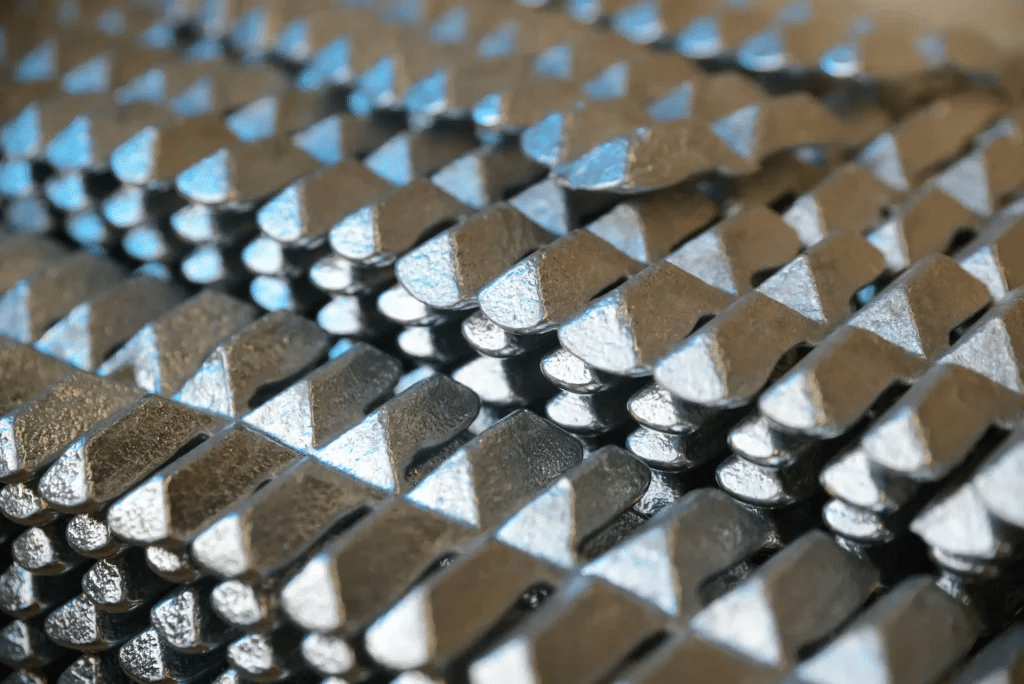
In actual structural testing, ZA-8 has shown 20-35 per cent. greater tensile and yield strength than Zamak 3 with significantly better creep behavior under constant load, which is significant with parts such as mounting brackets or housings exposed to constant stress.
Normal values (die-cast condition):
| Property | ZA-8 | Traditional Zamak (e.g., Zamak 3/5 avg) | Structural Impact |
| Ultimate Tensile Strength (MPa) | 374–386 | 283–331 | Higher allowable stress in tension/shear |
| Yield Strength (0.2% offset, MPa) | 290–317 | 221–269 | Better resistance to permanent deformation |
| Creep Resistance (under load) | Good (improved) | Fair to moderate | Less elongation over time in sustained-load scenarios |
| Elongation (%) | 6–10 | 7–13 | Slightly lower ductility—trade-off for strength |
In the case of load-bearing components of zinc die casting, ZA-8 proves its worth when the designs demand increased working stresses or higher operating temperatures (up to about 120 o C short time). When used in low-cycle applications or below that threshold, Zamak 5 is capable of achieving similar performance without as many headaches.
Thin-Wall Design Constraints for Structural Parts
Increased strength does not necessarily permit thinner walls in structural zinc die casting -ZA-8 reduced fluidity relative to Zamak 3/7 implies aggressive wall reductions (at a wall thickness of less than -1.2 -1.5 mm in complicated shapes) take their toll on incomplete fill, cold shuts or flow lines forming stress risers as the structure loads them.
Practically, we have observed a 10-20% thinner cross-sectional part (in practice) to be structurally sound at walls with ZA-8s like their Zamak counterparts; with the key difference being in optimized gating, increased injection pressures, and the thermal control of the die. Going beyond that welcomes flaws that eliminate the power gain. To be realistic, review our detailed post on thin-wall zinc alloy die casting design limits.
Tolerance Capability and Dimensional Control
ZA-8 is more likely to shrink (approximately 0.7-1.0 compared to 0.5-0.7 in Zamak 3) and respond to variations in thermal gradients on solidification which can cause greater range of variation in critical dimensions, particularly in larger structural castings.
Repeatability is lost in the event of drift of melt temperature, die temperature or cycle time. We have discovered that having tight tolerances (1/32 or -0.02 -0.05 mm on functional features) necessitates more rigorous examination of the process than with conventional Zamak alloys. When fit is very crucial to structural components, this can imply the incorporation of in-die checks or post-casting gauging. Learn more in our guide to typical tolerances for zinc die casting parts.
Defect Risk in Structural ZA-8 Applications
The increased susceptibility of aluminum and copper content in ZA-8 to internal porosity, shrinkage voids and flow defects further complicates the situation since such items Zamak 3 forgives easier because it has greater fluidity.
Even minor internal voids inherently serve as stress concentrators in load carrying applications to accelerate fatigue or brittle fractures under either cyclic or continuous loads. When process parameters are not dialed in at an exact point, higher defect density is easily spotted using X-ray inspection of ZA-8. The effects of structural loads enhance the outcomes and thus prevention using controlled filling and venting is not open to debate. See our breakdown of common defects in zinc alloy die casting for practical mitigation steps.
The Role of In-House Quality Inspection for Structural Parts
Structural Zinc components, in particular ZA-8, require much more rigid inspection guidelines since the indications on the surface are rarely complete in their reporting about internal integrity.
In-house CMM, X-ray, and tensile testing are very important to ensure we can detect the early occurrence of porosity or shrinkage to provide data to process corrections. Absent this closed-loop control ZA-8 benefits are lost rapidly. Our approach to in-house quality inspection for zinc die casting has proven essential for consistent structural performance.
When ZA-8 Is the Right Structural Choice — And When It Is Not
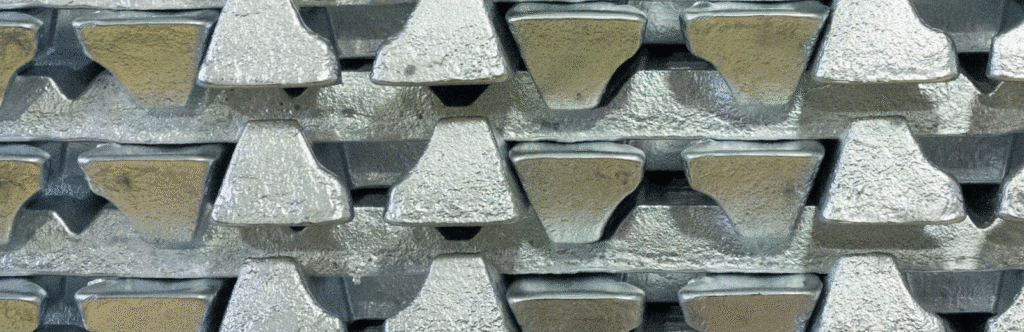
ZA-8 shines in targeted applications, but it’s overkill (and riskier) in many cases.
| Structural Requirement | ZA-8 Recommended? | Engineering Rationale |
| High sustained tensile/shear load | Yes | Superior yield and creep resistance justify tighter controls |
| Moderate load + complex/thin geometry | Sometimes | Fluidity trade-off; Zamak 5 often better balance |
| Long-term dimensional stability critical | Conditional | Good creep, but process variation can offset gains |
| Cost-sensitive, low-to-medium load | No | Zamak 3/5 deliver reliability at lower risk and cost |
| Elevated temperature (>100°C) exposure | Yes (short-term) | Better thermal stability than Zamak family |
Select ZA-8 where mechanical demand is obviously greater than what is available in Zamak and your supply chain is capable of exercising discipline. Otherwise, the conventional alloys can offer a better, less expensive way out.
Conclusion — Structural Performance Requires Manufacturing Discipline
Finally, ZA-8 selection has to be application-based, and not specification-based. Its high endurance and creep benefits exist in structural zinc die cast components which require but demand higher tolerances, defect prevention level and rigorous inspection. Its incorrect application in the non-critical functions is a waste of money and its application may lead to quality problems whereas under-specifying it in the high-load situations can negatively affect its reliability.Years of experience in the running of both families teaches: alloy performance can not be achieved outside of process capability. Choose manufacturers who are proven to have control over ZA-8 variables- this is where there is structural integrity.