
In zinc die casting, uniform quality is provided when inspection is not done as an independent or external event but rather incorporated into the manufacturing process. There are many OEM teams who continue to consider inspection as little more than a filtering gate of either good or bad when the process is finished in order to not ship defective components. However, that is a shortsighted way of looking at it: the larger picture is that a process requires preservation of stability, rather than merely conservation through detection.
The quality consistency is a system outcome, which is driven by the effectiveness of monitoring and real-time adjustment of upstream variables (melt temperature, injection parameters, cooling rates, die condition) to guarantee this. Post-production or outsourced inspection regardless of how stringent it is, comes too late to have any effect on those variables. It detects variation after it has happened but is not able to stop its occurrence during the subsequent cycle or batch.
One of the misunderstandings often held by sourcing groups is the theory that increased points of inspection or a third party checks and balances will provide a superior consistency. Practically, they tend to conceal the flaws on the processes they should address instead of treating them. In the sense of the inspection being part of the production flow, integrated at its critical points, it is a feedback which becomes corrective in its turn, enacting the data as control, instead of mere reporting.
For OEMs relying on precision zinc die casting parts manufacturing, mechanical behavior, and surface integrity directly in large-volume production by OEMs that are dependent upon this technique.
Why Quality Consistency Matters More Than Single-Part Accuracy
In case of zinc die casting, consistency is superior to one-time accuracy.
One component can be found to be within a closely controlled tolerance, but when the following hundred components are found different, owing to uncontrolled drift in alloy temperature or shot pressure, the whole assembly line is impacted – fit problems, functional, and warranty problems. OEMs value long-term stability, as variation adds to the costs: high scraps, re-work, sort, labor, and shipments and loss of supplier trust.
Swings in processes (e.g. operating, maintained, or foundry), as tiny as ±0.5 percent in zinc alloy composition or die temperature, cause accumulating defects and eventually undermine the reliability of automotive brackets, electronic housing parts, or cosmetic hardware.
| Quality Metric | One-Time Accuracy | Long-Term Consistency | OEM Impact |
| Dimensional Tolerance | Meets spec on first article | Holds across 10,000+ parts | Reduces assembly rejects and field failures |
| Mechanical Properties | Passes tensile test once | Stable strength/ductility batch to batch | Prevents premature part failure in use |
| Surface Quality | Acceptable finish on sample | Uniform porosity-free appearance | Lowers secondary finishing costs |
| Defect Rate | Low in initial run | Minimal recurring issues over time | Cuts warranty exposure and recall risk |
Limitations of Outsourced or End-of-Line Inspection
The zinc die casting processes cannot be stabilized through outsourced or end-of-line inspection due to late arrival of the feedback.
By the time ingredients get to an off-site laboratory or end sorting station, thousands of batches may have been processed already using the same uncontrolled variables causing extensive scrap or rework. Cause and effect (e.g. batching bad melt or die wear) are not fixed until the batch is finished which increases the cost and postpones corrective measures.
Delayed loops are also an impediment to traceability; the defects can manifest themselves weeks after they occur, making it hard to trace them to individual changes in processes. This is a risk of reoccurring problems and trust in supplier capacity is lost.
How In-House Inspection Integrates With Zinc Die Casting Processes
When implemented inside the organization, quality checks become a form of process control at major points.
Checks are done during melting, injection, solidification and early extraction as opposed to waiting until the parts are cast and trimmed. Operators/automation: Data is collected in real-time so operators will turn the furnace temperature up or down, speed of the shot, or spray of the die. This brings the loop to a close so that small drifts are not batched wide.
With eternal log-reading, a historical data of statistical process control (SPC) is created such that predictive changes can be made in advance before flaws develop.
| Inspection Stage | Inspection Purpose | Process Adjustment Enabled |
| Melt Preparation | Verify alloy composition and temperature | Adjust furnace settings or raw material ratios |
| Post-Injection | Check fill completeness and initial porosity | Tune injection pressure/speed |
| Trim & Initial Check | Dimensional sampling + visual surface | Modify die cooling or lubrication |
| In-Process Sampling | Monitor recurring patterns via CMM/X-ray | Refine mold venting or gate design |
Preventing Recurring Defects Through Inspection Feedback
Inspection feedback helps avoid the occurrence of similar defects by converting patterns into a process change.
In the case of flagged red flags on in-house systems such as cold-shuts in thin section or flash at parting lines, data is sent back straight to engineering. Root cause analysis is instant: was it melt low temperature? Insufficient venting? In the long run, this becomes more of a preventive effort than a response to fire, and the rate of defects and stabilized production is decreased.
The typical faults in zinc die casting frequently result out of these variables that are controllable; hence, their occurrence is prevented prior to any recurrence. (See our detailed guide on common defects in zinc alloy die casting for specific examples and fixes.)
Role of Advanced In-House Inspection Technologies
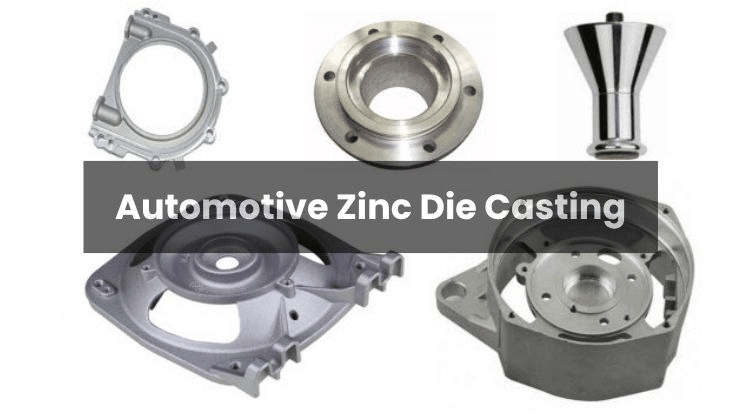
High-level home technologies identify defects that make external checks dysfunctional, particularly internal and dimensional tolerance.
X-ray systems expose porosity, inclusions or shrinkage cavities concealed within parts, which are essential in structural components where exterior appearance is fine yet integrity breaks down. CMMs measure subjected complex geometries and tight tolerances in more than one direction, before it gets to the downstream assembly.
When used internally, these tools offer real time feedback loops as opposed to placement of outsourced reports waiting. See our article on x-ray testing of zinc die casting parts (more on internal defect detection). For more on internal defect detection, read our article on x-ray testing of zinc die casting parts. Dimensional stability is covered in CMM inspection for zinc die casting parts.
Inspection’s Impact on Downstream Surface Finishing Quality
Early inspection within the company has a specific and direct positive effect on the success of downstream surface finishing.
The flaws of casting, such as minute porosity, cold flow lines, or difference in parting-lines, are amplified in plating, in powder coating, or in polishing. A component that passes through visual end-of-line checks might also blister or pit after treatment in case there is anything wrong within it. These are easily detected and corrected during casting to provide consistent quality bases and thereby minimizing finishing rework and scraps.
Explore zinc die casting surface finishing options and how surface treatment for corrosion protection in zinc die casting benefits from stable cast substrates.
How OEMs Should Evaluate a Supplier’s Inspection Capability
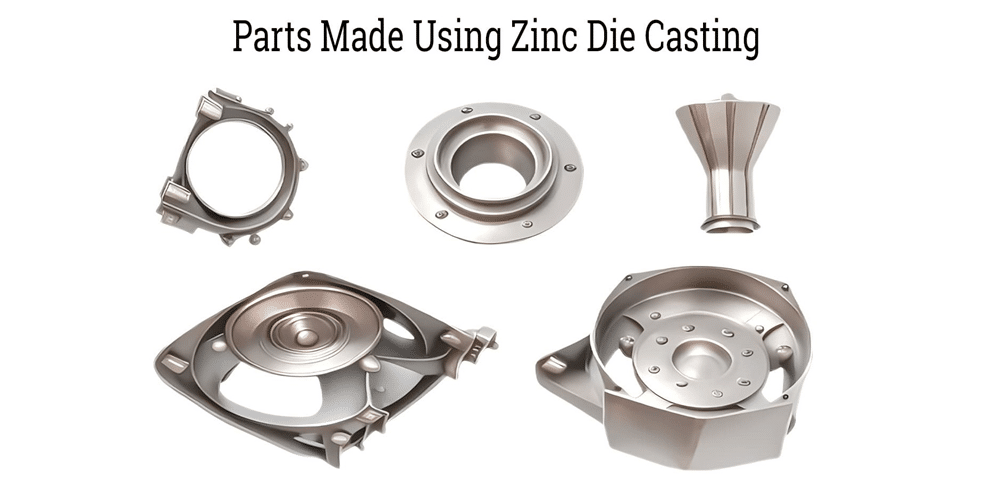
The depth of the integration should be used to determine the ability of suppliers to be inspected; OEMs should not only look at the lists of equipment and certificates.
Find indications that process is fed by inspection real time data use, SPC charts, corrective action records. Inquire: What is the rate at which you can change parameters depending upon inspection results? Do you measure trends of defects with time? Does X-ray/CMM data correspond to individual production sequence?
| Evaluation Factor | Strong In-House System | Weak Inspection Setup |
| Feedback Loop Speed | Real-time or same-shift adjustments | Days/weeks via external reports |
| Data Integration | Inspection data tied to process parameters | Standalone QC reports |
| Defect Prevention Evidence | Trending reduction in recurring issues | High rework/scrap without root-cause fixes |
| Technology Access | In-house X-ray, CMM, spectrometer | Outsourced or limited visual checks |
Common OEM Misconceptions About Inspection
There are numerous fallacies of many OEMs that disrupt the process stability and selection of suppliers.
The more you check the better it is- this is not the case when it is not more of a measurement but an evaluation. Substitution The process control is substituted by trying to uncover the problem; only in combination with other changes can the problem be resolved. Consistency via third-party inspection checks batches but does not stabilize the underlying process which forms variations.
Conclusion — Inspection Enables Control, Control Enables Consistency
The reason why in-house quality inspection is important is that it changes raw detection into mastering the process. To enable the real-time visibility and feedback required to stabilize the parameters and minimize variation in order to achieve repeatable results with each run, when incorporated in the flow of a zinc die casting, it provides the real-time feedback necessary to achieve these objectives.
Those OEM engineers and quality managers with a focus on this systems-level integration are less prone to surprises, reduced overall costs, and improved supply-chain reliability. Consistency is not an inspection result, but an occurrence when inspection is used as control.