
Thin-wall, zinc die casting is unique in the die casting process since zinc alloys have unsurpassed fluidity and solidification speed so that the walls can be very thin in comparison to aluminum or magnesium and still provide good detail and finish characteristics. Yet success isn’t automatic. The assumption that most OEM engineers make is that a prototype can fill at 0.6 mm or less means that the design will have a consistent scale in the production phase. It is a perilous fallacy. Practical repeatability is relied upon by cautious gating, behavior of alloys under thermal gradients, homogeneous cooling and prevention of aggressive thinning without consideration of process physics. This is a strength of zinc; it has to be thin, but one must exercise thick engineering judgment–not be even thinner.
As a point of reference on what our process can practically handle in applications with thin walls, see our zinc alloy die casting capabilities.
Why Zinc Alloys Support Thin-Wall Die Casting
The thin-wall work superiority of zinc is reduced to material physics with which other typical die casting alloys cannot compete.
Molten zinc possesses extremely low viscosity which allows it to travel over long distances over small pipes before freezing. Its melting temperature is approximately 385419 C (alloy dependent) much less than aluminum (around 660 C) or magnesium (around 650 C), thus heat loss to die is reduced compared to flow time. This acquires valuable milliseconds of full filling. Quick solidification then captures minute surface features and forms a robust, fine-grained, “skin” of the entire thin section, which often results in proportionate strengthening of thin walls as compared to heavy ones because of reduced porosity and enhanced microstructure.
These characteristics can be directly mapped into production advantages: thinner walls will consume less material and part weight, can integrate the functionality of features (ribs, bosses, lettering), and allow several cases to support complex geometries with no secondary machining.
| Material Property | Zinc Alloy Advantage | Thin-Wall Benefit |
| Fluidity (molten viscosity) | Highest among common die casting alloys | Fills sections <1 mm over longer flow paths |
| Melting point | Low (385–419°C) | Slower heat loss to die → better fill time |
| Solidification speed | Very rapid | Fine grain structure throughout thin sections |
| Shrinkage on cooling | Low and predictable (~1.0–1.3%) | Less distortion and sink in variable sections |
Practical Thin-Wall Design Limits in Zinc Die Casting
Never seek the faintest tiniest wall you can ever find in one of the specimens on a display stand or in a sales literature. Theory Production limits are lower than practicable maximum production limits.
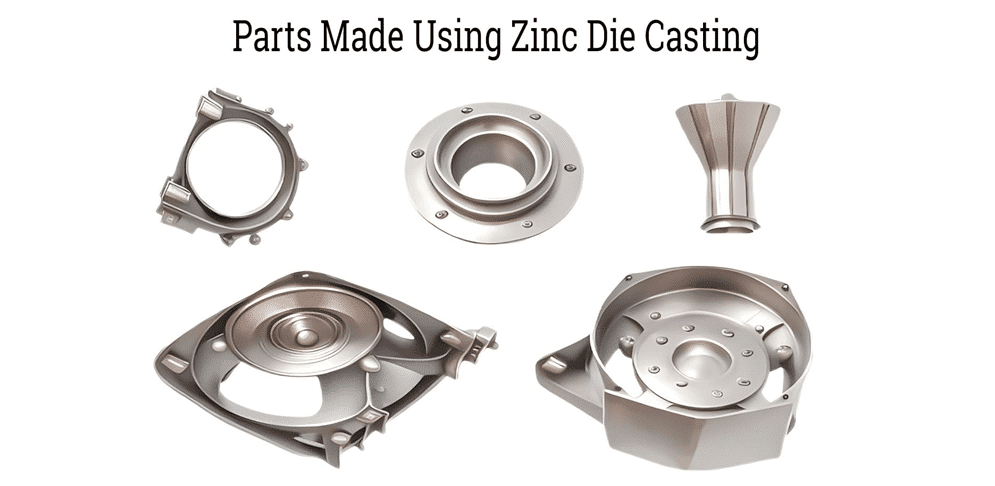
Even in small-to-medium parts (flow length less than 100 mm between gates) uniform 0.6 to 0.8 mm walls can be obtained using ordinary Zamak alloys and excellent tooling. This can be down to 0.5 mm in miniature or optimized hot-chamber systems, occasionally down to 0.4 mm or even 0.3 mm in very short-flow, small-area components- however it becomes counterproductive very quickly unless gating, venting and die temperature is set directly onto the money. The cosmetic surfaces may tend to sink when compared to the structural ones due to the reduction of tolerance to porosity in the load-bearing parts.
The actual split: “can be achieved once” vs. can be repeated at volume. What works perfectly in short-run sampling can give misruns, cold shuts or flash in case temperature changes between die and shot-to-shot drift or differing shot-to-shot consistency.
| Wall Thickness Range | Design Feasibility | Production Risk Level |
| >1.5 mm | Very high – standard practice | Low – forgiving process window |
| 0.8–1.5 mm | High – common for most applications | Moderate – requires good gating/venting |
| 0.5–0.8 mm | Medium – achievable with care | High – sensitive to alloy & process |
| <0.5 mm | Low – niche or miniature only | Very high – narrow process window |
Alloy Selection and Its Impact on Thin-Wall Performance
The alloy chemistry alters the way that a thin-wall design will be forgiving significantly.
Zamak alloys are known to be the best alloys in fluidity category (such as Zamak 3 or Zamak 5) and therefore better at pushing thin segments with high surface finish. ZA-8 vs zamak alloys has gained strength and creep strength and lost a little castability: Its marginally higher viscosity and faster freezing tend to leave it incompletely filled in its finest parts; ZA-8 requires gates larger or pressure increased.
In alloy selection in zinc die casting, the trade-off is obvious: with very fine walls, use a high level of fluidity; with a part that will experience load or heat, choose a high level of strength. Zamak alloys are more compliant to thin-wall consistency at a volume.
Key Design Rules for Thin-Wall Zinc Die Casting
Uniform wall thickness is not a recommendation, it has to be the case in thin parts.
Thickness jumps create thermal differences: the thin sections solidify first, and do not feed the thicker areas, resulting in shrinkage porosity or sinks. Bosses and ribs must be softened, with large radii (at least 0.5 -1 -wall thickness) so that the flow does not stagnate, and to prevent stress risers. Do not have sharp corners or single thin objects that are a long distance away, between gates metal will freeze away before it reaches it.
| Design Feature | Recommended Practice | Risk if Ignored |
| Wall thickness uniformity | Keep variation ≤10–15% across part | Sink marks, porosity, warping |
| Transition radii | Minimum 0.5–1 × wall thickness | Flow block, cold shuts, stress concentrations |
| Rib / boss integration | Gradual taper, connect to main wall smoothly | Isolated freeze-off, incomplete fill |
| Gate / runner placement | Multiple gates for long or complex flow paths | Misruns in distant thin sections |
Common Thin-Wall Design Mistakes
There is no quicker method of transforming a promising concept of a thin-wall headache into production problems than by neglecting flow physics.
Excessive thinning of the walls (e.g. dropping whole part below 0.6 mm without flow information) malnourishes remote features. Freeze-off points are developed as a result of sudden changes in thickness. Inappropriate location on the gates makes the metal to pass through extended narrow ways which cool rapidly. With a single good prototype many teams use it as evidence that the design is stable- forgetting that, on a single good prototype, qualification shots are often made under optimal conditions, and volume production is a subject of die temperature variations and small alloy variation that finds design flaws.
Quality and Yield Implications of Thin-Wall Designs
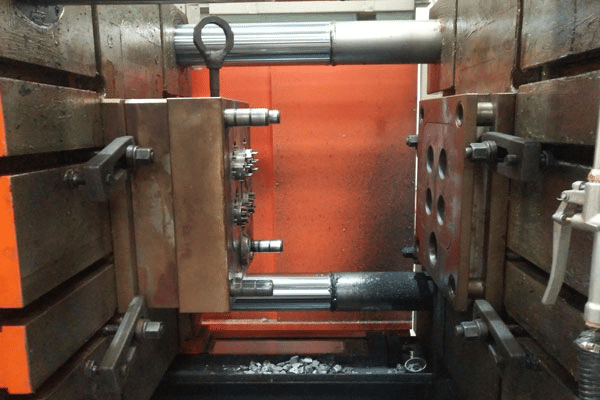
Unthickened walls enhance all the process variables.
Scrap rates increase due to the fact that misruns, cold shuts or surface defects (flow lines, drag marks) can be identified easier. The quality deteriorates first of all on the surface, as blisters or pitting foundations of gas trapped, or red lines on aesthetic visages. Over the long-term, tool wear increases faster in thin parts because the velocities required in fill are larger and because it is less consistent when there is clogging in the venting or offset in shot control.
In practice, if designs under 0.7 mm are used, initial reject rates are 2-5x higher with a process that is not owned down.
When Thin-Wall Zinc Die Casting Is the Right Choice
Thin-wall zinc provides performance when you require small parts with high detail and low weight that are simple to fabricate such as electronics cases, cosmetic hardware, small brackets or precision frames, where 20 to 40 percent weight reduction does not affect part detail.
It is not as good as thick-walled structural parts (thickening of structure is potentially safer at higher loads) or extremely massive parts (flow distance kills fill). Should tolerances be excessively tight and secondary machining is undesirable, or prototyping indicate re-occurring fill problems, might considering making aluminum materials (which is thicker but stronger at scale) or even machining be less risky?
| Application Requirement | Thin-Wall Zinc Recommended? | Engineering Rationale |
| Lightweight + intricate detail | Yes | Superior fluidity captures fine features |
| High structural load | Sometimes (with ribs/ZA-8) | Thin walls reduce strength unless reinforced |
| Cosmetic surface priority | Yes | Excellent as-cast finish, plating-ready |
| Large projected area / long flow | No | Risk of incomplete fill rises sharply |
| Tight tolerances + no machining | Yes (with care) | Precision possible but narrow process window |
Conclusion — Thin Walls Require Thick Engineering Judgment
Thin-wall zinc die casting is truly beneficial, offering weight reduction, cost reduction, multifunctional integration, and can only become a reality when the design takes into account the strengths of the material, and the limitations of the process. Extreme geometry is defeated by repetition. Go extreme without simulated flow, alloy optimization and robust gating and you will not only have valued short term weight wins at the expense of quality headaches and increased scrap and slower launches in the long run.Rigorous thin-wall activities have experienced the most success by setting realistic boundaries, homogenous geometry and early coordination between the designer and the caster. Once those fundamentals are on target, zinc would have a potent tool and not a risk.