
In case of threaded and precision zinc die casting parts, reliability of threads together with dimensional consistency are directly affected by the choice of alloy, and no secondary machining or remedial action will be needed.
When a feature such as an internal or external thread, tight-tolerance boss, or a small wall thickness is needed, the risk factors in material choice are exaggerated many times over. Problems like thread stripping under load, tolerance variations on ejection or different levels of engagement are often motivated with microstructure and mechanical behaviors of the alloy and not with tooling or process criteria in isolation.
The first myth in an OEM team is that any standard zinc alloy that is tested in general die casting will yield the same results in the design containing threads or perforations of a high precision. Practically, this assumption causes the sky-rocketing reworking, extra CNC processes or field failures.
Where extreme accuracy is needed both the process control and composition of the alloy must be overly tight compared to standard parts. Our experience in precision zinc die casting parts manufacturing shows that early material decisions prevent most downstream problems.
Why Threaded and Precision Components Are More Alloy-Sensitive
threads and precision characteristics are more susceptible to alloy characteristics by nature since the threads and precision characteristics focus stress and reveal microscopic faults that otherwise are not dangerous in less complex geometries.
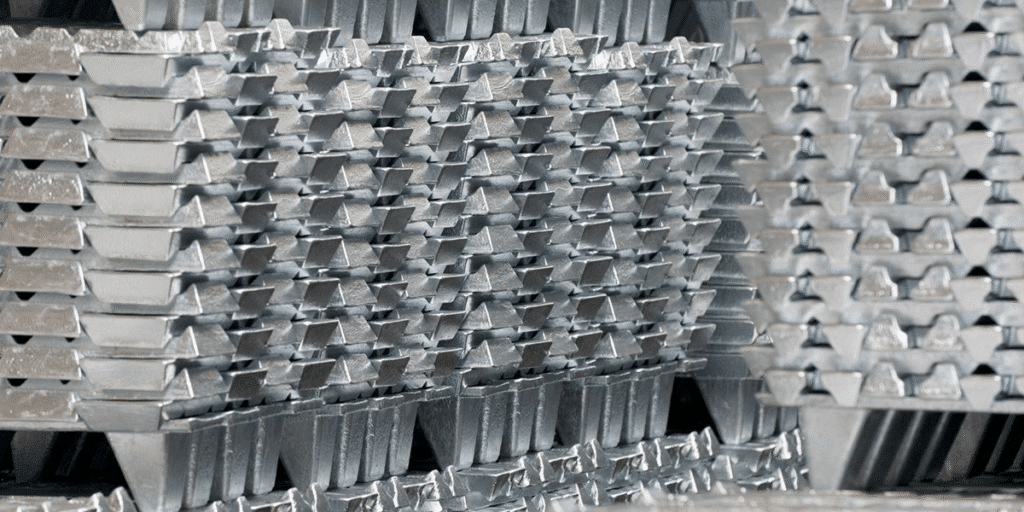
Key Risks in Precision Features
| Precision Feature | Primary Risk | Alloy-Related Influence |
| Internal/external threads | Stripping or galling under torque | Insufficient ductility or inconsistent hardness distribution |
| Thin walls & tight tolerances | Dimensional drift after cooling | Higher shrinkage variation or internal porosity |
| Fine bosses or locating pins | Tolerance loss across batches | Phase segregation affecting mechanical stability |
| Functional mating surfaces | Poor fit or intermittent interference | Micro-porosity leading to surface irregularity |
Any localized brittleness or porosity can be much hazardous at thread roots as compared to bulk sections. Any small differences in the dimensions of shrinkages of alloy variants may take the critical dimension outside the error range notably in tools with multiple cavities.
Zinc Alloy Properties That Affect Thread Performance
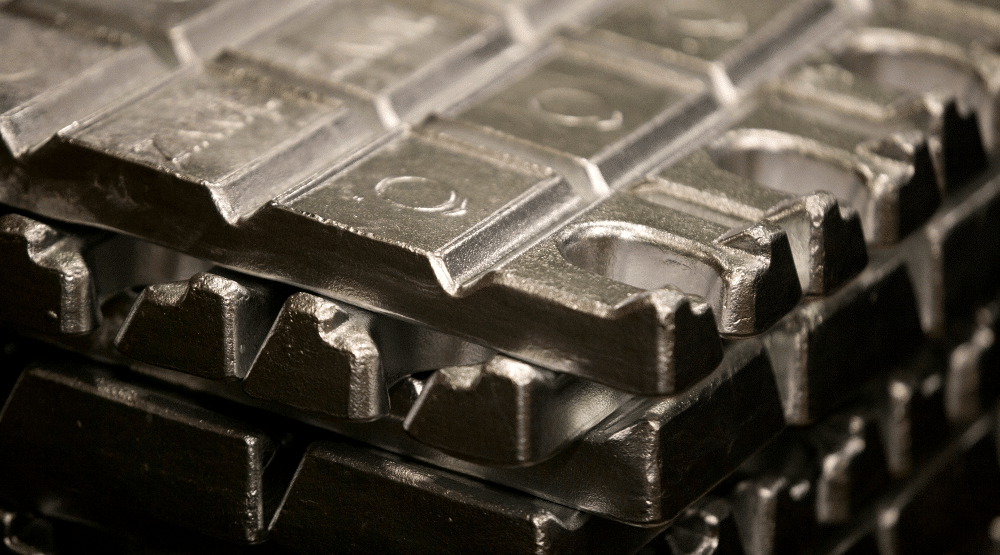
Ductility, hardness, and creep resistance differ greatly in mechanical conditions between commercial zinc alloys and this balance has a direct influence on thread performance.
Critical Properties and Their Thread Implications
| Alloy Property | Impact on Threads | Practical Implication |
| Hardness (Brinell) | Higher hardness improves wear resistance | Risk of brittleness and cracking under impact or over-torque |
| Tensile strength vs elongation | Strength aids load carrying; elongation prevents stripping | Alloys with high strength but low ductility often strip prematurely |
| Creep resistance | Limits thread relaxation under sustained load | Essential for fasteners or adjustable threaded assemblies |
| Batch-to-batch consistency | Affects repeatability of thread gauge results | Lower-grade alloys show wider property scatter |
When engineers are seeking ultimate tensile strength alone a sufficient level of elongation (usually 3 per cent or more) can be applied to threaded items to ensure they resist stripping during assembly or servicing.
Surface Finish and Post-Treatment Considerations
The quality of engagement among threads is strongly determined by the roughness of surfaces and the cohesion of metal finishes which determine the quality of the alloy base.
Higher copper content alloys have a potential to form finer heats as-cast surfaces which enhance edges of threads and ease secondary polishing. On the other hand, alloys that can form micro porous often need to be plated with more thickness to cover such defects which can change effective thread diameter.
Explore various zinc die casting surface finishing options to be familiar with the results of plating, painting or powder coating different alloy compositions.
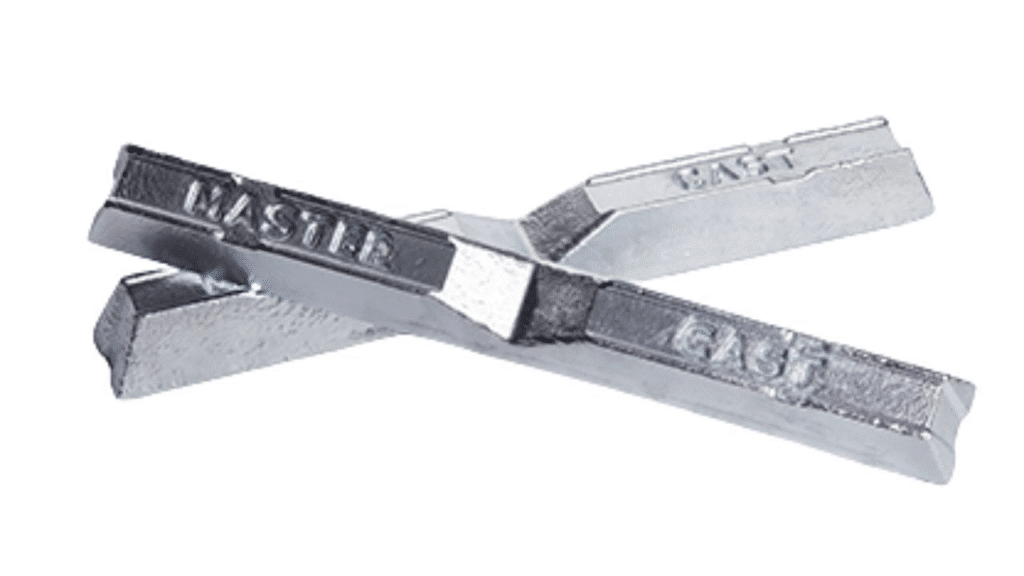
Corrosion Protection and Long-Term Thread Reliability
Threading In threaded areas, corrosion enhances wear acceleration and may result in seized or loss of preload with time.
The effect of alloy chemistry on intrinsic corrosion behavior and compatibility with protective coating. As an example, purer alloys are better accepting in conversion or in electroplating uniformity, which can be used to offer superior crevice protection within threads.
Clear direction on the surface treatment of corrosion protection surface treatment for corrosion protection in zinc die casting helps match alloy and coating systems for extended service life.
When Secondary CNC Machining Becomes Necessary
Some zinc alloys have a higher shrink change or surface porosity and there is a problem of holding thread tolerances on the die.
Scenarios Requiring Post-Casting Machining
- When assembling co-axial alignment that is beyond as-cast capability is needed with hybrid assemblies.
- Where design modification is done after completion of tool.
- Even though secondary operations contribute to cost and lead time, the possibility of eliminating them
Although secondary operations add cost and lead time, selecting a more dimensionally stable alloy at the design stage often eliminates them entirely. Learn more about secondary CNC machining for zinc die casting and when it becomes unavoidable.
Assembly and Packaging Considerations for Precision Parts
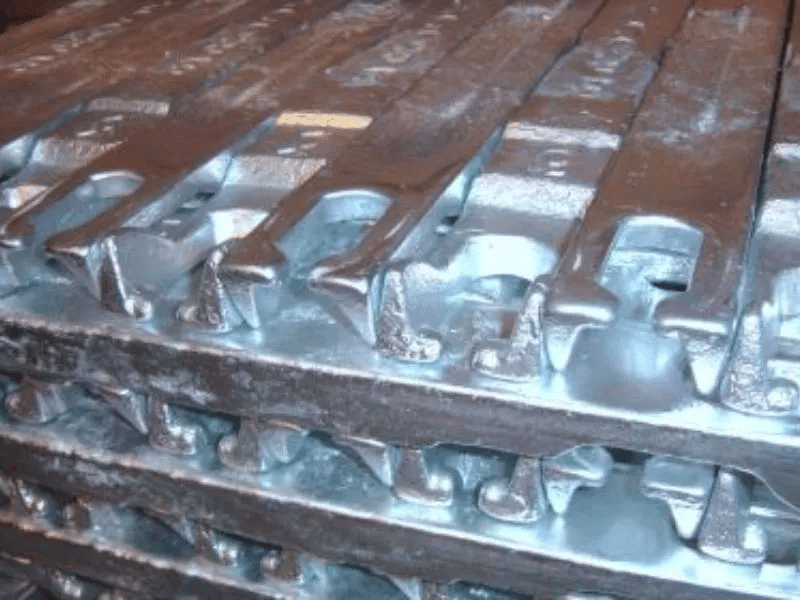
The monitor accuracy has a direct effect on the first-pass assembly yield. Any little ovality or change in pitch be it, will produce cross-threading or rejection on automated lines.
Close threaded parts also need proper handling to ensure no dings or burr marks are left to interfere with the fit. Custom fixturing and packaging are required when the tolerances are less than ±0.03 mm.
See practical approaches to assembly and packaging for zinc die casting components that protect critical features through the supply chain.
Zinc vs Aluminum for Threaded and Precision Applications
Aluminum alloys tend to be better in dimensional stability and creep but zinc has better as-cast detailing and higher cycling.
Quick Comparison for Threaded Precision Parts
- Dimensional repeatability: The Aluminum usually has tighter tolerances in large batches.
- Strength of thread Zinc alloys may equal or exceed aluminum when sufficiently ductile.
- Weight: Zinc is still a lighter and cheaper non-structural thread.
- Exposure to temperature: Beyond 100 C long-life Aluminum is the victor.
A detailed side-by-side evaluation is available in our guide to zinc die casting vs aluminum die casting.
Common OEM Mistakes in Precision Zinc Alloy Selection
Too simple decisions regarding material are faced in many projects:
- Use of the strongest alloy selected without analyzing elongation and creep information.
- Supposing all the grades of Zamak act the same in precision tooling.
- The neglect of considering the role of alloy selection with respect to plating thickness and completed thread gauge.
- The material selection is postponed until after tool steel has been cut which limits its selection.
Addressing these early prevents costly engineering change orders later.
Conclusion — Precision Components Demand Precision Alloy Choices
Warped dams and dimensions stability as well as overall production efficiency in accuracy found in zinc components directly relies on informed selection of alloy. Engineers with correct evaluation of hardnessductility balance, shrinkage behavior and compatibility of finishing at design stage have always higher yield and reduced rework and consistency over the field.
The best method of ensuring that risk and cost in threaded and precision zinc die casting projects is to ensure that a correct material decision is made early before Tooling commitments.