
In the majority of OEM projects that I have observed, teams are obsessed with machine cycle times or tooling lead time that is quoted when estimating the project schedules. They will automatically believe that rapid casting machines or faster CNC arrangements will automatically reduce the overall time to deliver. But experience teaches that that is seldom so. The actual delays, as well as the buried costs, are nearly always due to fragmentation of the process: different suppliers, different quality systems, different inspections, and different readjustment of datums and expectations.
Die casting and CNC machining rearrange lead time, expense by introducing unification of procedures, data, and responsibility to a solitary manufacturing regimen. When the casting mold design and the follow-up machining fixtures are in the same team, there is reduced communication gap, rework is reduced and modifications pass through quicker without initiating the entire requalification cycle.
Where Lead Time and Cost Are Lost in Fragmented Manufacturing
The invisible drag caused by fragmented supply chains extends weeks and multiplies total landed cost many times higher than appears on the surface in the respective quotes.
In case one facility does die casting and the other secondary CNC machining, any transfers will bring in delays: packaging, shipping, customs (when international moves), incoming inspection, and queue time until the next operation can be started. Home to home transfers can regularly lose 3-10 days of transfer because of scheduling.
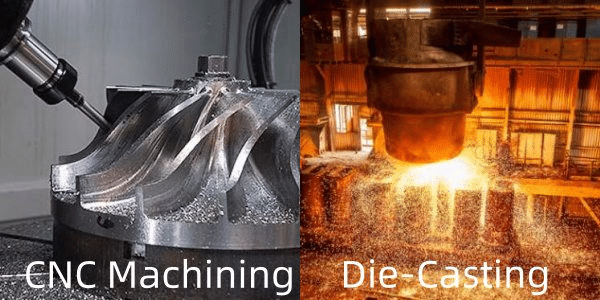
Re-setup is another killer. The castings received by the machining shop do not have very high variation of as-cast datum positions or surface conditions. The next steps are operators who probe, fiddle with fixtures or even reject batches- adding labour hours and scrap risk. The level of quality is slipping away: one supplier may tolerate some small imperfections the other announces as a defect resulting in arguments on both sides.
The following is a breakdown of the lose points that are common:
| Fragmentation Point | Time Impact | Cost Impact |
| Supplier handoff | 5–14 days per transfer | Shipping, packaging, expedited fees |
| Re-qualification | 2–7 days per batch issue | Inspection labor, potential scrap |
| Process mismatch | 1–5 days per setup adjustment | Fixture modifications, rework labor |
| Quality standard drift | Variable (days to weeks) | Rejected lots, corrective actions |
| Transport & queue time | 3–10 days cumulative | Inventory holding, expediting costs |
These aren’t theoretical. On the projects we have assumed the fragmented jobs, we have typically been able to save 4-6 weeks off the schedule by simply eliminating the transfer steps.
Integrated Manufacturing Enables End-to-End Control
In case of die casting and CNC machining, there is a lack of any coordination when they are located under one roof and they have a common engineering supervision. The designers of molds are already aware of the essential machined features and datum references and therefore design the casting tooling with them in mind, minimising as-cast variation where it is most important.
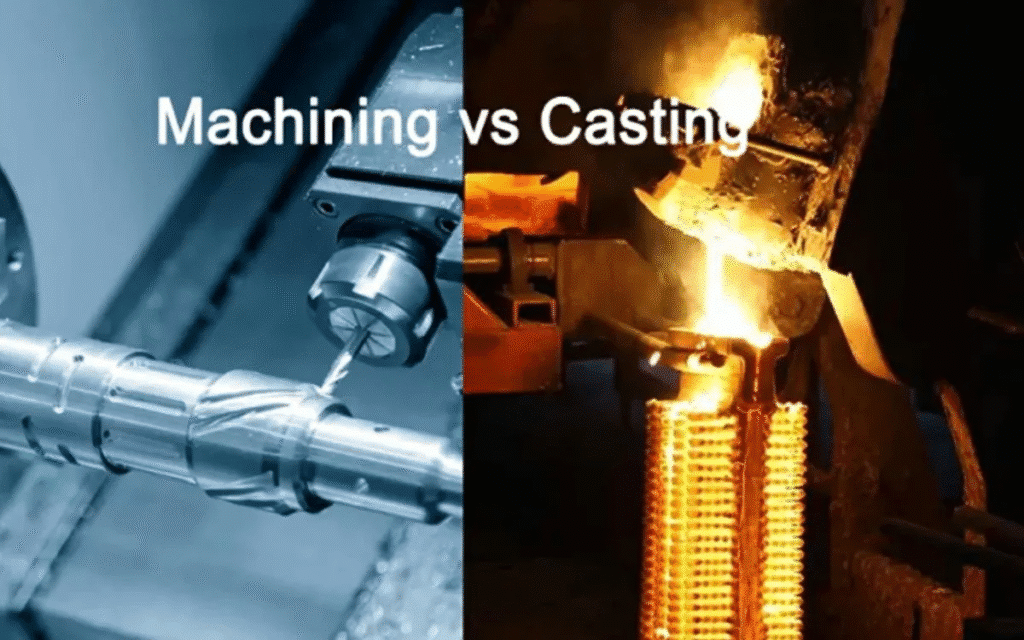
Guesswork is eliminated by common fixtures and intent of process. The machining team machining the parts can base on the specifics of the process of the exact casting (alloy temperature, injection speed, and cooling rates) with which they predict and counter possible distortions. This transforms a secondary operation that is firefighting to a planned precision work.
To get further information about what we are able to do in this field, take a look at our aluminum and zinc die casting factory.
Surface Finish Quality Improves With Process Integration
Surface finish consistency is among the initial aspects to be affected by fragmented workflows. Castings sent to another shop invariably come with handling marks, fades and flash which did not pose a problem during the casting process but develop into a problem during the machining preparation.
The integrated planning will allow the team to determine in advance where on the cosmetic surfaces additional polishing of the mold or the release agent is required and where on the machining a material always will be removed. This will break this cycle of casting, shipping, finding finishes wrong, and rework or scraps.
All in-house will experience changes in real-time: a minor tweak of a mold or change of a shot parameter can fix a repeat finish defect before it even gets to the CNC machine. This is discussed further in more detail in our guide to zinc die casting surface quality standards.
Tolerance Alignment Reduces Assembly Rework
Die casting in itself has wider tolerance ranges than finished machining requirements, standards of tolerance all being between the range of +-0.1 and -0.3 mm depending on alloy and part size. When imaging the machining supplier has no way of seeing the mold design or data about the casting simulation, they make assumptions about worst-case as-cast conditions, and safety-stock or to-the-idle setups.
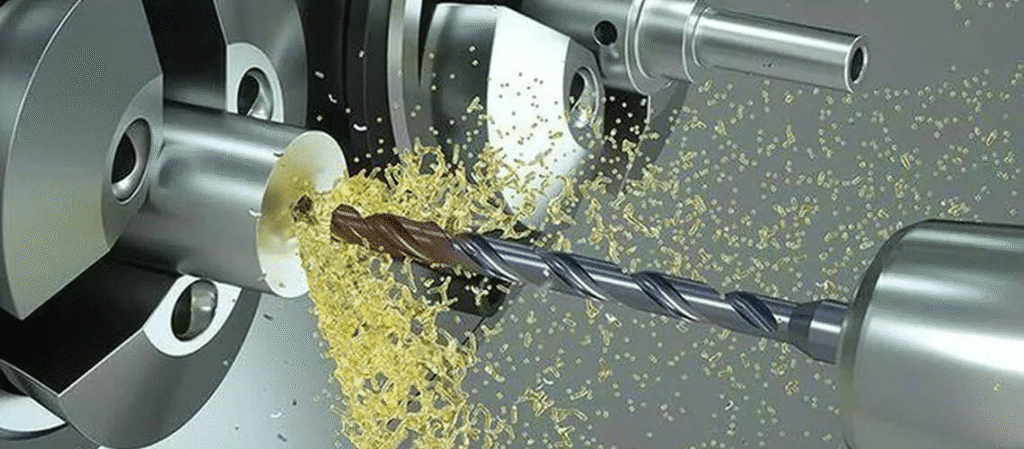
Poorly matched assumptions cause assembly pains: components that fit on paper and bind on the assembly board, or have to be shimmed. Combined teams get tolerances established early in-production – casting near-net shape and with purposeful machining stock, machining programs are created based on CAD concept of the casting itself with common datums.
This stability reduces assembly rework drastically. Read in our article about implications of tolerances how tolerances affect die casting assembly.
Secondary Machining Becomes Predictable, Not Reactive
Functional die-cast components hardly ever have any other option other than secondary machining, threads, precision bores, and flat sealing surfaces, and tight positional features invariably demand it. As in fragmented constructions, machining becomes often reactive: maintenance of casting defects, as opposed to value addition.
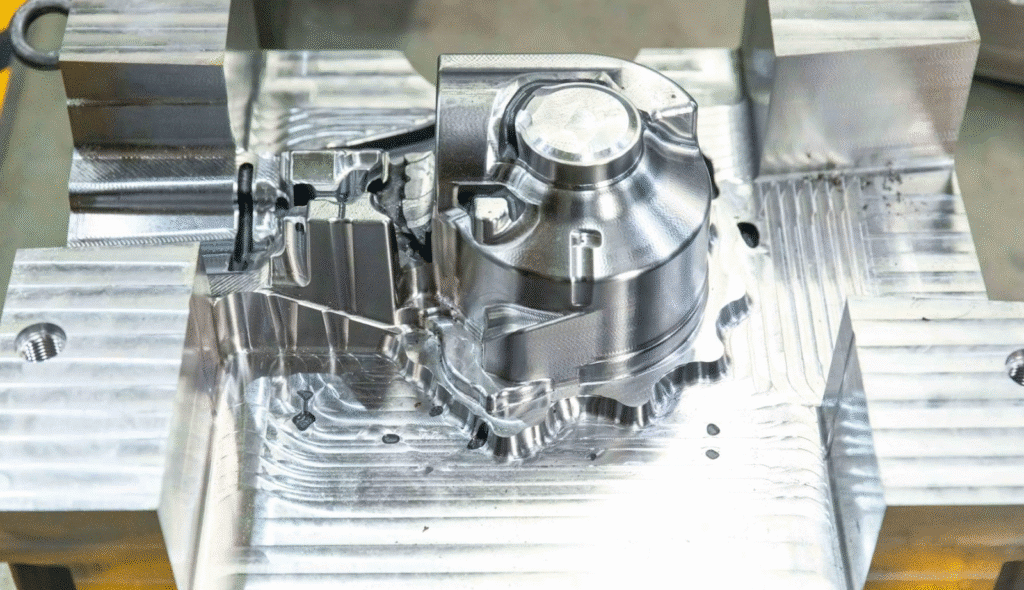
This is changed to proactive integration. The process of casting is pre-tuned to the knowledge of what the CNC step is supposed to accomplish. The allowance in stock is regular, parting lines have been gapped out to prevent critical areas and the draft angles have been designed to maximize ejection and fixturing. The outcome will be a predictable cycle time, reduced scrap and the amount of emergency re-runs minimized.
We discuss such dependency here in detail: secondary machining for die cast parts.
Integrated Workflow Shortens Total Project Timeline
The greatest timeline victory is due to quicker iteration and change intake. With a discontinuous chain a single engineering change (ECN) may propagate: notify caster – revise Mold – revise sample – ship – revise machining program – re-qualify – revise sample. Each step adds days or weeks.
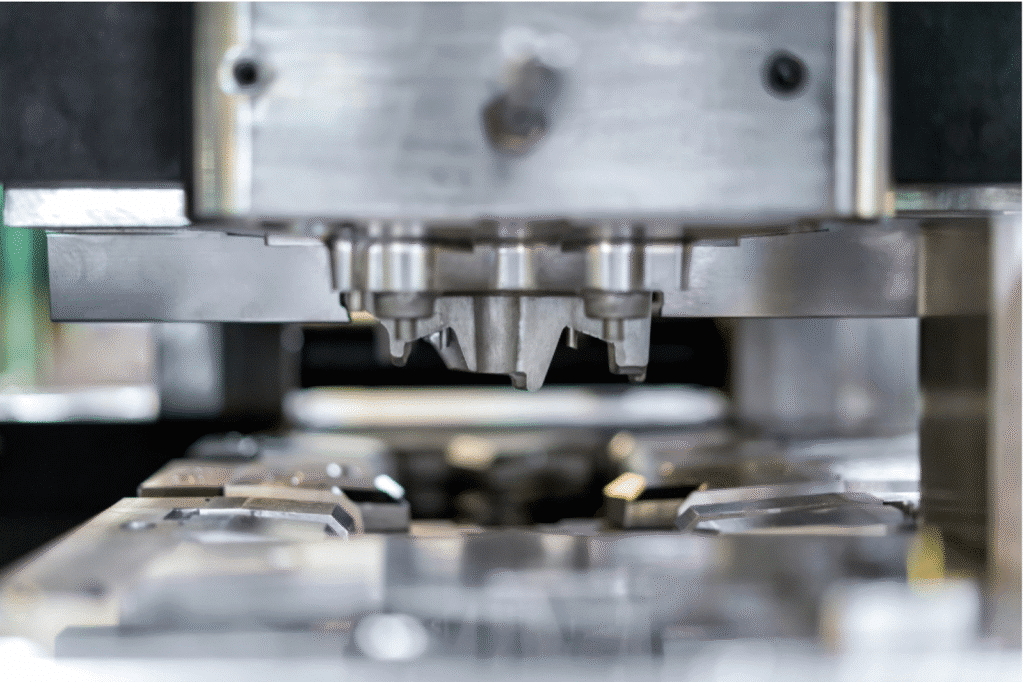
Combined manufacturing fails back in circle. Modifications are directly sent to an engineering team, which amends both mould and CNC code at the same time, and are usually confirmed with an in-house first-article inspection in days and not weeks.
The table below compares and contrasts them:
| Project Stage | Fragmented Supply Chain | Integrated Manufacturing |
| Tooling approval | 6–12 weeks (serial reviews) | 4–8 weeks (parallel validation) |
| First article | 2–4 weeks after casting samples | 1–2 weeks (immediate machining) |
| Production ramp-up | 4–8 weeks (multiple handoffs) | 2–4 weeks (continuous flow) |
| Engineering changes | 3–6 weeks per ECN | 1–3 weeks per ECN |
Conclusion — Integration Reduces Hidden Cost, Not Just Quoted Price
When considering the overall project cost and schedule the lowest line item quote can hardly provide the least total expenditure or the shortest time to market. There are hidden costs on transportation, reworking, inventory stores, expeding, and schedule risk that accumulate fast in dotted chains.Due to their use of integrated die casting and CNC machining, there is better reduction in lead time and cost through the elimination of uncertainty not acceleration of separate processes. Such predictability is the actual benefit: less unexpected, more chances to preserve the situation and greater best confidence in the commitments of delivery. In the case of OEM teams with long life programs, that reliability can be the difference between making a few cents on the price of the piece and not.