
In precision die casting dimensional accuracy is not a speculation on a drawing but it is what makes parts fit, work, and does not require the secondary processes or expense of a field failure. Zinc alloy die casting is always more accurate in the dimension accuracy than the aluminum die casting. The fundamental causes do back to the fact that zinc had a lower melting temperature (around 380-420 C as compared to that of aluminum, the latter being approximately 660 C), a much higher solidification rate, a lower total shrinkage, and the nature of the hot chamber operation employed with zinc.
The increased rigidity and strength of aluminum in OEM engineers presuppose the increased accuracy. Practically, thermal solidification and cooling behaviour, and repeatability of processes are much more important in maintaining fine tolerances between production steps. Zinc is usually the more predictable option when fit, alignment or repeatability is more critical than weight saving.
Considering the choice of an alternative on a new project, an established zinc die crisis manufacturer can assist in carrying such material benefits into actual apparatus and procedure setup or selection that is not unexpected despite tolerances and one that does not demand re-work.
What Determines Dimensional Accuracy in Die Casting?
Dimensional accuracy in die casting refers to the extent to which a die cast part is similar in geometry to the nominal geometry in thousands of shots in repetitions -and does so reliably.
The maximum tolerance attained is never a system value: any given material properties provide a reference point of the potential of the system, yet tooling design, thermal control, injection factors and cycle consistency dictate what you actually obtain. Nominal tolerances in standards (such as the NADCA) are those values that the process will achieve under controlled conditions; actual performance is determined by the extent to which the whole process minimizes the variation.
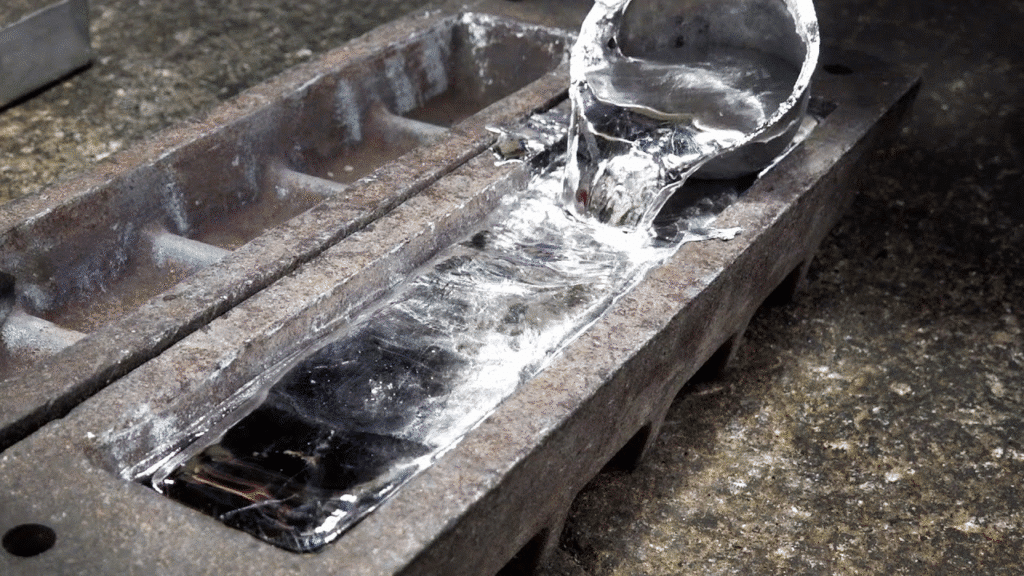
Machine capability does not always carry much weight particularly when zinc and aluminum are the subject of comparison.
| Accuracy Factor | Zinc Die Casting | Aluminum Die Casting | Precision Impact |
| Typical linear tolerance (per inch) | ±0.001–0.0015 in (±0.025–0.038 mm) | ±0.002–0.003 in (±0.05–0.076 mm) | Zinc holds tighter as-cast; less need for post-machining on critical features |
| Shrinkage during solidification | Lower (~0.6–0.7%) | Higher (~1.0–1.3%) | Lower shrinkage = less distortion and easier tool compensation |
| Process type | Hot chamber (more stable melt delivery) | Cold chamber (more thermal cycling) | Hot chamber reduces shot-to-shot variation in temperature and fill |
| Thermal conductivity & cooling rate | High; rapid, uniform solidification | Lower; slower, more gradient-driven | Faster cooling in zinc minimizes warpage from uneven contraction |
Material Behavior — Zinc vs Aluminum During Solidification
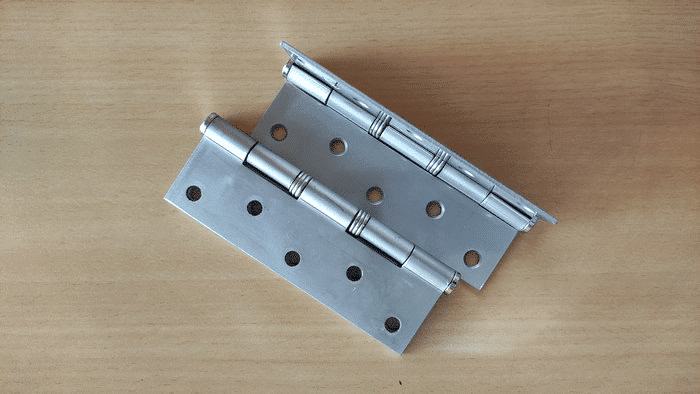
The relatively low melting point and rapid solidification of zinc provides it with an obvious advantage of managing dimensional variation at the phase change.
Zinc alloys are melted at about 380-420 C and solidified fast because it is highly fluid, as well as, low heat content. This quick, homogenous movement lowers the duration taken by the part in a semi-solid state where the risks of distortion increase. Aluminum which melts at about 660C has more thermal energy, solidifies slower, and has larger contraction gradients- resulting in an increase of residual stresses and out-of-tolerance warpage unless cooling is perfectly uniform.
Another important differentiator is that of thermal contraction (shrinkage). The shrinking of zinc is normally 0.6-0.7 and that of the aluminum alloys can reach up to 1.0-1.3. There is an added effect of that difference at photofinancial geometries, where aluminum components are more likely to develop sink marks, voids, or bowing.
| Material Property | Zinc Alloy | Aluminum Alloy | Effect on Accuracy |
| Melting temperature | ~380–420°C | ~660°C | Lower temp = less die thermal shock, more stable tooling dimensions |
| Solidification speed | Very fast (high fluidity, low heat) | Moderate to slow | Faster freeze reduces distortion time window |
| Shrinkage factor | 0.6–0.7% | 1.0–1.3% | Lower shrinkage = easier to predict and compensate in tool design |
| Thermal contraction behavior | More uniform | Greater gradients | Zinc experiences less differential cooling stress |
Process Stability and Cycle Consistency
Hot chamber die casting – zinc normative – has an innate and better cycle-to-cycle stability as compared to the cold chamber method necessary to extract aluminum.
In hot chamber, the injection system is kept in hot melt material reducing temperature variations between injections. This uniformity decreases the variation of fill pressure, gate freeze-off time and parts ejection temperature. Cold chamber processes on the other hand pour molten aluminum in a cold shot sleeve each cycle, adding more thermal variation and oxide entrainment or non-uniform fill.
In the long runs, such small changes in the aluminum accumulate to larger bands of tolerance.
Alloy Selection Within Zinc and Its Impact on Accuracy
Not all zinc alloy will act the same in the situation where dimensional stability takes a higher priority.
Zamak 3 is still the standard of those applications that require the narrowest as-cast tolerances, an optimized composition that provides both a high long-term dimensional stability and very low growth rates with age. Zamak 5 augments copper to improve strength and hardness, but at the expense of a slight decrease in the ductility, and some effect on aging stability. Zamak 7 has an even better fluidity in thin walls and high-performance grades such as EZAC have higher strengths, but need to be carefully compared in regards to creep and stability.
When it comes to pure controlling in terms of dimensions, start with the Zamak 3 unless it is different in mechanical terms.
| Zinc Alloy | Dimensional Stability | Typical Accuracy Use Case |
| Zamak 3 | Excellent | General precision parts, long-term stability critical |
| Zamak 5 | Very good | Strength-focused where slight stability trade-off acceptable |
| Zamak 7 | Excellent | Thin-wall, high-fluidity needs with good stability |
| Zamak 2 / EZAC | Good to very good | High-strength applications; evaluate aging effects |
For more on selection trade-offs, see our detailed comparisons: zamak 3 vs zamak 5, zamak 2 zamak 3 zamak 5 zamak 7 comparison, and high-strength zinc die casting materials.
Tooling Interaction and Thermal Distortion Effects
Zinc is less demanding of tooling thermal expansion and contraction.
Smaller melt temperatures imply that heat transfer to the die steel is also reduced per shot and therefore die surfaces undergo less significant temperature changes. The additional heat load of aluminum results in more die expansion/contraction cycles characterizing that could open up tolerances over time – particularly with large or complicated tooling. The quick solidification of zinc also allows parts to solidify as the die is reasonably stable to minimize the amount of distortion transferred during tool movement.
Practical Accuracy Outcomes in Real Applications
The benefits of zinc are exhibited in the field of steadfast assembly features, less use of adjustment shims or selective fitting, less secondary CNC action to achieve the critical features and lower scrap revise rates in tight-tolerance runs.
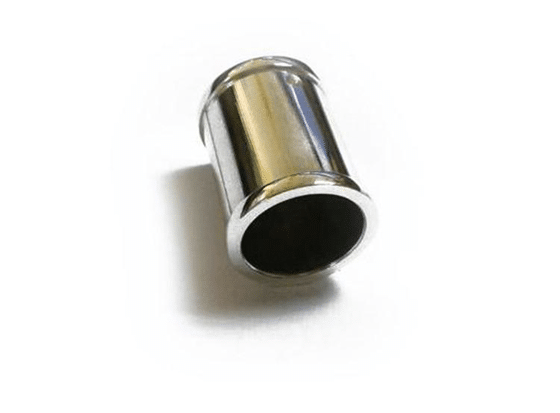
Zinc is common in automotive brackets, housings of electronic devices and precision hardware, where it is as-cast (with features of players of ±0.0010002) and aluminum would have to be machined to match.
Common OEM Misconceptions About Accuracy
A common supposition is that the stronger military the more precise it will be. Strength is of assistance in load bearing, but has no close relation with as-cast dimensional control-thermal behaviour is predominant.
Another spurious belief: “Accuracy is usually the result of post-machining anyway. Although machining may be necessary to tighten features, it is more expensive and more time consuming; an originating net-shape operation, e.g., zinc die casting, frequently may avoid or reduce the additional operation.
Lastly, the notion of aluminum being capable of matching zinc all the time at comparable total cost gives credence to the cumulative consequences of increased scrap, increased machining facilities and increased cycle times of an aluminum run.
Conclusion — Accuracy Follows Material and Process Discipline
The zinc alloy die cast has higher dimensional accuracy than the aluminum due majorly to its preferable solidification characteristics, reduced shrinkage and the stability of hot chamber processing. All of these are merged together in eliminating variation at the shot-to-shot level and decreasing distortion risks associated with aluminum because of increased thermal loads.Finally, accuracy is not about a single wonderful quality but about the cognition of the system made up of material, tooling and process. When your tolerances are sacrosanct and you use repeatability as your quality criteria, zinc can be put seriously into consideration in the early design phase.