
The consumer electronics and the consumer goods sectors encounter an insistent demand to have the slick designs, reliable functions as well as competitive prices in extensive quantities. Customers demand parts with perfect surface clearance that can be seen immediately after leaving the enclosure, and the engineers demand parts that maintain these tight tolerances across thousands -or millions- of units without compromising. The Zinc alloy die casting is exceptional in this case in that it provides compromising features of the appearance, dimensional accuracy and affordability at the production level.
It is a mistake that people continue to consider zinc die casting only with heavy industrial or automotive parts in mind. The fact is that it is one of the consumer electronics and lifestyle product go-to processes, high-end goods: smartphone frame, audio device casings, smart home control, and high-quality appliance equipment. It is convenient in appearance-sensitive, high-volume production due to the combination of very thin-wall fluidity and fine detail, and repeatability in the quality of deposit in hot-chamber machines.
For manufacturers exploring this process, our zinc alloy die casting capabilities offer the full in-house chain—from mold design through finishing—to support these demands reliably.
Why Zinc Die Casting Is Well Suited for Electronics and Consumer Products
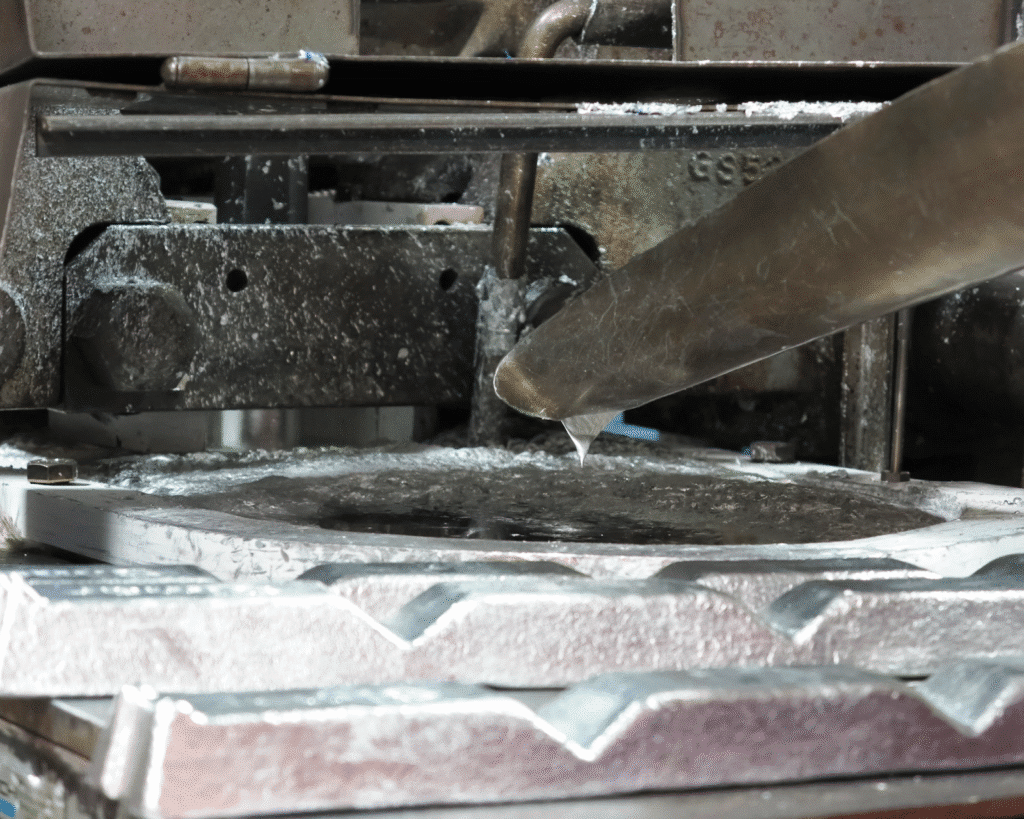
The initial impression in consumer facing classes can be as simple as the appearance and even the feel of the product when one is holding it. With low specifications like the tight tolerances required by snap-fits, connectors, and fine alignments, Zinc die casting provides clean as-cast finishes that do not require much post processing, either plating, or painting, or powder coating.
It is the process that is the most brilliant to have high-volume production that lacks variation. Its low melting temperatures and rapid cycle times keep costs in check and the natural characteristics of the material include good strength of small parts, great capability to reproduce detail and in some cases has the ability to shield out EMI, which suits well with electronics and gadget needs.
| Consumer Product Requirement | Why It Matters | Zinc Die Casting Advantage |
| Clean, smooth surface finish | Visible parts must look premium without heavy rework | Superior as-cast quality; ideal for plating/chrome/paint |
| Tight dimensional tolerances (±0.01–0.05 mm typical) | Ensures fit, function, and assembly reliability | Excellent stability and repeatability in high-volume runs |
| High production volumes (100k+ units) | Cost amortization and margin pressure | Fast cycles, low per-part cost after tooling |
| Thin walls and complex geometries | Miniaturization in devices | High fluidity fills intricate features without defects |
| Consistent cosmetic quality | Brand perception and returns control | Low porosity risk with proper venting and process control |
Typical Electronics and Consumer Parts Made by Zinc Die Casting
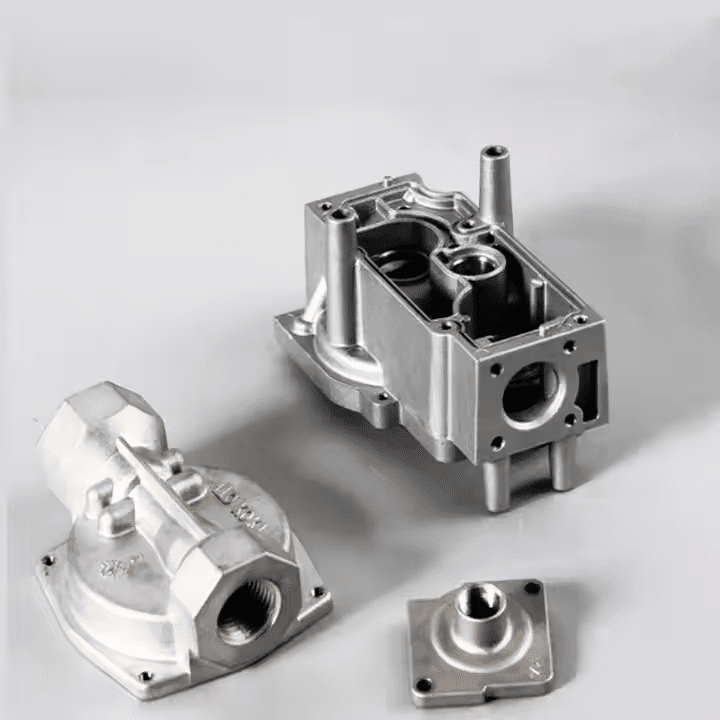
Zinc die casting has a wide range of applications as internal structural supports as well as external touchpoints in consumer electronics and products. The process manages functional and ornamental roles well and in most cases, the process combines both roles into one single part.
It often serves as a choice of designers who are dealing with materials that they want to feel solid and high-end whilst at the same time lightweight and easy to carry around.
| Part Type | Functional Role | Why Zinc Is Suitable |
| Device housings and enclosures | Protection, EMI shielding, heat dissipation | Thin walls, fine details, good conductivity |
| Structural frames and brackets | Internal support, mounting points | Strength in small sections, dimensional stability |
| Control knobs, levers, buttons | User interaction, tactile feedback | Precise edge definition, smooth texture post-finish |
| Connectors and terminal blocks | Electrical interfacing, durability | Tight tolerances for mating, impact resistance |
| Decorative-functional trim | Aesthetic accents with mechanical purpose | Excellent plating compatibility, sharp details |
Appearance, Surface Finish, and Tactile Quality Considerations
In consumer markets, appearance makes more difference than in most industrial applications in terms of influence in purchasing decisions. Zinc die castings are naturally smooth on surfaces and sharp with edges that are tough to survive under the chrome plating and PVD or under a rough powder coating and that feel that every one wants with earbud cases, kitchen appliance controls and hundreds of others.
The choice of texture can include high-gloss mirror finishes, matte or brushed textures, and the material is resistant to secondary operations such as vibratory polishing without beginning to lose detail. The density also helps in tactile quality: the parts are solid and comfortable to hold because less dense plastics may be considered cheap.
For examples of how this translates to visible components, see our guide on decorative zinc die casting parts.
Cost Structure and Volume Economics in Consumer Markets
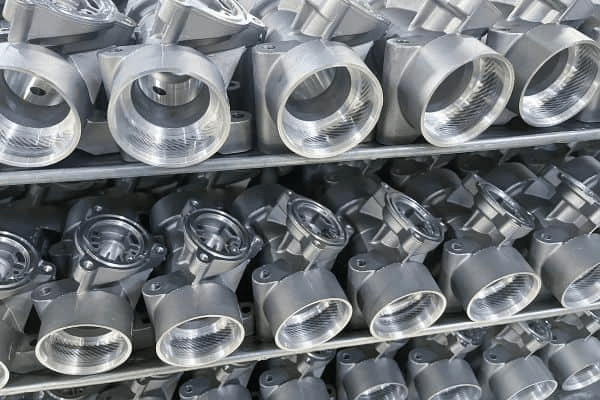
Consumer goods survive or fail on a thin margin, particularly on retail level. Zinc die casting is attractive beyond about 50,000 -100,000 units since the initial tooling minor cost is rapidly amortised with minimal unit cost.
Cycle times are very fast (only a few seconds with each shot in hot-chamber equipment), there is a minimum level of material waste and secondary processes such as trimming or machining can be automated. Such predictability aids the sourcing teams in safe-guarding against surprises of rework or scrap, caused by inaccurate forecasting of landed costs.
Tooling lasts longer than in higher-temperature processes, and design iterations can be tested affordably early on. For a deeper breakdown, check our article on zinc die casting tooling and production costs.
Material Selection for Consumer Electronics Components
The majority of consumer electronic components use Zamak 3 or Zamak 5- the two work horses of the family. Zamak 3 has the best overall balance: it is castable, has dimensional stability during service, and is ductile enough on parts which may experience small impacts or flex-loading during assembly.
Zamak 5 contains more copper to increase its strength and improve its creep resistance, which is desirable in use where the part is subject to sustained loads or wear (such as a hinge joint or a clip). The quality of the finish is as good in both, though Zamak 3 can win the prizes in plating heavy usage because of marginally better surface properties.
The decision between those is often choosing between fluidity and finish (Zamak 3) and additional mechanical strength (Zamak 5). Our detailed comparison of zamak 3 vs zamak 5 comparison for die casting walks through the trade-offs.
Electronics vs Automotive — Why Requirements Differ
Zinc automotive components can experience excessive temperatures, vibrations, fatigue, and high regulatory adherence to safety-critical functions. The consumer electronics and products are refocused on the visual perfection, light weight feel and quick market cycles.
The load requirements are reduced, lifestyles are brief (2-5 years compared to 10 or more in vehicle models) and visage takes precedence to long-term tenacity in most situations. Cost sensitivity is even greater in this regard, there is less room in retail pricing to over-engineer. This is why consumer designs tend to push the limit of zinc in the area of finish and detail over the limit on tensile strength.
For context on the automotive side, read our overview of zinc die casting for automotive components.
Common OEM Mistakes in Consumer Zinc Die Casting Projects
A common mistake is to transfer automotive style strength standards to consumer designs – excessive attention to wall thickness or alloy grade that increases the cost of material and cycle time but not the value added.
The other one is the underestimation of risks of cosmetics: not taking into consideration the angles of drafts and sharp determinations or venting visible results to flow lines, sink marks, or plating blisters that kill the perceived quality. The interaction of finish processes with tooling is also not considered in many teams because plating reveals minor surface unsettling, which machining may conceal in a useful component.
Last, mold design should be rushed without the input of DFM feedback which would lead to costly changes after sampling. Most of these headaches are avoided by early coordination in the parting lines and the location of ejectors.
Conclusion — Why Zinc Die Casting Fits Consumer-Driven Manufacturing
Ultimately, zinc alloy die casting is well-suited to consumer electronics and products in that it provides the correct combination: repeatable accuracy in assembling, eye-catching surfaces in the market and economics at retail levels. It is not about finding the strongest or the lightest material, but manufacturability that will ensure high quality and low costs based on thousands of units produced.
Where appearance, function, and price not solely control but must always stay in line, zinc die casting can also be the most feasible option at the floor.