
Most OEMs believe that decreased prices in CNC machining automatically decrease cost in projects. Regrettably, the reverse is frequently the case: low quotations causes costs to be moved down the chain, causing what appears to be a savings to actually be a net addition to the overall expenditure. Cheap CNC machining compromises process stability, integration and predictability in projects making them expensive. It is not the machining rate that is the actual price, but rather the downstream implications that arise weeks or months later when the of the parts are not assembled, that the tolerances accumulate wrongly or that the delivery is delayed.
It is not about the fact that supplier quality is morally bad. It’s a systems problem: the need to cut costs aggressively in the CNC operations is likely to be counterproductive by undermining the mechanisms that ensure the level of variation is low and predictability is high. When such controls fail, the project takes up the shock in form of rework cycles, additional inspection, time buffers and engineering escalation. The tendency over years in our experience with die casting + post machine programmes is that the lowest unit price does not usually result in the lowest landed cost of the program.
Why CNC Machining Price Is Not the Same as Project Cost
CNC machining price only includes the direct operation -spindle time, tool wear, simple setup, and labor within the CNC cell. Total project cost, however, encompasses all that it involves starting with the qualification of the incoming materials and concluding with the validation of the final assembly and testing in the field and any exposure to warranty.
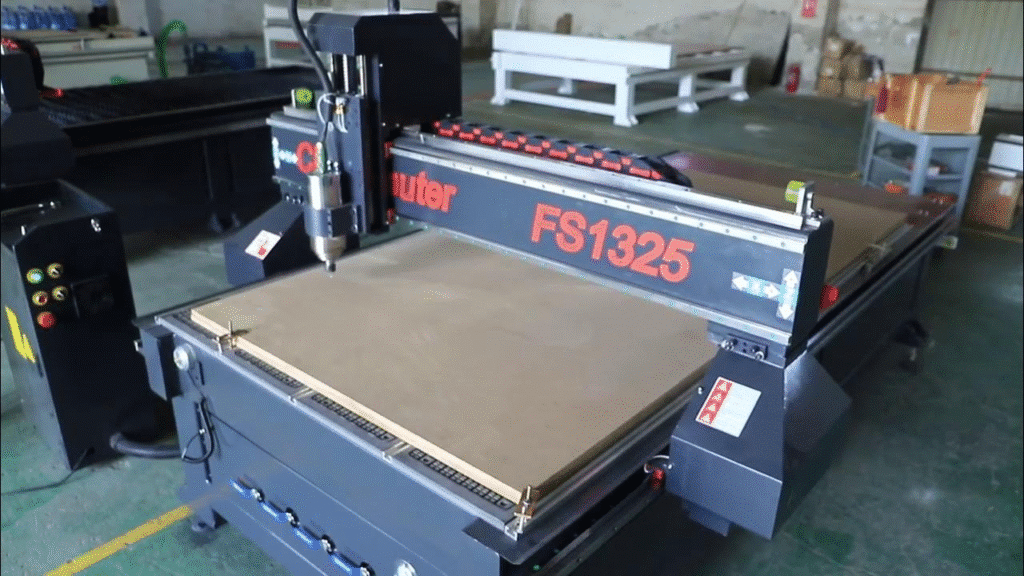
The detachment occurs due to a large number of undetected expenses that occur outside the CNC workshop. As an illustration, unsteady fixturing or data referencing may cause variation, which may be apparent only later, at downstream assembly or functional testing. The supplier who offers bottom-prices can attain the price by cutting engineering time on program validation, lowering in process inspection, or compensating increased tool wear with no correction. The latter options reduce their in-house expense but outsource the risk to the OEM in the shape of non-specified parts that require additional sorting, rework, or even batch rejection.
In the case of die casting parts, especially, whose as-cast characteristics provide an initial variation base, CNC machining for die casting parts becomes the critical stabilizing step. In the event that that step is not disciplined, it is the whole value chain that suffers.
Process Disconnect as a Primary Cost Multiplier
The presence of CNC operations, which are isolated in that the machining shop is not aware of any information about upstream die casting parameters or downstream assembly requirements, is a potent cost multiplier. Errors multiply without closed feedback loops instead of being rectified.
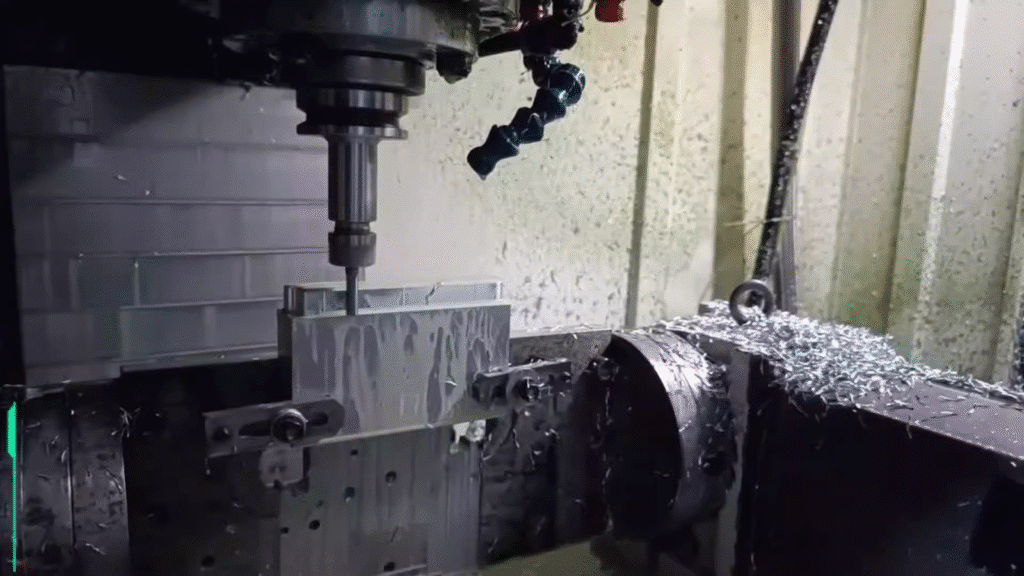
A cheap supplier can machine characteristics, not knowing the impact of as-cast porosity, draft angles, or parting-line shift on the stock allowance and tool path characteristics. Any minor movements in casting that would be insignificant with integrated process control are exaggerated: tool paths that presuppose evenly cut stock will cut away excess in one place and leave insufficient in another, resulting in chatter, poor surface finish, or out of tolerance features. What ensues is more scrap in the CNC stage or worse still parts that pass outgoing inspection but fail in the incoming or assembly line by the customer.
Integrated casting and machining for die casting as a machining strategy can be adjusted in real time on the basis of actual cast data. In the event of the lack of that integration, the variability is absorbed by the OEM in increased sampling rates, containment measures, and corrective engineering loops.
Axis Configuration and Capability Mismatch
In CNC machine shops which are cheap, parts are often forced onto 3-axis machines (where 4-axis or greater would minimize setups and enhance accuracy). The rationale is simple enough: 3-axis equipment is less burdened in hourly terms and can be programmed with less skills.
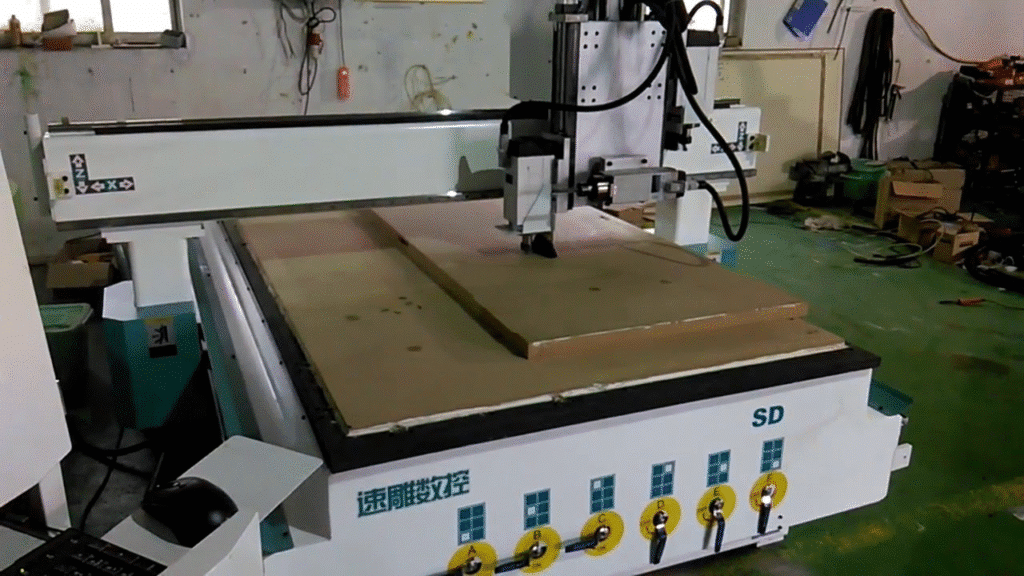
When the features are on more than one side of the die-cast parts — brackets with angled mounting holes, housings with intersecting bores, or pedals with compound curves, etc. — pushing the job to 3-axis requires numerous manual repositioning operations. Both configurations add fixturing error tolerance stack-up, risk handling damage, and lead time. What might run on a single or two operations on a 4 axis table will become four or five setups, which multiplies the chances of variation and adds indirect costs such as additional labour touch points and queue time.
Relevance to real world: we have followed programs in which changing to suitable axis configuration cut the scrap caused during set-up by more than 60 percent and reduced the overall machining time by 30 -40 percent. The difference in upstream hourly rate is actual, but the savings in downstream predictability and throughput normally outcompensate.
For practical examples of when each configuration makes sense, see our detailed comparison of 3-axis vs 4-axis of die-cast parts provides detailed examples of when each configuration is appropriate.
Multi-Operation Machining as a Hidden Cost Driver
Cheap machining can be a source of unwanted multi-operation sequence since the shop does not have the machines/ know how to consolidate the steps. Each extra operation of handling adds variation and time – refixturing, intercellular part movement, interim inspection.
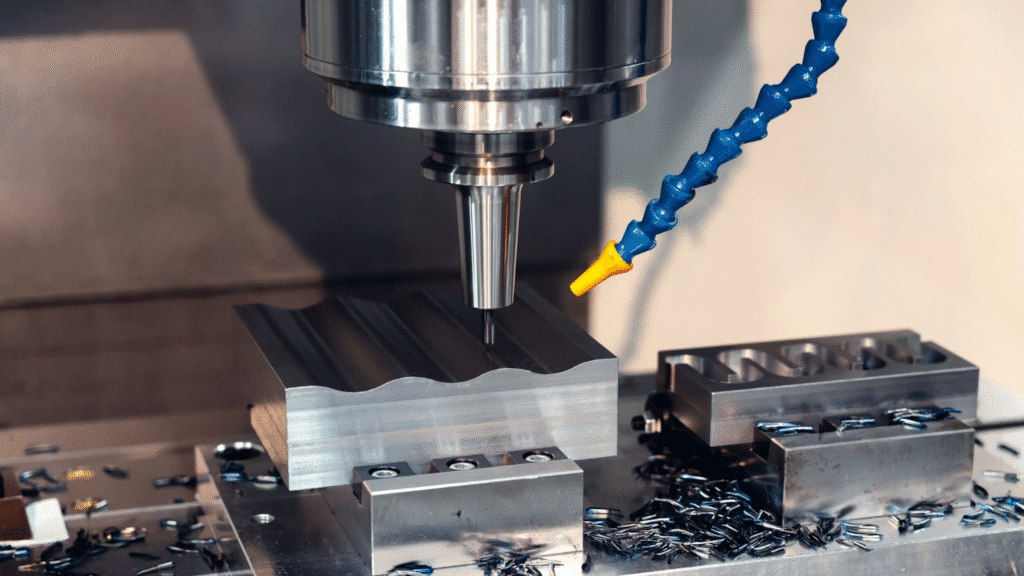
Additional operations lead to a higher probability of cumulative error: datum shifts, thermal expansion between measurements, or operator induced inconsistency. Lead times are long due to the fact that parts queue at each station and a delay at any of these points is cascading. This can convert a 4 6 weeks projected turnaround on high-mix, mid -volume die casting projects into 10-12 weeks in cases where corrections are required.
Learn more about multi-operation CNC machining and the circumstances when it is inevitable and when it is a symptom of finding itself in the capability mismatch.
Where Cheap CNC Machining Shifts Cost Instead of Eliminating It
Cost shifting as opposed to elimination is the main process. The following is a breakdown of expenses transfer:
| Cost Category | How Cheap CNC Increases Cost | Typical Manufacturing Logic |
| Rework | Inconsistent machining results force corrections at assembly or functional test | Variation from poor process control creates misfits; OEM teams spend engineering hours fixing. |
| Scrap | Through poor process control, there will be an increase in the rate of rejection at the incoming or in-process. | In-process checks are loose, and defective parts move forward; they are discovered later and result in multiplying waste. |
| Inspection | Additional sampling and containment on risk mitigation. | The OEMs increase AQL or introduce 100 percent checks where the supplier CpK is low and this introduces labor and time. |
| Delays | Re-queuing, clearing of corrections, and expedited freight to save schedule. | Variability in production is destabilizing to MRP; expedited orders or air forwarding consumes space. |
| Management | Supplier corrective actions, cross-functional coordination and escalation. | The time spent on procurement and engineering on chronic issues is multiplied; chance cost is high. |
These are not imaginary – in a program we have audited, rework and delay have in itself increased a 1520 percent apparent unit saving into a net program overrun of 1030 percent.
Why Cheap CNC Machining Often Fails Under OEM Requirements
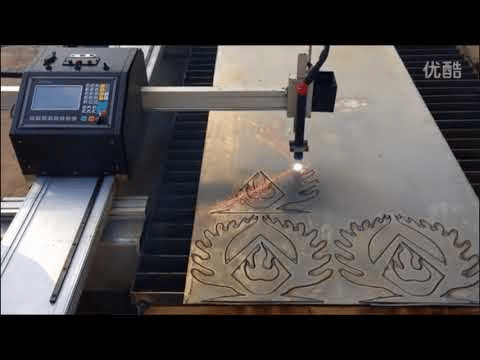
The die casting post-machining OEM requirements are not very lenient: strict positional specifications (within critical areas, the range can be as low as 0.02 mm), ECN sensitivity within days and repeatability with mid to high volumes. The low end suppliers find it difficult as the low cost pressure undermines the infrastructure necessary to support stability, repeatable fixturing, proven programs, SPC monitoring, and responsive engineering.
Low-risk, cosmetic or prototype components can be able to withstand loose control. High-volume or functional (or safety-critical) components cannot. When the requirements become stricter, the difference between the quoted capability and delivered performance increases, and the cost-shift cycle will begin.
Common OEM Sourcing Mistakes That Enable Cost Escalation
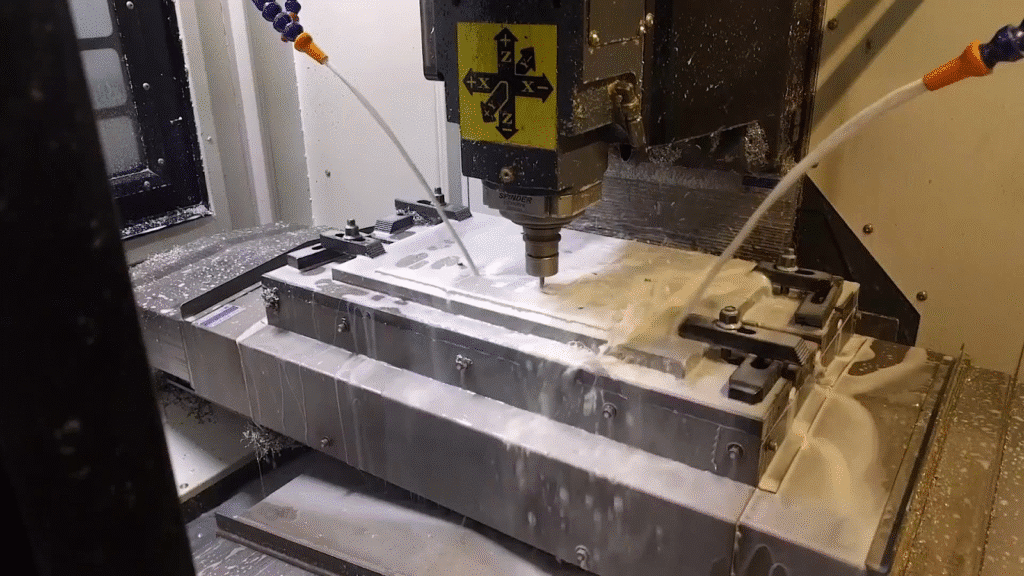
The most common decision-risk patterns that we observe:
- Using unit price without any weighting of total landed cost or variability criteria when choosing suppliers.
- Neglecting the indications of integration ability casting and machining.
- The use of CNC machining as a commodity process, which can be used in all shops interchangeably.
These are not the failures of hard work, but natural consequences of procurement KPIs that focus on piece-price cut but not overall system predictability. The outcome is expected: early savings are washed away as project risk comes to life.
How OEMs Should Evaluate CNC Machining Beyond Price
Evaluation of shift towards evidence of system stability:
- Find shown combined processes (shared data loops, collaborative PFMEA or casting-knowing programming).
- Evaluate the performance during volume ramps and variations in ECN — demand recent case examples of CpK data or on-time delivery under variation.
- Request suppliers to define their cost drivers and trade-offs themselves; an established partner will be able to justify why some decisions lower the overall cost even though unit price might seem increased.
This reasoning assists OEMs to single out partners who reduce downstream risk as opposed to making the lowest bid.
Conclusion — Cheap Machining Is Expensive at the Project Level
In CNC machining of die casting projects, low prices tend to raise the overall cost of the project as they pass the risk and inefficiency down the line. The discipline that offers stability, integration and predictability in the process typically costs a greater unit rate – but it offers lower overall expenditure in terms of rework, less delay and more reliable delivery. In the case of OEMs that are stressed to manage budgets, the most intelligent thing to do is to compare suppliers using the overall system performance and not the individual machining price.