
Your projects fail when CNC machining is not integrated with casting since design intent, process control and manufacturing feedback is dispersed across the organizational borders.
This is the most widespread of the systemic failures which we observe in medium-to-high volume OEM programs. Companies regularly outsource best-in-class die casting, best-in-class precision CNC, and so forth, thinking that they are risking off the program. As a matter of fact, they are producing a silent division that is growing through each next stage – which is in many cases only revealed when it is already too costly to fix.
Why Casting and CNC Machining Must Be Treated as One System
Casting and CNC machining are not consecutive, but they are two stages of the same manufacturing system.
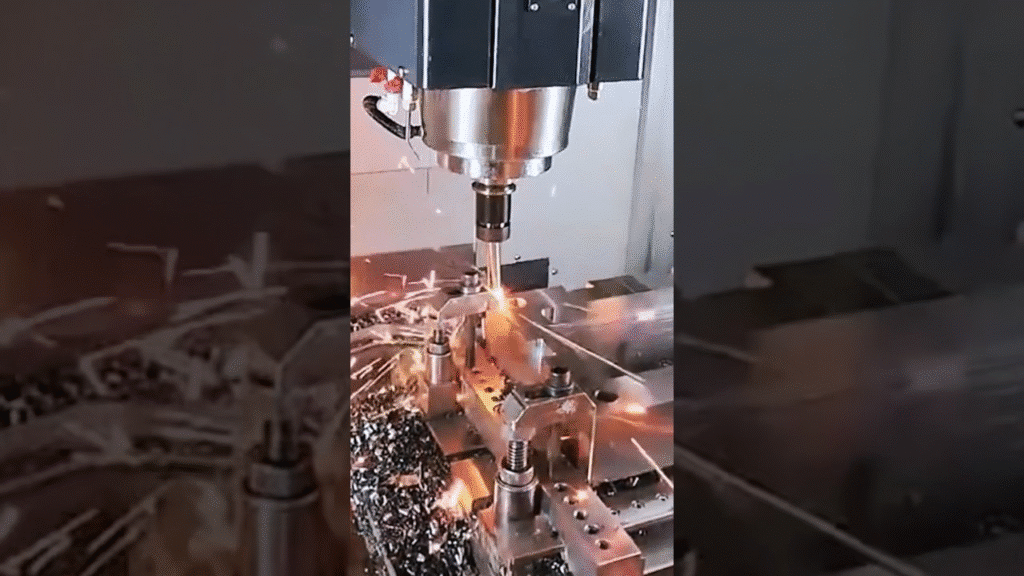
By the time the molten aluminum or zinc is solidified in the die it has already predetermined by 70-80 percent what the downstream CNC process can-or cannot-accomplish. The location of porosity, constant draft angle, ejector pin witness marks, height of parting line flash, and core shift are all difficult constraints on the design of the fixtures, ejector tool path strategy, and attainable tolerance. Such limitations are not noticeable to the CNC process engineer during the planning process, thus causing the machining team to be in a constant firefighting situation.
The only way to achieve system level accuracy is to have the same datum logic, allowance philosophy and feedback loop between casting and CNC. Less of that is assured of creating exponential issues in the other process due to local optimization. That is why we never intended to do our own high-precision CNC manufacturing out of the casting floor, in other words, high-precision CNC manufacturing is never planned in isolation from the casting floor—accuracy is engineered upstream, not inspected downstream.
Common Failure Patterns in Disconnected OEM Projects
The unrelated processes generate repeatable, predictable patterns of failures. Having studied over 200 failed or troubled OEM programs in the last 10 years, the four patterns that emerge in a greater than 85 percent of cases include:
| Disconnection Point | Downstream Consequence | Real-World Manifestation |
| Casting variability ignored | CNC rework escalation | 30–200% increase in secondary benching and spot-facing operations |
| No shared datum logic | Assembly inconsistency | Parts pass incoming inspection but fail final assembly stack-up |
| Separate planning teams | Lead time instability | CNC shop constantly waiting for “revised” castings that fix the last crisis |
| No feedback loop | Repeated defects | Same porosity pocket reappears in every batch, forcing the same rescue tool path |
They are not just accidental quality, but the signs of organizational division.
Axis Configuration Decisions Made Without Casting Context
One of the costliest errors that is caused by lack of coordination between casting and machining is wrong axis configuration.
When a casting engineer chooses core pulls and does not think about the geometry they will support in a 4 or 5 axis fixture, they continually push the machine shop into 5-axis simultaneous machining where 3 or 4 axis indexed machining would have worked perfectly well and been much less costly. On the contrary, a CNC programmer who demands 3-axis strategies in his or her methods without measurable knowledge of casting draft limitations, will simply be putting a lot of unwanted steps in his or her procedures to get access to a buried part.
Whether to use a clever 4-axis indexed or a costly 5-axis simultaneous may be determined several months before the die design review even before the CNC team ever hears of the part. This is examined in detail in our practical comparison: 3-axis vs 4-axis CNC machining for die casting.
Multi-Operation CNC Machining as a Symptom of Poor Integration
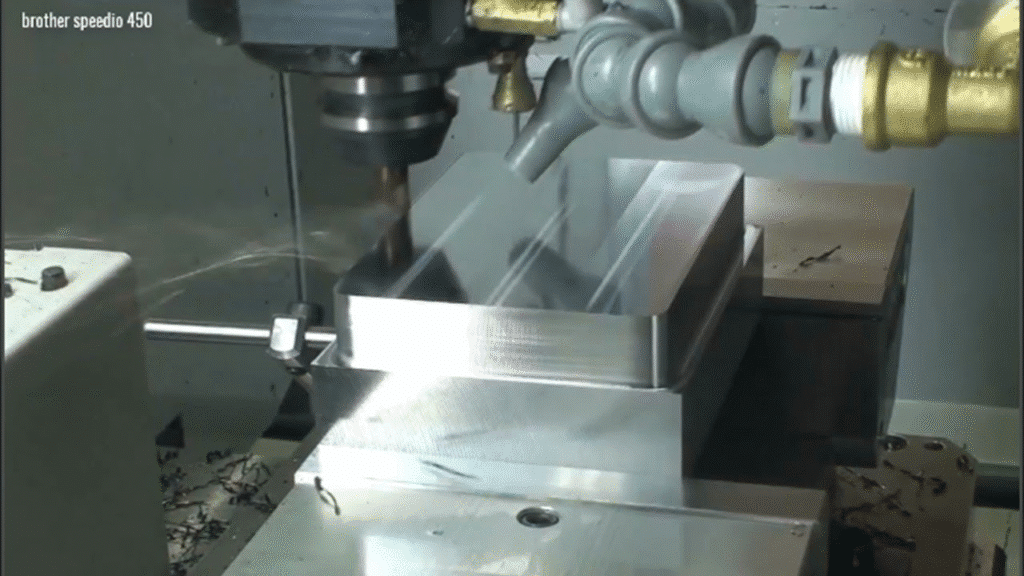
When you encounter a die-cast component that must go through six or eight CNC processes, that is nearly always an indicator of upstream tradeoff, rather than downstream complexity.
Features that would have been net-shape in the die are being pushed to CNC due to either not being informed by the casting team of the need to meet a given tolerance or surface finish- because they have been measured against a different datum scheme. The outcome is a sequence of soft-jaw arrangements, more cost of fixtures and stack-up of tolerance that kills repeatability. This is most frequently found in the automotive mounts of roof racks and in telecommunication housings where weight reduction mandates thin-wall designs which are highly sensitive to core shift.
More operations = more chances for variation. See real cases here: multi-operation CNC machining for die casting.
Tool Wear Escalation Caused by Casting–Machining Disconnect
Hard spots, chill layers and micro-porosity that are hard to control around machined surfaces make predictable tool wear chaotic.
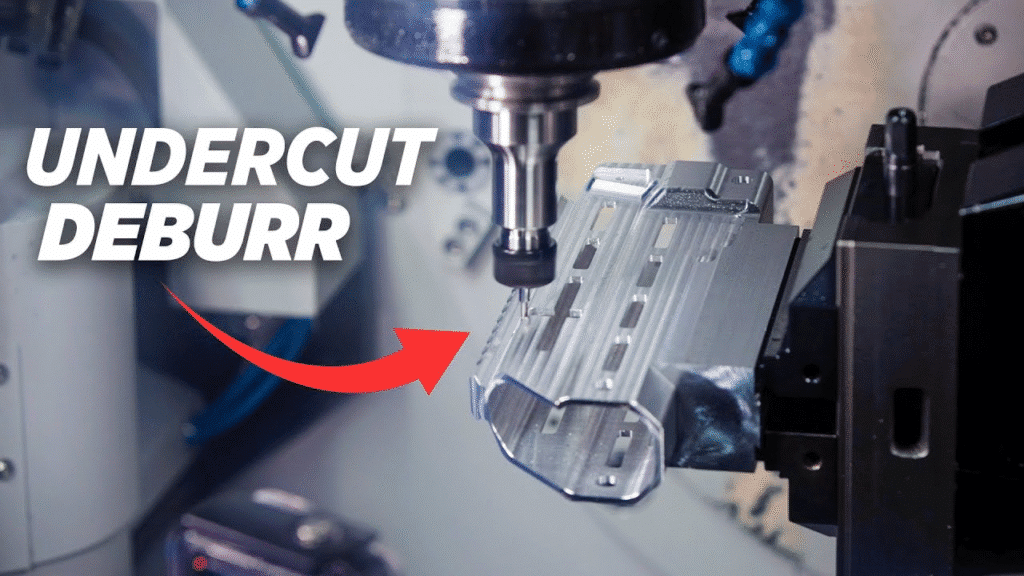
Even a single casting made to a certain level of oxide, or a certain silicon morphology, can reduce tool life by 40-60 percent relative to a sister batch made on the same machine the same week- and the difference will not be detected by incoming inspection. The CNC team is unable to make feed, speed, and tool geometry adjustments in advance when casting process parameters (melt temperature, intensification pressure, die lube pattern) remain unknown to them. The outcome: insert catastrophe on the third shift at 2 am, which was followed by emergency air-delivery of new inserts and failure to deliver to end-users.
Proper tool wear management for die casting begins with casting process stability, rather than harder carbide grades.
Cost Explosion When CNC Strategy Ignores Casting Reality
Each person maximizes the unit price in silos, the casting quote is great at 2.80, the CNC quote is great at 4.20, and the purchasing claims the victory at 7.00 total. The actual system cost is 18.50 six months later due to 38 percent scrap in CNC, three redesign of the 38 per cent scrap in CNC, and two engineering change orders.
This is the classical local optimization failure of a tightly coupled system. The only way to have true lowest total cost is to co-develop casting allowances, machined wall thickness targets and inspection criteria right at the outset. Total cost explosion is always brought about by separate optimization. Cost analysis on file: CNC machining cost strategy for die casting.
Make-or-Buy Decisions That Fail Without Process Integration
The question the most dangerous one is posed under the too late time: “Should we outsource the CNC machining?
Once this question is posed and the casting tool has already been cut the answer, is nearly always costly. Geometry has already been committed to the casting, and it could need indexed 4-axis or tombstone fixturing, or even special soft jaws – features that are very few job shops can offer at significant competitive prices. Any company finding this once tool steel has been machined on a regular basis will find itself paying double or even triple quoted or rework it in-house at colossal disruption expense.
Strategic make-or-buy decisions for CNC for die casting must be made before the first gram of aluminum is poured.
How OEMs Can Prevent Failure Through Integrated Manufacturing
Prevention is not a process but a structure.
- Unify datum philosophy at RFQ stage- casting and CNC need to use the same coordinate systems.
- Conduct combined DFM of casting and machining engineers in presence of the tool steel prior to ordering.
- Install closed-Loop feedback: each non-conformance in the CNC is followed by an instant review of the casting process parameters.
- Make use of common digital strings (3D annotated models with allowance callouts that can be seen by both teams).
- Do not measure Suppliers based on casting price or CNC price, but overall system stability (first-pass yield through final assembly).
The companies which regard casting and CNC as one manufacturing system regularly realize final tolerance of complex aluminum housings of ±0.02 mm without any rework at all – their rivals struggle with constant fires.
Conclusion — Integration Determines OEM Project Success
The success of OEM projects is not in the excellence of individual processes, but in the effectiveness of casting and CNC machining as a single manufacturing system.Even the most capable die caster and sophisticated CNC shop in the world will result in a failed program unless the processes are engineered in the same way since the very first drawing release. They are not the option, neither are the nice-to-have, but the cost, quality, and delivery of modern die-cast OEM projects mainly depend on integration.