
When zinc alloy die casting, the majority of the quality problems are planned in-or-out long before the start of production. Though recent uses of zinc alloys produce unsurpassed fluidity, tight tolerances, and thin-wall capability, the procedure is by no means lenient in terms of geometry. Far too many OEM engineers continue to believe that zinc can adhere to anything that gets thrown at it but in reality, aggressive features, sudden transitions or simply disregarding manufacturability recommendations will result in the occurrence of porosity, sinks, distortion or ejection issues. The result? High tooling rework, long sampling time, and unpredictable yields.
A well-designed part geometry corresponds to the characteristics of high-pressure die-casting of zinc, which are predictable shrinkage (approximately 0.7 per cent), good flow into thin microatures, yet response to thermal gradient and entrained air. Whenever engineers use the correct DFM principles in the initial phases, the number of defects is minimized, achievable tolerances are narrowed, and downstream finishing and inspection becomes much more reliable. To have a closer glance at what we can actually cast in the regular what we can cast, see our zinc alloy die casting capabilities.
Why Design Matters More Than Process Tweaks in Zinc Die Casting
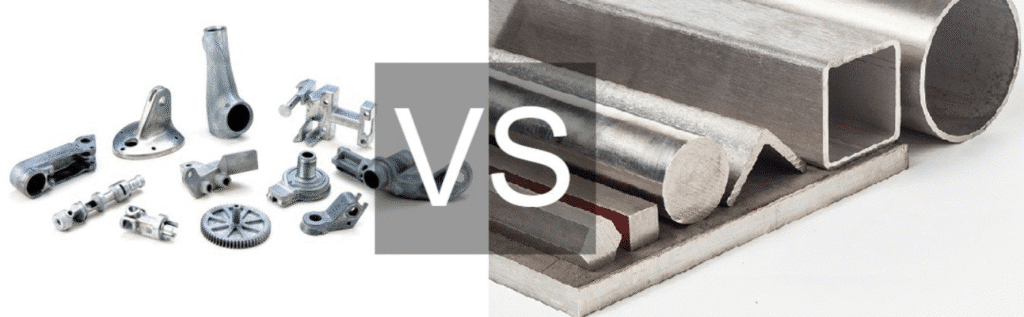
Optimization of processes, whether in increased gate speed or vacuum assistance or finely tuning the die temperature, can do no good in the face of an inherently bad design.
During my years of reviewing OEM submissions, 70 to 80 percent of the recurring defects can be carried to geometry decisions many months ago. Last-minute adjustment causes changes to dies (typically $10k50k- and more), slated releases, and marring. Tweaks to processes can be temporary but in most instances they do not get rid of underlying causes of the problem like uneven cooling, traps of air entrapment or over-stress risers. The most significant lever in ensuring that quality and cost are repeatable is designing with the capabilities of zinc in mind at the start.
| Design Decision | Downstream Impact | Typical Risk |
| Non-uniform wall thickness | Uneven solidification, sink marks, warpage | Porosity clusters, dimensional instability |
| Insufficient draft on deep cores | High ejection force, scoring, stuck parts | Tool damage, surface drags, production halts |
| Overly thick ribs/bosses | Shrinkage porosity at intersections | Internal voids detected only in X-ray or sectioning |
| Ignoring fillet radii | Stress concentrations, cracking during use | Field failures, especially under vibration/load |
| Over-specified tolerances | Unachievable without secondary machining | Rejected lots, added cost, longer lead times |
Wall Thickness and Geometry Guidelines
The secret of flawless zinc die castings lies in uniformity of wall thickness- zinc as a fluid is free to go very thin but any discontinuities will produce the thermal effects upon which most troubles depend.
In any case, seek uniformity in the walls. The standard production of zinc is 0.75-2.5 mm (0.3-0.10 inch) continuous; most short-to-long flow items run well with 1.0-1.8 mm; failure to do so will lead to incomplete fill in flow paths, and excessively ribbed items will be porous on shrinkage. Stepped changes (>3050% step) lead to flow hesitation and cold shut, or sink, gradually change between steps and provide generous fillets (R S wall thickness) to smooth the flow and cooling of metals.
| Design Feature | Recommended Practice | Risk if Ignored |
| Nominal wall thickness | 0.75–2.5 mm (ideal 1.0–2.0 mm for most parts) | Short shots (too thin) or shrinkage porosity (too thick) |
| Wall variation | ±20% max; gradual transitions | Sink marks, warpage, internal voids |
| Fillet radii at junctions | R ≥ wall thickness (min 0.5–1.0 mm) | Stress risers, cracking, flow hesitation |
| Heavy sections (>4 mm) | Core out or reinforce with ribs | Centerline shrinkage, longer cycle times |
Ribs, Bosses, and Structural Reinforcement
The ribs and bosses allow you to add stiffness and not mass, however, do it wrong and you create sink marks or porosity where you cannot afford it to occur.
Maintain rib base thickness = 0.6 1.0 × wall thickness (do not exceed wall or sinks will occur). The height of ribs must remain 3 to 5 times the wall thickness to avoid distortion. Combine the ribs with plentiful fillets, but sharp crossroads prevent shrinkage. In the case of bosses, locate them on ribs, or gusset to spread the load and heat. They are commonly tall, isolated bosses, which sink up on the opposite face-strucure them and retain some good proportions between diameter and height.
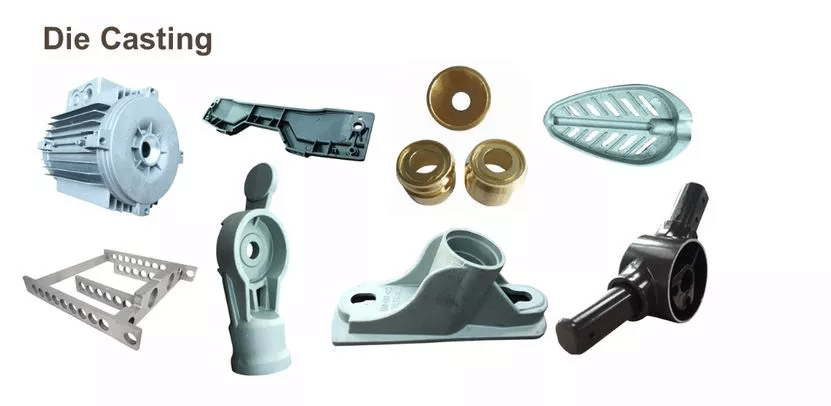
Draft Angles, Ejection, and Tooling Release
Clean ejection and surface integrity must not be compromised at all: the zinc allows slimmer drafts than aluminum, yet zero-draft zinc requires careful considerations.
Minimum draft: 0.5 -1o internal, 1-2o outermost features. Round holes can run as low as 0.1–0.5°. Deep ribs/textured surfaces might be required to have drags of 25 degrees or 5. Zero draft can be realised on zinc in rare instances (notably when using multi-slide tooling), although positively ejectioning the tooling must only be designed to leave the casting behind the moving half. Poor draft increases the ejection force, score surface and reduces die life.
Tolerance Design and Dimensional Expectations
Minimum as-cast tolerances in metal forming are obtained – with zinc die casting – but excessive specification brings unwarranted machine work or scrap.
Linear tolerances -0.02-0.05 mm usually projected area opening. Design to fit zones, achievable with critical at ±0.01-0.03 mm may need post -machining. Use useful datums early; do not stack tolerances across intervening parting lines, or move slides around. For precise verification, CMM measurement in zinc die casting and X-ray inspection for zinc die casting become essential tools.
Designing to Prevent Common Zinc Die Casting Defects
Considerate geometry avoids many more defects than the regulation of any parameter of the process.
Porosity may lack any pockets or thick cross especially when they are trapped, then use high fillets, no blind galls. Misruns and cold shuts are evident on sharp transitions between thins and heavy or great distances between gates without due regard to the gating. Distortion and sinks are the result of uneven cooling due to the variation in the wall or heavy parts of the wall. see our detailed post on zinc die casting defects.
Design for Quality Inspection and Process Control
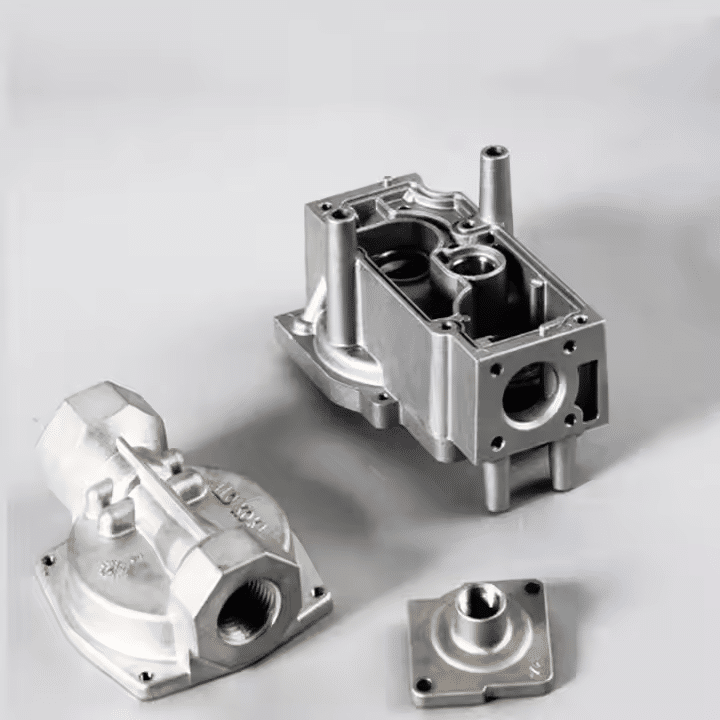
Components should be easily checked without having to do any heroic fixturing- bad datum access or blocked features will convert good castings into bad castings.
Give repeatable datums, preferably in one plane or core. do not use deep narrow channels which choke probes.. Design for in-house QC for zinc die casting parts—accessible surfaces speed up CMM, X-ray, and visual checks while reducing measurement uncertainty.
Design Considerations for Surface Finishing and Corrosion Protection
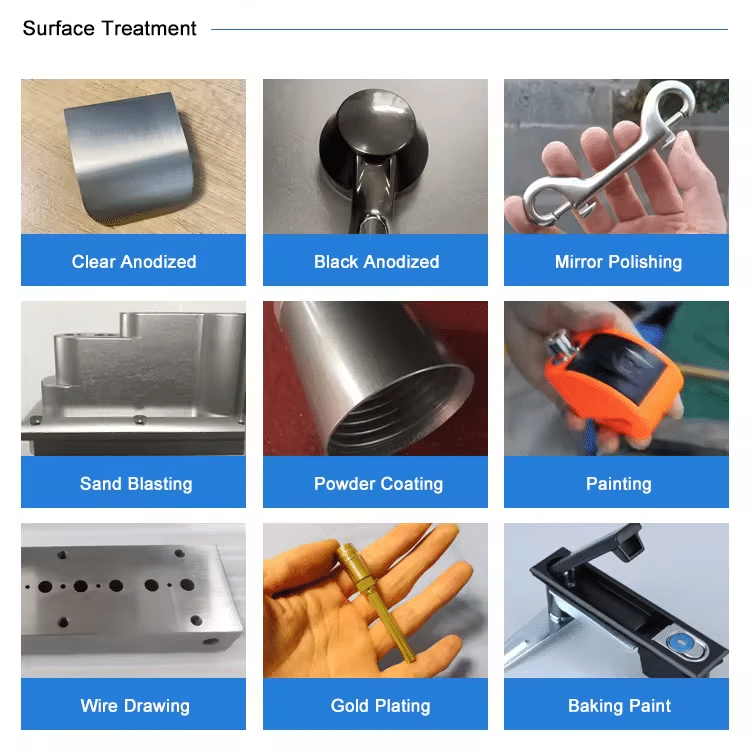
The quality of surface begins at the tool- geometry determines the degree to which plating, painting, or powder coating will adhesively cover the surface.
Chip sharp edges during tumbling; radii of a minimum 0.3 -0.5 mm. assure availability of all surfaces to the media flow/evenness of coating. Avoid deep recesses where coating pools or thins. Proper design enhances plating and coating for zinc die casting and boosts long-term zinc die casting corrosion resistance improvement.
Common OEM Design Mistakes in Zinc Die Casting
Among the numerous DFM reviews, one can distinguish the following recurring mistakes:
- Setting tolerances that are smaller than as-cast without allocating funds to machining.
- Swings exceeding 30-50 per cent between parts round off all four sides of wall.
- Installation of tall bosses that are not supported and placed distant to wall or ribs.
- Asset Ignoring draft on moving-die features, resulting in scoring.
- Bullfinch planning without involvement of die casters, thinking, zinc can handle everything.
- Ignoring the accessibility of inspections, coercing costly fixturing or damaging testing.
These are the ones to catch upstream and you are 80 percent through with the headaches down the stream.
Conclusion — Good Design Is the Best Quality Control
The best quality system begins with geometry which considers the physics of zinc die casting uniform cooling, smooth flow, easy ejection and features that can be inspected. Particularly when design engineers and well-trained tooling and process teams work together in the early phases, parts themselves become stable, repeatable and cost-effective. Take DFM up the ladder, challenge all variations, and manufacturability and function take center stage. It is how to make good material out of competent stuff into sound production.